
Introduction
Choosing a hospital for heart surgery is a major decision that requires more than comparing reputation or location. Patients must consider the experience of the cardiac surgeons, the hospital’s safety systems, available technology, intensive care support, infection-control standards, rehabilitation services, and experience in treating the specific heart condition.
The top heart surgery hospitals usually provide coordinated care through teams of cardiac surgeons, cardiologists, cardiac anaesthesiologists, imaging specialists, critical-care doctors, nurses, physiotherapists, and rehabilitation professionals. However, no hospital is automatically the best choice for every patient. The right hospital depends on the required procedure, the patient’s overall health, the complexity of the condition, financial considerations, and the availability of long-term follow-up care.
What Makes a Heart Surgery Hospital Truly Specialized?
A specialized cardiac hospital does more than perform routine operations. It should be able to evaluate complicated conditions, select an appropriate treatment method, manage emergencies, and support patients throughout recovery.
Quality healthcare should be effective, safe, timely, people-centred, equitable, integrated, and efficient. These principles are especially important in cardiac surgery, where patients may require complex coordination before, during, and after an operation.
Important qualities of a specialized heart surgery hospital include:
- Experienced cardiac surgeons with procedure-specific expertise
- Dedicated cardiac operating theatres
- Advanced cardiac imaging and diagnostic facilities
- Well-equipped cardiac intensive care units
- Round-the-clock emergency cardiac services
- Strong infection-prevention protocols
- Blood bank and laboratory support
- Cardiac rehabilitation services
- Multidisciplinary treatment planning
- Clear communication with patients and families
Hospital size alone does not establish quality. Patients should focus on whether the centre regularly manages their specific condition and has the necessary specialists and support services.
Major Cardiac Procedures Offered by Leading Hospitals
The best heart surgery hospitals generally provide a broad range of surgical and minimally invasive procedures. The exact treatment recommended depends on the patient’s diagnosis, symptoms, age, previous treatment, and overall medical condition.
Coronary Artery Bypass Graft Surgery
Coronary artery bypass graft surgery, commonly called CABG or bypass surgery, is performed to improve blood flow to the heart when coronary arteries are severely narrowed or blocked.
During the procedure, a healthy blood vessel from another part of the body is used to create a new route around the blocked artery. Some centres also offer minimally invasive approaches for carefully selected patients. These approaches may involve smaller incisions, although they are not suitable for every condition.
Patients comparing the best hospitals for bypass surgery should ask about:
- The surgeon’s experience with complex and repeat bypass operations
- Conventional versus minimally invasive options
- Management of patients with diabetes or kidney disease
- Cardiac ICU facilities
- Rehabilitation and follow-up planning
Heart Valve Repair and Replacement
Heart valve surgery may be needed when a valve becomes too narrow, does not close properly, or is damaged by disease or infection.
Depending on the condition, surgeons may repair the patient’s existing valve or replace it with a mechanical or biological valve. The selected valve and treatment approach can influence medication requirements, recovery, and long-term quality of life.
Advanced hospitals may offer:
- Mitral valve repair
- Aortic valve replacement
- Tricuspid valve surgery
- Multiple-valve procedures
- Minimally invasive valve surgery
- Transcatheter valve procedures for eligible patients
Minimally invasive valve treatments may reduce chest trauma and shorten hospital stay for some patients, but eligibility must be determined by a qualified heart team.
Aortic Surgery
The aorta is the body’s largest artery. Conditions such as an aortic aneurysm, aortic dissection, or inherited connective-tissue disorder may require highly specialized surgery.
Hospitals performing complex aortic procedures should have surgeons experienced in:
- Aortic root repair or replacement
- Ascending and descending aortic surgery
- Aortic arch reconstruction
- Emergency treatment for aortic dissection
- Hybrid surgical and catheter-based procedures
These operations often require advanced imaging, careful anaesthesia, intensive monitoring, and experienced critical-care teams.
Congenital Heart Surgery
Congenital heart surgery treats structural heart problems present from birth. These conditions may affect infants, children, teenagers, or adults who require continued care after childhood treatment.
Children needing heart surgery should receive care at hospitals with dedicated paediatric cardiac expertise.
A specialized paediatric heart centre should provide:
- Paediatric cardiac surgeons
- Paediatric cardiologists
- Neonatal and paediatric intensive care
- Congenital heart imaging
- Child-focused anaesthesia
- Family counselling and long-term follow-up
Adult patients with congenital heart disease may require specialists who understand both paediatric heart defects and adult cardiac complications.
Arrhythmia Surgery and Electrophysiology Procedures
Irregular heart rhythms may be managed with medication, catheter-based procedures, implantable devices, or surgery.
Specialized hospitals may provide:
- Catheter ablation
- Surgical maze procedures
- Pacemaker implantation
- Implantable cardioverter-defibrillator placement
- Combined valve and arrhythmia surgery
A coordinated electrophysiology and cardiac surgery team is especially important when an arrhythmia occurs alongside another structural heart condition.
Heart Transplantation and Mechanical Circulatory Support
A heart transplant may be considered for selected patients with advanced heart failure when other treatments are no longer effective.
Hospitals offering transplantation require dedicated teams for donor coordination, transplant surgery, infection prevention, immunosuppressive treatment, rehabilitation, and lifelong follow-up. Some centres also provide ventricular assist devices to support the heart temporarily or over a longer period.
These services are generally available only at highly specialized cardiac institutions.
Open-Heart Surgery Versus Minimally Invasive Procedures
The least invasive option is not automatically the safest or most effective option for every patient. Treatment should be selected after a complete evaluation of the heart condition and overall medical risk.
| Treatment approach | General characteristics | Important consideration |
|---|---|---|
| Traditional open-heart surgery | Provides direct access to the heart and may be appropriate for complex or combined procedures | Usually requires a larger incision and longer recovery |
| Minimally invasive surgery | Uses smaller incisions and specialized instruments | Available only for selected patients and procedures |
| Robotic-assisted surgery | Uses robotic instruments controlled by an experienced surgeon | Requires specialised equipment and surgical expertise |
| Catheter-based procedure | Performed through blood vessels without opening the chest | Suitability depends on anatomy, condition and clinical risk |
| Hybrid procedure | Combines surgical and catheter-based methods | Requires close coordination between multiple specialists |
Patients should ask why a particular approach has been recommended and whether an alternative method would provide comparable safety and effectiveness.
How Top Hospitals Maintain Surgical Safety
Heart surgery carries potential risks, including bleeding, infection, irregular heart rhythm, kidney complications, blood clots, heart attack, stroke, or reactions to anaesthesia. The individual level of risk depends on the operation and the patient’s health.
WHO surgical-safety initiatives emphasize structured standards and checklists to reduce avoidable harm during operations.
A dependable heart surgery hospital should have systems for:
Preoperative Verification
Before surgery, the healthcare team confirms the patient’s identity, diagnosis, planned procedure, allergies, medications, blood availability, and major risk factors.
Patients may undergo blood tests, chest imaging, electrocardiography, echocardiography, coronary angiography, lung-function testing, and anaesthesia evaluation. The required tests vary by procedure and medical history.
Infection Prevention
Hospitals should follow established procedures for hand hygiene, operating-room sterilization, antibiotic use, wound care, and monitoring for postoperative infection.
Patients should also receive instructions about bathing, skin preparation, dental problems, smoking, diabetes control, and reporting illness before surgery.
Experienced Cardiac Anaesthesia
Cardiac anaesthesiologists monitor blood pressure, heart function, oxygen levels, circulation, temperature, and medication throughout the operation.
Their experience is particularly important for older patients and people with lung disease, kidney disease, diabetes, previous stroke, or other serious conditions.
Cardiac Intensive Care
After major heart surgery, patients are usually transferred to a cardiac intensive care unit for close monitoring.
The ICU should be prepared to manage:
- Breathing support
- Bleeding
- Abnormal heart rhythms
- Blood pressure changes
- Kidney complications
- Neurological symptoms
- Postoperative pain
- Emergency reoperation when necessary
Emergency Response Systems
A hospital performing complex cardiac surgery should provide immediate access to diagnostic imaging, blood products, operating theatres, and specialists when an unexpected complication occurs.
Importance of the Cardiac Surgeon’s Experience
Hospital reputation is important, but patients should also evaluate the surgeon’s experience with the specific operation.
During consultation, patients can ask:
- How frequently do you perform this procedure?
- Have you treated patients with a similar condition?
- What surgical approach do you recommend and why?
- What are the important risks in my case?
- Could a minimally invasive method be considered?
- How long might hospitalization and recovery take?
- Who will manage my care after discharge?
- What symptoms should prompt urgent medical attention?
The American Heart Association recommends asking about a specialist’s experience and evaluating whether the doctor communicates in a way that works well for the patient.
Multidisciplinary Treatment Planning
Complex heart conditions should not be evaluated by one specialist alone. Leading cardiac centres often use multidisciplinary heart teams to review test results and compare available treatments.
A heart team may include:
- Clinical cardiologists
- Interventional cardiologists
- Cardiac surgeons
- Cardiac imaging experts
- Anaesthesiologists
- Electrophysiologists
- Critical-care doctors
- Rehabilitation specialists
This approach is particularly valuable for patients with severe valve disease, multiple blocked arteries, advanced heart failure, congenital abnormalities, or several medical conditions.
Comparing Top Heart Surgery Hospitals
Patients should use a structured comparison rather than relying only on advertisements, rankings, or online reviews.
| Comparison area | Questions patients should ask |
|---|---|
| Surgical expertise | Does the team regularly perform the required procedure? |
| Hospital accreditation | Is the hospital evaluated by a recognized healthcare authority? |
| Safety systems | Are surgical checklists and infection-control protocols used? |
| Technology | Are suitable imaging, operating and intensive-care facilities available? |
| Emergency support | Can complications be managed without transferring the patient? |
| Patient communication | Are risks, alternatives and expected outcomes clearly explained? |
| Rehabilitation | Is supervised cardiac rehabilitation available after treatment? |
| Cost transparency | Is a written and itemized estimate provided? |
| Follow-up care | Who will monitor the patient after discharge? |
| International support | Are travel, language and remote follow-up services available? |
Understanding Heart Surgery Cost in India
The heart surgery cost in India can vary significantly between patients and hospitals. Costs may depend on:
- Type and complexity of surgery
- Surgeon and specialist fees
- Hospital location
- Room category
- Length of ICU and hospital stay
- Diagnostic tests
- Surgical implants or heart valves
- Blood products
- Medicines and consumables
- Complications or additional treatment
- Rehabilitation and follow-up care
Patients should request a written estimate that explains what is included and excluded. The lowest initial quotation may not represent the total treatment cost.
International patients should also budget for travel, accommodation, local transportation, companion expenses, visa requirements, extended recovery, and follow-up after returning home.
Medical Tourism for Heart Surgery in India
India is considered by many international patients because it has hospitals offering advanced cardiac procedures and multidisciplinary care. However, travelling abroad for major surgery requires detailed planning.
Before confirming treatment, patients should obtain:
- A formal diagnosis and review of medical records
- A written treatment recommendation
- The proposed surgeon’s name and qualifications
- An itemized cost estimate
- Expected hospital and local recovery duration
- Information about possible complications
- A plan for emergency care
- A post-discharge follow-up schedule
- Instructions for safe air travel after surgery
- Contact details for continuing care at home
Patients should not schedule return travel based only on the expected discharge date. The surgeon must confirm that the patient is medically stable for the journey.
Preparing for Heart Surgery
Preparation may influence recovery and reduce avoidable delays.
Patients should provide a complete list of prescription medicines, over-the-counter products, supplements, allergies, previous operations, and existing medical conditions.
The surgical team may give instructions regarding:
- Blood-thinning medicines
- Diabetes medication
- Eating and drinking before surgery
- Smoking cessation
- Skin and dental infections
- Exercise and breathing preparation
- Hospital admission timing
- Personal belongings and documentation
Patients should never stop prescribed medication without instructions from the treating doctor.
Recovery After Cardiac Surgery
Recovery differs according to the type of procedure, the patient’s age, overall health, complications, and whether the chest bone was opened.
After major surgery, patients may initially experience tiredness, discomfort, reduced appetite, sleep changes, or emotional changes. Recovery should be gradual and guided by the medical team.
Movement is commonly introduced soon after surgery when clinically appropriate because early mobilization can help reduce complications such as blood clots.
After bypass surgery, many patients gradually return to routine activities over several weeks, while full recovery may take longer. Recovery timelines must be individualized rather than treated as fixed deadlines.
Cardiac Rehabilitation
Cardiac rehabilitation is a supervised program that may include:
- Gradual physical activity
- Heart-health education
- Medication support
- Nutrition guidance
- Stress management
- Smoking-cessation support
- Monitoring of symptoms and risk factors
Patients should ask whether rehabilitation is available near their home or through a coordinated remote program.
Warning Signs After Discharge
Patients should follow the discharge instructions provided by their own surgical team. Urgent medical advice may be required for symptoms such as:
- Increasing chest pain
- Sudden shortness of breath
- Fainting or severe weakness
- Fast or irregular heartbeat with symptoms
- New confusion or difficulty speaking
- Weakness on one side of the body
- Persistent fever
- Increasing wound redness, swelling, discharge, or bleeding
- Sudden leg swelling or pain
- Rapid or unexplained weight gain
Worsening wound pain, redness, bleeding, pus, or fever after bypass surgery may indicate a complication that needs prompt medical evaluation.
Common Mistakes While Choosing a Hospital
Selecting a Hospital Only by Price
Affordable care is important, but cardiac surgery decisions should not be based only on the lowest estimate. The hospital’s expertise, safety systems, ICU support, and follow-up services must also be reviewed.
Relying Only on Rankings
Rankings may use different criteria and may not reflect the hospital’s experience with a patient’s specific condition.
Ignoring Procedure-Specific Experience
A well-known hospital may not have the strongest team for every cardiac procedure. Patients should confirm experience with their exact diagnosis and proposed operation.
Not Seeking a Second Opinion
A second opinion can help patients understand alternatives, especially when the surgery is complex, high-risk, or non-emergency.
Overlooking Recovery Support
Successful treatment includes safe discharge, rehabilitation, medication management, wound care, and follow-up—not only the operation itself.
Frequently Asked Questions
1. How can I identify a top heart surgery hospital?
Look for procedure-specific surgical experience, recognized quality standards, advanced cardiac facilities, dedicated intensive care, multidisciplinary planning, transparent communication, and structured follow-up care.
2. Is a famous hospital always the best choice?
No. A hospital should be matched to the patient’s condition, required procedure, surgeon’s expertise, medical risk, location, and follow-up needs.
3. Should I choose the hospital or the cardiac surgeon first?
Both matter. An experienced surgeon also needs a capable hospital with advanced operating facilities, intensive care, blood-bank support, infection control, and trained nursing teams.
4. What procedures are performed at specialized cardiac hospitals?
Procedures may include bypass surgery, valve repair or replacement, aortic surgery, congenital heart surgery, minimally invasive procedures, arrhythmia treatment, heart transplantation, and mechanical circulatory support.
5. Are minimally invasive procedures safer than open-heart surgery?
They may offer advantages for selected patients, but they are not suitable for every condition. The safest approach depends on the diagnosis, anatomy, complexity, and overall medical risk.
6. What should I ask a cardiac surgeon before treatment?
Ask about experience with the procedure, recommended approach, expected benefits, major risks, alternatives, recovery time, complication management, and long-term follow-up.
7. How long does recovery take after heart surgery?
Recovery varies widely. The procedure, age, overall health, surgical approach, and complications all influence the timeline. Patients should follow individualized advice from their surgical team.
8. How can international patients compare heart surgery costs?
They should request itemized written estimates covering surgery, implants, ICU care, room charges, medicines, tests, rehabilitation, follow-up, and possible additional expenses.
9. Is a second opinion necessary before heart surgery?
It may be valuable for complex or non-emergency cases. A second opinion can confirm the diagnosis, clarify alternatives, and help patients make informed decisions.
10. What role does cardiac rehabilitation play?
Cardiac rehabilitation helps patients gradually restore activity, understand medicines, improve heart-health habits, manage risk factors, and recover with professional supervision.
Conclusion
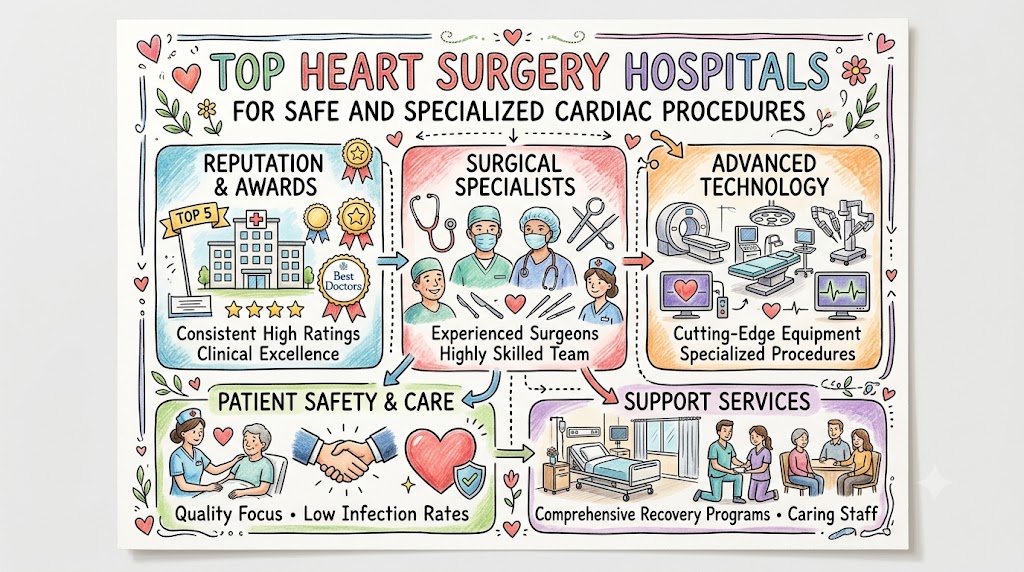
The top heart surgery hospitals combine experienced specialists, advanced technology, strong patient-safety systems, dependable intensive care, and structured recovery support. Patients should compare hospitals according to their specific condition rather than relying only on reputation, price, or general rankings. Reviewing the surgeon’s procedure-specific experience, hospital facilities, emergency capabilities, treatment costs, communication standards, rehabilitation services, and follow-up arrangements can support a safer and more informed decision. For international patients, medical travel planning should also include adequate recovery time, complication support, and coordination with a doctor at home. The final decision should always be made with qualified medical professionals who understand the patient’s complete health history and cardiac needs.