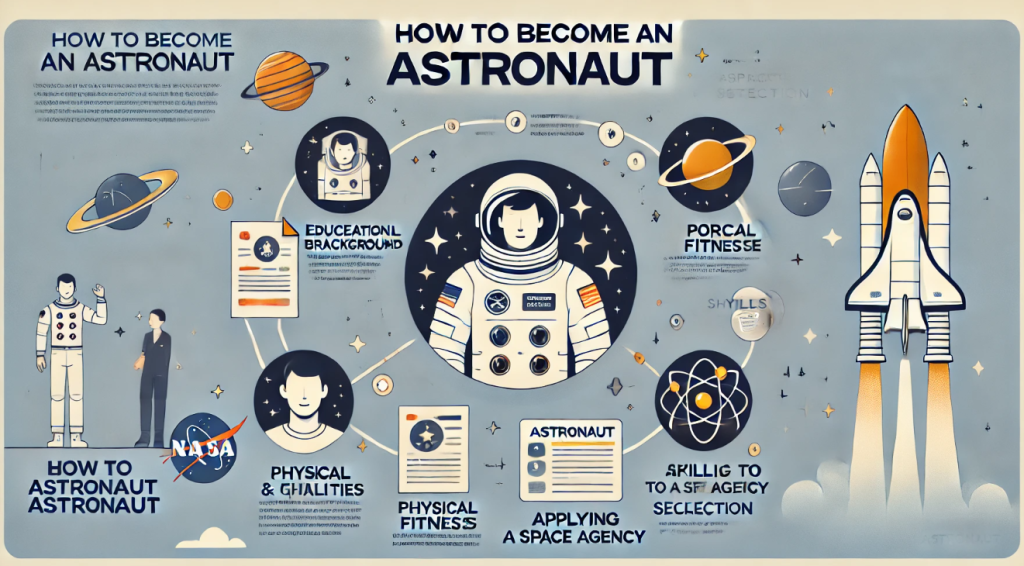
Becoming an astronaut is a challenging and competitive journey that requires extensive education, physical fitness, and a specific set of skills. Here is a comprehensive guide on the steps you need to take to become an astronaut:
Step 1: Educational Requirements
- Earn a Bachelor’s Degree
- Fields of Study: Typically, astronauts have degrees in engineering, biological science, physical science, computer science, or mathematics.
- Institutions: Attend an accredited university with a strong program in your chosen field.
- Pursue Advanced Degrees (Optional but Recommended)
- Master’s Degree or PhD: While not always required, advanced degrees can enhance your qualifications and expertise.
- Research Experience: Participate in research projects to gain valuable experience and skills.
Step 2: Gain Relevant Experience
- Professional Experience
- Work in Your Field: Accumulate at least three years of related, progressively responsible professional experience. This could be in research, engineering, piloting, or other relevant fields.
- Military Service: Many astronauts have a background in the military, particularly in roles such as test pilots or engineers.
- Flight Experience (For Pilot Candidates)
- Pilot Licenses: Obtain at least 1,000 hours of pilot-in-command time in jet aircraft. Military pilots often meet this requirement through their service.
Step 3: Develop Key Skills and Attributes
- Physical Fitness
- Health Standards: Maintain excellent physical health, including good vision, blood pressure, and overall fitness.
- Fitness Routine: Regularly engage in physical activities to ensure you meet the stringent health requirements of space agencies.
- Technical Skills
- Problem-Solving: Develop strong analytical and problem-solving skills.
- Technical Proficiency: Gain proficiency with various technical systems and software.
- Teamwork: Cultivate excellent teamwork and communication skills, as astronauts work closely with others in high-pressure environments.
Step 4: Apply to a Space Agency
- Meet Eligibility Requirements
- Age: Typically, candidates must be between 27 and 37 years old.
- Citizenship: Applicants must be citizens of the country they are applying to (e.g., NASA requires U.S. citizenship).
- Submit Your Application
- Application Process: Follow the specific application process of the space agency you are applying to. For example, NASA’s application is through USAJOBS.
- Documentation: Prepare and submit all required documents, including educational transcripts, professional experience records, and references.
- Pass the Selection Process
- Initial Screening: Applications are initially screened based on education, experience, and physical fitness.
- Interviews and Tests: Selected candidates undergo rigorous interviews, medical exams, psychological tests, and other assessments.
- Final Selection: A small number of candidates are chosen to become astronaut candidates.
Step 5: Astronaut Training
- Basic Training
- Duration: Typically lasts about two years.
- Training Areas: Includes instruction in spacecraft systems, extravehicular activity (EVA) skills, robotics, physical fitness, and survival training.
- Advanced Training
- Specialized Training: Involves mission-specific training, simulations, and further development of skills in areas like spacewalking, flight training, and scientific research.
- Continuous Learning
- Ongoing Education: Astronauts continue to learn and train throughout their careers to stay updated on new technologies and mission requirements.
Step 6: Mission Assignment and Preparation
- Mission Assignment
- Role Assignment: Once training is complete, astronauts are assigned to specific missions based on their skills and experience.
- Team Integration: Work closely with mission team members to prepare for the specific objectives and tasks of the mission.
- Mission-Specific Training
- Simulations: Participate in mission simulations to practice procedures and prepare for potential challenges.
- Physical and Mental Preparation: Ensure optimal physical and mental readiness for the mission.
Step 7: Spaceflight
- Pre-Launch Preparation
- Final Training: Complete final training and simulations specific to the mission.
- Health Checks: Undergo comprehensive medical examinations.
- Launch and Mission Execution
- Launch: Travel to space aboard a spacecraft such as the Space Shuttle, Soyuz, or commercial space vehicle.
- Mission Tasks: Perform tasks such as scientific research, maintenance, and spacewalks as assigned.
- Post-Mission Activities
- Debriefing: Participate in debriefing sessions to discuss mission outcomes and any issues encountered.
- Recovery: Undergo medical examinations and physical rehabilitation as needed.
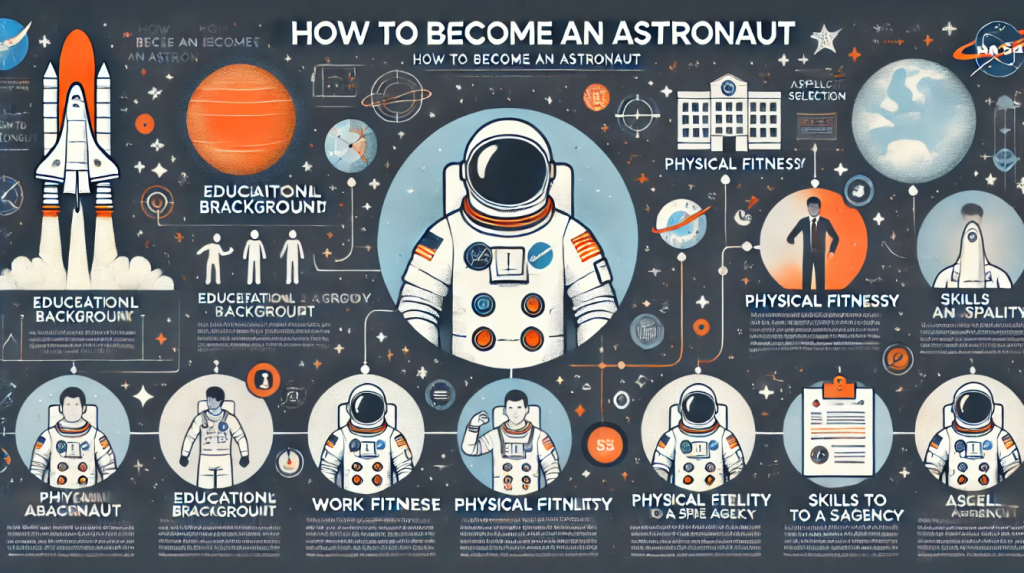
Space Agencies and Opportunities
- NASA (National Aeronautics and Space Administration)
- Location: United States
- Website: NASA Astronaut Selection
- ESA (European Space Agency)
- Location: Europe
- Website: ESA Astronaut Selection
- Roscosmos (Russian Space Agency)
- Location: Russia
- Website: Roscosmos
- CSA (Canadian Space Agency)
- Location: Canada
- Website: CSA Astronaut Selection
- JAXA (Japan Aerospace Exploration Agency)
- Location: Japan
- Website: JAXA Astronaut Selection
- ISRO (Indian Space Research Organisation)
- Location: India
- Website: ISRO Human Spaceflight