
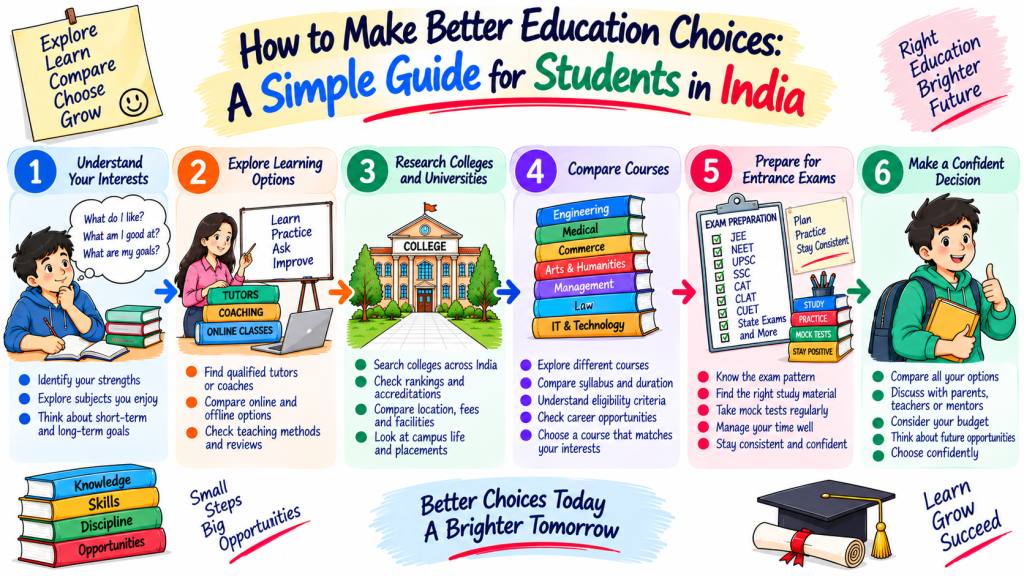
Introduction
Choosing an education option can feel difficult when many choices appear. Students may need tutors, coaching classes, colleges, courses, or exam guidance. Parents may search for tutors near home or online tutors in India. Students after Class 12 may also explore entrance and competitive exams. Each option has different costs, rules, schedules, and learning methods. So, students need a simple way to search and compare them. Start with your own study needs and future plans. Then collect clear information about each choice. GurukulGalaxy helps students and parents explore tutors, teachers, coaching institutes, colleges, courses, and exam information. It can support the early research process and help users organize possible choices. Always confirm important details with official sources before making a final decision.
Start With the Basics
A clear education search begins with a few simple questions. What do you want to learn? What level are you studying? Where do you want to study?
You should also think about your budget and schedule. These details can quickly remove options that do not fit your needs.
For example, a school student may need help with science. A college learner may want a short skill course. A Class 12 student may need information about entrance exams.
Write down your answers before searching. This small step can make the rest of your research much easier.
Finding a Tutor for Extra Learning Support
A tutor can help students understand topics that need more practice. Start your search with the exact subject and class level.
Look at the tutor’s experience and teaching method. Ask how the tutor explains difficult topics. Find out how the tutor handles homework and questions.
You should also discuss the class schedule. Ask about lesson length and weekly class frequency. Clear timing can help students follow a regular study routine.
Parents can ask how the tutor shares progress updates. Students can explain which topics cause problems. Good communication can make lessons more focused.
Choosing Online Tutors in India
Online tutors in India can help students learn without traveling to a classroom. This format can work well for students who need flexible schedules.
Before joining, ask how the tutor conducts classes. Some tutors use live video lessons. Others may add recorded lessons, worksheets, or practice tests.
Check the technology needed for each class. Make sure your device and internet connection can support the lessons.
Discuss fees and class policies before starting. Ask what happens when you miss a class. Also ask how the tutor handles doubts outside class time.
Finding Tutors Near Me
Students who prefer face-to-face learning can search for tutors nearby. Use your subject, class level, and location when searching.
A nearby tutor can reduce travel time. However, location should not become your only selection factor.
Compare teaching experience, class size, fees, timings, and teaching methods. Ask about the tutor’s approach to practice and revision.
Consider your daily routine too. A tutor with convenient timings may help you attend classes regularly. Balance location with actual learning needs.
Understand Coaching Before You Join
Coaching institutes can give students a planned study routine. Many institutes offer classes, tests, study materials, and doubt support.
Different institutes may focus on different goals. Some support school subjects. Others prepare students for entrance and competitive exams.
Read the course details before joining. Check the syllabus, faculty, batch size, class timings, and test schedule.
Ask about the complete cost as well. Find out whether study material or tests cost extra. Clear fee information can help families plan their budget.
How to Compare Coaching Institutes
Many students search for the best coaching institutes in India. Yet one coaching institute cannot match every student’s needs.
Instead of relying on general popularity, compare useful facts. Think about your exam, study style, location, and budget.
| Factor | What to Understand | What to Ask |
|---|---|---|
| Teachers | Who teaches the class | What experience do they have? |
| Syllabus | Topics covered | Does it match the exam? |
| Batch Size | Number of students | Can learners ask questions? |
| Tests | Practice opportunities | How often do tests happen? |
| Materials | Study resources | Do they cover the syllabus? |
| Timings | Class hours | Do they fit your routine? |
| Fees | Total course cost | Are there extra charges? |
| Location | Travel needs | Can you attend regularly? |
A personal comparison can give you more useful information than a general list.
Make College Research Simple
College searches become easier when students know what they want to study. Start with your preferred subject or course.
Then search for colleges that offer that program. Read the course information before adding a college to your shortlist.
Check eligibility and admission requirements. Review subjects, course duration, fees, location, and learning format.
Think about daily life too. Travel, housing, food, and other costs may affect your plans. Include these points when comparing colleges.
Compare Courses With Care
Two colleges may offer courses with similar names. Their subjects, structure, and learning methods may still differ.
Read the course details carefully. Check the subjects and duration. Also review eligibility and admission requirements.
Use a simple comparison table to organize your findings.
| Point | What to Check |
|---|---|
| Subjects | Topics included in the course |
| Eligibility | Required qualifications |
| Duration | Total study period |
| Fees | Complete expected cost |
| Location | Travel and living needs |
| Learning Mode | Online or classroom format |
| Admission | Required application steps |
| Structure | Course stages and subjects |
Use official college sources when you need current admission information.
Learn About Competitive Exams
Competitive exams can support different study and career paths. Students should understand the purpose of an exam before preparing.
Start by checking who can apply. Then review the syllabus and exam format. Learn about application steps and required documents.
Official sources should guide important exam decisions. Rules, dates, and requirements can change.
Once you understand the exam, you can create a study plan that matches its requirements.
Make Exam Preparation More Organized
A large syllabus can look difficult at first. Divide it into small topics and create a simple study schedule.
Set realistic daily goals. Include revision along with new topics. Spend extra time on areas that you find difficult.
Practice questions can show where you need more work. Mock tests can help you understand the exam format.
After each test, review your mistakes. Write down weak areas and study them again. Small changes can improve your study routine.
Explore Competitive Exams After Class 12
Class 12 students can explore different entrance and competitive exams. Their choices depend on their subjects, qualifications, and future plans.
Start by deciding what you want to study next. Then find exams connected with that study field.
Check the eligibility rules before preparing. Some exams may require specific Class 12 subjects. Others may use different qualification rules.
Also check the application process. Use official sources for current requirements, documents, and instructions.
Education Choices in Real Situations
Suppose a student struggles with mathematics. The student can search for both online tutors and tutors nearby. The student can compare fees, experience, timing, and teaching style.
Another student may want coaching for an entrance exam. That student can compare institutes using faculty, syllabus, tests, study material, and location.
A Class 12 learner may want a degree in another city. The learner can first compare courses. Then the learner can compare colleges, fees, admission rules, and living needs.
These situations show why one choice does not suit everyone. Your education goal should guide your search.
Ten Mistakes to Avoid
1. Searching Without a Clear Goal
A vague search can create too many choices. Define your main need first.
2. Looking Only at Fees
Cost matters, but it does not show the whole picture. Compare learning features too.
3. Trusting Every Advertisement
Promotional content may not include every detail. Check complete information before deciding.
4. Ignoring the Course Syllabus
A course title does not explain all subjects. Read the syllabus carefully.
5. Forgetting Extra Charges
Some programs may have additional costs. Ask for the complete fee structure.
6. Using Unofficial Exam Information
Exam rules may change. Confirm important details through official sources.
7. Choosing a Tutor Too Quickly
Tutors have different teaching methods. Ask questions before starting classes.
8. Ignoring Location
Long travel can affect your routine. Consider travel time before choosing local classes.
9. Following Popularity Alone
A popular option may not match your needs. Compare features that matter to you.
10. Making a Fast Decision
Education choices can affect your time and money. Review your options before deciding.
How GurukulGalaxy Helps With Education Discovery
GurukulGalaxy helps learners explore several education choices. Users can research tutors, teachers, coaching institutes, colleges, courses, and competitive exams.
Students can explore online tutors and local tutors based on their needs. They can also research courses before comparing colleges.
Parents can use education discovery tools when exploring learning choices for their children. They can consider subjects, location, schedules, and other practical needs.
GurukulGalaxy supports the early research stage. Users should still confirm important information through official institutions and exam authorities.
Eight Steps for a Better Education Search
1. Understand
Know what you want before you search. Write down your subject, level, goal, budget, and location.
2. Search
Look for tutors, coaching, colleges, courses, or exams that fit your needs.
3. Compare
Create a shortlist. Compare important details instead of looking at names alone.
4. Check
Verify fees, eligibility, dates, subjects, and admission rules through reliable sources.
5. Ask
Contact tutors or institutions when you need more information. Ask clear questions.
6. Decide
Choose an option that fits your study and practical needs. Consider several factors together.
7. Prepare
Collect documents and organize your study schedule. Complete required steps on time.
8. Review
Check your progress after starting. Change your plan when your needs change.
Frequently Asked Questions
1. How can I find a good tutor online?
Begin with your subject and study level. Search for tutors who match those requirements. Compare experience, teaching methods, fees, and timings. Ask about assignments and doubt support. Explain your weak areas before starting. A trial lesson can help you understand the tutor’s approach.
2. How can I find online tutors in India?
Online tutors in India can teach students from different locations. Search by subject, class level, and schedule. Check the tutor’s experience and teaching format. Ask about live classes, recordings, assignments, and doubt sessions. Also check your device and internet needs before joining.
3. How can I find tutors near me?
Local searches can help you find tutors close to your area. Use your subject and class level when searching. Compare experience, teaching style, fees, class size, and timings. Check travel distance before joining. Choose a tutor who fits both your location and learning needs.
4. What should I check before joining a coaching institute?
Before joining, review the syllabus, teachers, batch size, study material, tests, and timings. Ask about doubt support and class rules. Check the complete fee structure. Find out about extra costs before paying. Review these details carefully before making a decision.
5. How can I compare coaching institutes in India?
A useful comparison starts with your target exam or subject. Check faculty, syllabus, batch size, study material, tests, fees, timings, and location. Ask questions about important features. Avoid choosing an institute only because it has a popular name.
6. How can I search for colleges in India?
College research should start with your preferred subject or course. Find colleges that offer suitable programs. Compare eligibility, subjects, duration, fees, location, and admission steps. Create a shortlist before applying. Check official college sources for current admission information.
7. What should I compare when choosing a college course?
Look at the course structure before comparing college names. Review subjects, eligibility, duration, fees, learning mode, location, and admission rules. Check whether the course matches your study goals. Similar courses can have different structures. Read official course information before applying.
8. How can I understand competitive exams in India?
Competitive exams serve different purposes. Some support college admission, while others connect with professional paths. Each exam has specific eligibility and syllabus rules. Check the official exam information before preparing. Learn the exam format and application process first.
9. What is a simple way to prepare for competitive exams?
Effective preparation starts with the syllabus. Divide topics into smaller sections and set realistic goals. Include revision and practice in your routine. Mock tests can show areas that need more work. Review mistakes after each test and update your study plan.
10. What competitive exams can students explore after Class 12?
After Class 12, students can explore exams linked with different study fields. Start by choosing your preferred field. Then research related exams and eligibility rules. Some exams may require specific Class 12 subjects. Check official requirements before beginning preparation.
11. How can I verify education information?
Reliable information should come from official or trusted sources. Check college websites, exam portals, course documents, and institute information. Compare details when information seems unclear. Pay close attention to fees, eligibility, dates, and admission steps. Confirm important details before applying or paying.
12. How does GurukulGalaxy help students?
GurukulGalaxy helps users explore tutors, teachers, coaching institutes, colleges, courses, and competitive exam information. Learners can use these options during the early research stage. They can compare suitable choices and create shortlists. Users should verify important information through official sources before taking action.
Final Thoughts
Education choices become easier when students follow a clear research process. Start by defining your learning goal and practical needs. Then explore tutors, online tutors, local tutors, coaching institutes, colleges, and courses. Compare subjects, fees, schedules, location, eligibility, and other useful details. Students should also understand competitive exams before creating preparation plans. Class 12 learners should check suitable exams and their eligibility rules. GurukulGalaxy can support the discovery process by helping users explore different education options. Use careful comparison to create a useful shortlist. Then confirm important information with official sources before making your final choice.