
Introduction
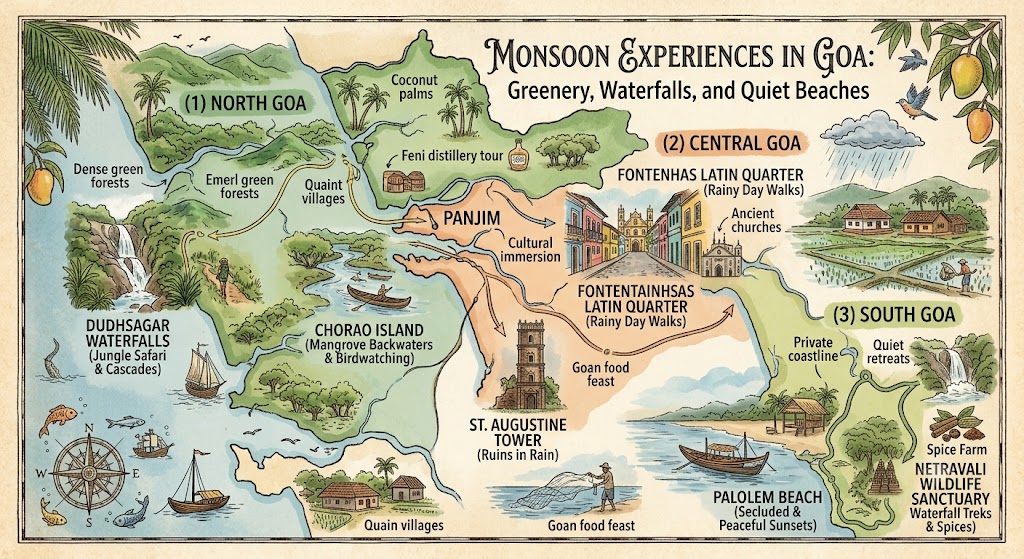
Goa during the monsoon feels very different from the bright and busy beach destination seen during the main winter season. Rain turns fields and hills green, fills seasonal streams, strengthens waterfalls and brings a slower rhythm to villages and coastal areas.
The southwest monsoon generally influences Goa from June to September, although the exact arrival, rainfall pattern and withdrawal can vary each year. An IMD study found that most of Goa’s annual rainfall occurs during this season, making weather awareness an essential part of travel planning.
Monsoon experiences in Goa are best suited to travellers who enjoy greenery, village drives, heritage walks, warm local food and watching dramatic coastal weather from a safe distance. It is not the ideal season for travellers whose main priorities are swimming, regular water sports or long days under clear skies.
GoaOrbit can help visitors create a realistic Goa itinerary that balances waterfalls, quiet beaches, inland villages and indoor experiences without depending on perfect weather.
Why Visit Goa During the Monsoon?
The rainy season reveals Goa’s forests, agricultural landscapes and inland waterways more clearly than the dry months. Paddy fields become greener, hills are frequently covered by mist and rivers carry more water through the countryside.
Popular coastal areas may feel less crowded, while inland destinations become a larger part of the travel experience. Goa Tourism actively presents monsoon activities, nature destinations and waterfalls as alternatives to conventional beach-focused holidays.
A monsoon holiday may offer:
- Green paddy fields and coconut-covered village roads
- Stronger waterfalls and flowing seasonal streams
- Cooler periods between rain showers
- Quieter walks beside selected beaches
- Cloudy landscapes suitable for photography
- Heritage areas with fewer daytime visitors
- Local festivals and community traditions
- Time for relaxed meals, reading and slow travel
The experience depends heavily on the weather. A flexible plan is more useful than a tightly scheduled list of distant attractions.
Best Monsoon Experiences in Goa
Witness the Power of Dudhsagar Falls
Dudhsagar is Goa’s most widely recognised waterfall. The four-tiered cascade is located in the Bhagwan Mahavir Wildlife Sanctuary region and has a total height of approximately 1,017 feet. Its flow becomes especially dramatic when the surrounding forests receive heavy rain.
A Dudhsagar visit should not be treated as an independent drive directly to the base of the waterfall. Access can depend on forest rules, authorised transport, approved trekking arrangements, weather and seasonal safety restrictions.
Goa Tourism and the Goa Forest Development Corporation have introduced an official booking system for organised trekking, including controlled visitor capacity. Travellers should verify the latest operating status instead of relying on an old itinerary or social-media video.
Never walk along railway tracks, enter closed forest routes or attempt an unauthorised shortcut. Heavy rainfall can rapidly change stream levels and trail conditions.
Best for: Nature lovers and organised adventure travellers
Time required: One full day
Important: Book only through authorised channels and follow forest instructions
Visit Arvalem Waterfall for an Easier Nature Trip
Arvalem Waterfall, also known as Harvalem Falls, is a more accessible alternative for families and travellers who do not want a demanding forest journey.
The waterfall is approximately 50 metres high and becomes a powerful flow during the monsoon. It is located near Sanquelim, with the Arvalem Caves and Rudreshwar Temple in the surrounding area.
Its easier access does not remove the risks created by rain. Steps, rocks and viewing areas can become slippery, and visitors should remain within designated public sections.
Best for: Families, couples and casual sightseeing
Nearby places: Mayem Lake, Arvalem Caves and Sanquelim
Important: Avoid standing close to fast water or crossing barriers
See Kesarval Falls After Seasonal Rain
Kesarval Falls is another waterfall whose flow becomes stronger during the rainy season. Goa Tourism notes that the cascade reaches its most powerful condition during the monsoon when abundant rain fills the channel.
The experience is generally shorter than a Dudhsagar excursion and can be included in a wider drive through central or South Goa.
Access conditions may change following heavy rainfall, maintenance work or local restrictions. Check the situation before planning a dedicated visit.
Best for: Short nature stops and road-trip travellers
Important: Wear footwear with a firm grip and avoid slippery edges
Drive Through Divar Island’s Green Landscapes
Divar Island is among the best places to visit in Goa for a peaceful monsoon village experience. Its green pastures, traditional homes, winding roads and river crossings create a completely different atmosphere from Goa’s commercial beach areas.
The ferry journey becomes part of the experience. Vehicles and pedestrians can use Goa’s river ferries, although queues, service frequency and weather disruptions should be considered.
Travel slowly and remain on public roads. Paddy fields and residential properties are not open photography sets, so visitors should avoid entering private land or blocking narrow lanes.
Best for: Village photography, slow drives and couples
Morning experience: Green fields, traditional homes and river views
Important: Check ferry conditions during intense rain
Explore Ponda’s Spice Plantation Region
Ponda is one of Goa’s important inland areas for forests, temples and spice plantations. Goa Tourism lists several plantation experiences in the taluka, including properties growing spices, fruits and flowers within green rural surroundings.
A plantation visit can work well on a rainy day because parts of the experience may include sheltered areas, guided explanations and a traditional meal.
Facilities and walking conditions differ between properties. Ask about advance reservations, accessibility, meal inclusions and rain-related cancellations before travelling.
Best for: Families, food lovers and cultural travellers
Experience: Green plantations, local ingredients and rural landscapes
Important: Carry insect protection and waterproof footwear
Enjoy Quiet Beach Walks Without Entering the Sea
Monsoon beaches can look beautiful under dark clouds, but the sea is often rough and unsafe. Goa Tourism specifically warns of dangerous undercurrents and difficult weather during the June-to-September period.
Beaches during this season should be treated as places for safe viewing, short walks and photography rather than swimming.
Ashwem Beach
Ashwem offers a long coastal stretch with palms and fewer visitors during rainy periods. Its atmosphere can be peaceful, but official guidance warns that monsoon seas may have dangerous undercurrents.
Bambolim Beach
Bambolim has a smaller and more sheltered-looking coastal setting. However, Goa Tourism clearly states that the sea is not safe for swimming during the monsoon.
Galgibaga Beach
Galgibaga in South Goa is quieter and less developed than major tourist beaches. The sea remains rough during the monsoon, and visitors must also respect its environmentally sensitive coastal areas.
At any beach, stay behind warning signs, follow lifeguard instructions and move away if waves begin reaching unusually high sections of the shore.
Watch Rain from a Safe Coastal Viewpoint
Not every monsoon experience requires walking through heavy rain. A sheltered café, hotel balcony or legal roadside viewpoint can provide beautiful views of clouds moving across the sea, rivers and coconut trees.
Avoid exposed cliff edges, fort walls and rocky shorelines during storms. Wet surfaces, strong wind and limited visibility can turn a simple photograph into an unnecessary risk.
A calm monsoon holiday often becomes more enjoyable when travellers allow time to stop rather than continuously moving between attractions.
Walk Through Old Goa After a Rain Shower
Old Goa combines historic architecture, broad public spaces and access to nearby river and island landscapes. The wider heritage region also provides convenient connections toward Divar Island.
After a lighter rain shower, the surroundings can feel cooler and less crowded. Visitors should check monument opening hours, dress respectfully and avoid entering religious buildings with dripping rainwear.
Old Goa can be combined with Divar Island, Panaji or a Ponda plantation as part of a central Goa itinerary.
Experience São João Celebrations
São João is one of Goa’s best-known monsoon celebrations and is associated with the feast of St John the Baptist on 24 June. Traditional observances include floral headpieces, music, community gatherings and water-related customs.
Organised celebrations in places such as Siolim may include boat parades, cultural performances and local food, but programmes and venues can change each year.
Visitors should participate respectfully and never jump into a well or water body simply because others are doing so. Goa Tourism itself advises caution for travellers unfamiliar with the tradition.
Discover Bonderam on Divar Island
Bonderam is a community festival associated with Divar Island. It usually takes place during August and includes flags, music, performances and colourful parades. Goa Tourism describes the main celebration as taking place in the later part of the month, although the exact date and programme should always be checked for the relevant year.
The festival brings larger crowds to an otherwise relaxed island. Travellers seeking complete silence should visit Divar on another day, while visitors interested in community culture may enjoy attending the official programme.
Enjoy Slow Rainy-Day Food Experiences
Monsoon travel provides an opportunity to spend more time in local restaurants, bakeries and family-operated cafés.
Warm fish curry and rice, vegetable curries, freshly baked bread, cutlets, soups and tea can feel especially comforting after a rainy drive. Availability varies by restaurant and dietary requirements.
Ask about seafood freshness, spice levels and allergens before ordering. Avoid travelling long distances only for a restaurant unless its current opening status has been confirmed.
North Goa and South Goa During Monsoon
Places to Visit in North Goa
North Goa works well for travellers who want to combine rainy beach scenery with Panaji, Old Goa, Divar Island, Arvalem Falls and inland drives.
Suitable experiences include:
- Divar Island village roads
- Arvalem Waterfall
- Mayem and Bicholim countryside
- Ashwem coastal walks
- Panaji cafés and heritage neighbourhoods
- Old Goa monuments
- Ponda spice plantations
These attractions should be arranged into separate regional days instead of one rushed journey.
Places to Visit in South Goa
South Goa is suitable for travellers seeking quieter accommodation, coastal villages and greener drives.
Possible monsoon stops include:
- Bambolim and quieter coastal viewpoints
- Benaulim and Varca village areas
- Agonda and Canacona countryside
- Galgibaga’s coastal surroundings
- Rural roads toward Sanguem
- Netravali and forest regions through authorised experiences
Remote waterfall and sanctuary routes should only be attempted when official access is open and conditions are considered safe.
Suggested Four-Day Goa Monsoon Itinerary
Day One: Panaji, Old Goa and Divar Island
Begin with breakfast in Panaji and continue toward Old Goa.
Use the ferry to visit Divar Island if weather and river services are operating normally. Explore public village roads slowly and return before heavy evening rain.
Day Two: Arvalem and Mayem Region
Travel toward Sanquelim and visit Arvalem Waterfall from the designated viewing area.
Include Arvalem Caves or Mayem Lake only when access and road conditions are suitable. Do not force every attraction into the day.
Day Three: Ponda and Central Goa
Visit a pre-booked spice plantation and explore one or two nearby heritage or religious sites.
Keep the afternoon flexible for heavy rain or a relaxed meal.
Day Four: Quiet South Goa
Choose one South Goa coastal area such as Benaulim, Varca, Agonda or Galgibaga.
Enjoy the beach from a safe position without swimming. Finish the day at a local restaurant or return to your accommodation before dark.
Dudhsagar should be added as a separate fifth day because it requires organised access and most of the day.
Best Time to Visit Goa During the Monsoon
Goa’s main southwest monsoon period generally falls between June and September. Exact rainfall and warning conditions vary, so visitors should check the Goa Meteorological Centre forecast before each long drive or outdoor excursion.
There is no single perfect monsoon month for every traveller.
- June may suit visitors interested in the arrival of the rains and São João.
- July and August can provide deep greenery and strong waterfall flow, but may also bring heavier rain and more disruptions.
- September can still offer green scenery, while rainfall patterns may begin changing.
These are broad travel patterns rather than guarantees. Weather can vary significantly from one week to another.
Accommodation During a Monsoon Holiday
Choose accommodation based on road access and indoor comfort rather than proximity to the sand alone.
Useful features include:
- Covered parking or a sheltered entrance
- Reliable electricity backup
- Good drainage around the property
- An in-house restaurant or nearby food options
- Drying space for wet clothes
- Flexible cancellation terms
- A location away from flood-prone low sections
- Staff who can provide local weather guidance
A peaceful inland property, village guesthouse or green resort may provide a better monsoon experience than an isolated beach hut.
Confirm whether seasonal beach accommodation, shacks and restaurants are operating before booking.
Transport and Driving Tips
A car is often more comfortable than a two-wheeler during heavy rain. Visibility can fall quickly, village roads may collect water and fallen branches may create unexpected obstructions.
Travellers should:
- Check weather warnings before leaving
- Avoid driving through water of unknown depth
- Use headlights in low visibility
- Reduce speed on wet roads
- Avoid sudden braking
- Keep extra distance from other vehicles
- Download offline maps
- Carry a charged phone and power bank
- Complete remote drives before dark
- Avoid shortcuts through fields or forest tracks
Ferry services are useful for island travel, but delays are possible during difficult weather.
Water Sports and Goa Nightlife During Monsoon
Many conventional water sports in Goa depend on sea and weather conditions. Rough waves, strong wind and dangerous undercurrents can lead to temporary or seasonal suspension of activities.
Do not book parasailing, jet skiing, scuba diving or an informal boat trip from an unverified operator during unsafe conditions.
Goa nightlife continues in selected indoor venues, but outdoor beach events may be affected by rain. Check current timings, transport and return arrangements before leaving your accommodation.
Never combine alcohol with driving on wet roads.
Essential Monsoon Safety Tips
The beach may appear empty and beautiful, but empty water does not mean safe water. Goa Tourism advises travellers to follow lifeguard guidance and remain cautious about undercurrents.
Keep these precautions in mind:
- Do not swim during rough-sea warnings
- Avoid isolated beaches after dark
- Stay away from cliff and river edges
- Never enter overflowing streams
- Do not climb wet fort walls
- Follow forest and waterfall restrictions
- Wear shoes with a strong grip
- Protect phones and documents from rain
- Carry drinking water and basic medicines
- Watch for leeches and insects on forest trails
- Postpone travel during severe weather warnings
Responsible Monsoon Travel
Rain makes Goa’s landscapes beautiful but also more fragile. Soft ground, full rivers and active agricultural fields require careful behaviour.
Visitors should avoid walking through planted fields, leaving waste near waterfalls or entering protected forest areas without permission.
Support local cafés, guides, homestays and transport providers where practical. Ask before photographing residents and keep noise low in villages.
At festivals, participate as a guest rather than treating local traditions as staged entertainment.
Common Monsoon Travel Mistakes
Planning Every Hour
Heavy rain can change travel time and attraction access. Keep at least one flexible period in every day.
Treating Quiet Beaches as Safe Swimming Areas
Monsoon beaches are quieter partly because sea conditions are dangerous. Enjoy the view without entering the water.
Attempting Unauthorised Waterfall Routes
A route shown in an old video may now be closed or unsafe. Use approved access only.
Riding a Scooter Without Rain Experience
Wet surfaces, poor visibility and loose road material can be difficult for inexperienced riders.
Carrying Only Beach Clothing
Pack quick-drying clothes, closed footwear, a light rain jacket and waterproof protection for electronics.
Choosing Accommodation Without Checking Access
A beautiful remote stay may become inconvenient when roads flood or nearby restaurants close.
How GoaOrbit Helps Plan a Monsoon Trip
GoaOrbit helps travellers compare the best places to visit in Goa according to season, travel time and personal interests.
Visitors can use the platform to explore waterfalls, green villages, quiet beaches, places to visit in North Goa and places to visit in South Goa before building a balanced route.
It can also support planning around accommodation areas, transportation, the best time to visit Goa, indoor activities and weather-sensitive things to do in Goa.
A practical Goa travel guide should always leave room for changing rain conditions. GoaOrbit helps travellers create that flexibility without missing the character of the season.
Frequently Asked Questions
1. Is Goa worth visiting during the monsoon?
Yes, especially for travellers interested in greenery, waterfalls, villages and a slower holiday. It may not suit visitors whose main priorities are swimming, regular water sports and sunny beach days.
2. Which months are considered the monsoon season in Goa?
The main southwest monsoon generally affects Goa from June to September. The exact onset, intensity and withdrawal vary each year, so current IMD forecasts should be checked.
3. Can tourists swim at Goa beaches during the rainy season?
Swimming is often unsafe because monsoon seas can have strong waves and dangerous undercurrents. Follow lifeguard warnings and stay out of the water when red flags or restrictions are present.
4. Is Dudhsagar Falls open throughout the monsoon?
Access depends on rainfall, forest regulations and authorised operating arrangements. Travellers must check the current official booking and access status before starting the journey.
5. Which waterfall is easier to visit with a family?
Arvalem Waterfall is generally easier to reach than Dudhsagar. Families must still remain in designated areas because wet steps and viewing surfaces can become slippery.
6. Are North Goa beaches crowded during monsoon?
Many beaches receive fewer leisure visitors during prolonged rain. However, popular towns can still become busy on weekends, during festivals and whenever the weather improves.
7. What clothes should travellers carry for Goa in monsoon?
Pack quick-drying clothes, a light rain jacket, closed walking shoes, spare socks and waterproof covers for phones and documents. An umbrella alone may not be enough during strong wind.
8. Is a scooter suitable for monsoon travel in Goa?
It can work for experienced riders on short routes, but a car is usually more comfortable during heavy rain. Inexperienced riders should avoid long or unfamiliar journeys on wet roads.
9. Are water sports available in Goa during monsoon?
Availability is limited by sea conditions and operator schedules. Activities may be suspended when wind, waves or visibility make them unsafe.
10. How many days are suitable for a Goa monsoon holiday?
Four to five days allow travellers to experience one waterfall region, an island or village route, heritage areas and a quiet coastal day without rushing.
Conclusion
Monsoon experiences in Goa are built around greenery, flowing water, village landscapes and slow travel rather than continuous beach activity.
Dudhsagar and Arvalem reveal the strength of the season, while Divar Island, Ponda and Goa’s rural roads show its quieter side. Coastal areas such as Ashwem, Bambolim and Galgibaga can still be beautiful, provided visitors remain out of unsafe water.
The best monsoon holiday is not the one with the longest attraction list. It is the one that respects the weather, follows local safety guidance and allows enough time to enjoy Goa between the rain showers.