Introduction
Pilot Training Versus Astronaut Training is one of the most inspiring comparisons for anyone dreaming of a career in aviation or space exploration. Both paths represent elite levels of professional achievement, requiring discipline, advanced technical knowledge, and exceptional physical and mental strength. However, despite their similarities, the journey to becoming a pilot is very different from becoming an astronaut.
With the aviation industry expanding rapidly and space exploration entering a new commercial era, students often find themselves confused about which path to choose. Pilots fly aircraft within Earth’s atmosphere, while astronauts travel beyond it into space missions that involve research, engineering, and exploration.
This blog breaks down both career paths in detail, including training, skills, challenges, and opportunities, helping you understand which path aligns best with your future goals.
What is Pilot Training?
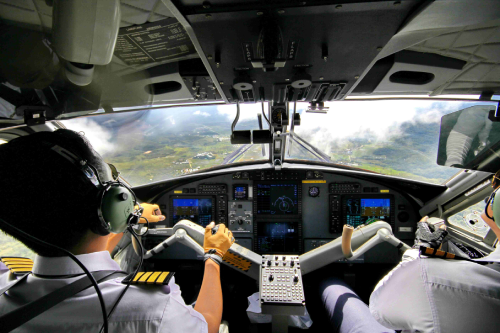
Pilot training is a structured professional program designed to prepare individuals to operate aircraft safely and efficiently. It focuses on both theoretical aviation knowledge and practical flying experience.
Training Process for Pilots
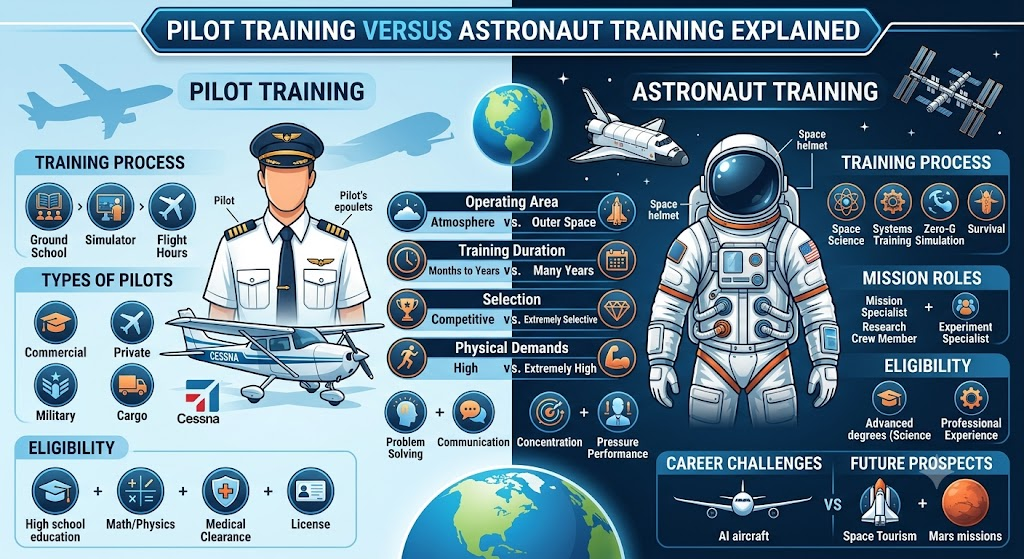
Pilot training generally includes:
- Ground school training (aviation theory, navigation, meteorology)
- Flight simulator practice
- Real aircraft flying hours
- Communication and air traffic control training
- Emergency handling and safety procedures
Types of Pilots
- Commercial Airline Pilots
- Private Pilots
- Military Pilots
- Cargo Pilots
Eligibility Requirements
- Strong knowledge of physics and mathematics
- Medical fitness certification
- Completion of aviation training school
- Valid pilot license issued by aviation authority
Pilot training prepares individuals to operate aircraft safely within Earth’s atmosphere.
What is Astronaut Training?
Astronaut training is a highly advanced and extremely competitive program designed to prepare individuals for space missions beyond Earth. It is conducted by major space agencies and private space organizations.
Training Process for Astronauts
Astronaut training includes:
- Advanced space science and engineering education
- Spacecraft systems training
- Zero-gravity simulation training
- Survival training in extreme environments
- Physical endurance and psychological conditioning
- Robotics and mission control operations
Eligibility Requirements
- Advanced degree in science, engineering, medicine, or aviation
- Strong physical and mental fitness
- Professional experience in technical or aviation fields
- Passing strict psychological and physical evaluations
Astronaut training prepares individuals for missions aboard space stations, satellites, and planetary exploration programs.
Pilot Training vs Astronaut Training (Key Differences)
| Feature | Pilot Training | Astronaut Training |
|---|---|---|
| Operating Area | Earth’s atmosphere | Outer space |
| Training Duration | Months to a few years | Many years (selection + training) |
| Entry Requirements | Aviation school + license | Advanced degree + elite selection |
| Physical Demands | High | Extremely high |
| Career Scope | Aviation industry | Space exploration & research |
| Competition Level | High | Extremely high |
The key difference is that pilots operate aircraft, while astronauts operate spacecraft and perform scientific missions in space.
Skills Required for Both Careers
Both careers require similar foundational skills, although at different levels of intensity:
- Strong analytical and problem-solving ability
- Excellent communication skills
- High level of concentration
- Physical fitness and stamina
- Ability to perform under pressure
- Technical understanding of complex systems
These skills are essential for safe and successful operations in both aviation and space environments.
Selection Process Comparison
Pilot Selection Process
- Complete aviation training program
- Pass medical fitness tests
- Clear written and practical flying examinations
- Obtain pilot license (commercial or private)
- Apply to airlines or aviation organizations
Astronaut Selection Process
- Apply through space agency recruitment programs
- Pass academic and technical screening
- Undergo intense physical and psychological tests
- Complete years of astronaut training
- Participate in mission-specific preparation
Astronaut selection is significantly more competitive and selective compared to pilot recruitment.
Career Opportunities
Careers in Aviation (Pilots)
- Airline Captain
- First Officer
- Flight Instructor
- Cargo Pilot
- Military Pilot
Careers in Space Industry (Astronauts)
- Space Mission Specialist
- Research Astronaut
- Space Station Crew Member
- Scientific Experiment Specialist
- Test Astronaut
Both careers offer global recognition, responsibility, and excellent professional growth.
Challenges in Both Careers
Challenges for Pilots
- High training and licensing cost
- Long working hours and irregular schedules
- Strict medical requirements
- Continuous skill upgrades
Challenges for Astronauts
- Extremely competitive selection process
- Years of intensive training
- Physical and mental stress in space
- High-risk missions and isolation
Astronaut training is significantly more demanding and rare compared to pilot training.
Which Career Should You Choose?
Choose Pilot Training if:
- You want to become a professional aircraft pilot
- You prefer structured aviation career growth
- You want faster entry into the aviation industry
Choose Astronaut Training if:
- You are passionate about space exploration
- You are ready for long-term academic and physical preparation
- You are interested in research and advanced science
Both careers are prestigious, but astronaut training requires a much longer and more competitive journey.
Future of Aviation and Space Careers
The future of both fields is highly promising due to rapid technological advancements:
- AI-powered aircraft systems
- Electric and autonomous aircraft
- Expansion of commercial space tourism
- Mars and lunar exploration missions
- Satellite-based global communication systems
- Private space companies and innovation growth
Both pilots and astronauts will play key roles in shaping future transportation and exploration.
FAQs
1. What is the main difference between pilot and astronaut training?
Pilot training focuses on flying aircraft in Earth’s atmosphere, while astronaut training prepares individuals for space missions beyond Earth.
2. Which is harder, pilot or astronaut training?
Astronaut training is significantly harder due to extreme selection criteria and long preparation time.
3. How long does pilot training take?
Pilot training usually takes a few months to a few years depending on the license level.
4. How long does astronaut training take?
Astronaut training can take several years after selection, along with prior academic and professional experience.
5. Do pilots become astronauts?
Yes, some astronauts have a background as pilots, especially military or test pilots.
6. What qualifications are needed to become a pilot?
You need aviation training, medical clearance, and a valid pilot license from aviation authorities.
7. What qualifications are needed to become an astronaut?
You typically need an advanced degree in science, engineering, medicine, or aviation plus professional experience.
8. Is astronaut training available in India?
Yes, organizations like ISRO are developing human spaceflight programs, including astronaut training initiatives.
9. Which career pays more, pilot or astronaut?
Both are high-paying careers, but astronaut roles are rarer and often government or mission-based.
10. Can civilians become astronauts?
Yes, civilians with strong technical and scientific backgrounds can apply through space agency programs.
Conclusion
Pilot Training Versus Astronaut Training represents two of the most prestigious and challenging career paths in aviation and space exploration. While pilot training focuses on mastering aircraft within Earth’s atmosphere, astronaut training goes far beyond, preparing individuals for space missions that require advanced science, engineering, and extreme physical endurance.
Both careers demand discipline, intelligence, and dedication. Pilots enjoy a structured and faster career path in aviation, while astronauts follow a highly competitive and long-term journey into space exploration.
Ultimately, the right choice depends on your passion—whether you dream of flying across the skies or exploring the unknown universe beyond Earth.