
Introduction
When a child may need heart surgery, families often face difficult decisions about where to seek treatment and which specialists to consult. Pediatric heart surgery is different from adult cardiac surgery because children have smaller and developing organs, age-specific medical needs, and heart conditions that may require highly specialized techniques.
The best hospitals for pediatric cardiac surgery are not defined by a single ranking, building, technology, or surgeon. A suitable hospital should combine experienced pediatric cardiac professionals, child-focused intensive care, advanced diagnostic services, transparent communication, and long-term follow-up support.
Some congenital heart defects can be monitored, treated with medicines, or managed through cardiac catheterization, while others require one or more operations. The treatment plan depends on the child’s diagnosis, age, symptoms, overall health, and heart structure.
This guide explains what pediatric cardiac hospitals provide, how families can compare different programs, what happens before and after surgery, and which questions should be discussed with the medical team.
Understanding Pediatric Heart Surgery
Pediatric heart surgery involves operations performed on infants, children, and adolescents with congenital or acquired heart conditions. Congenital heart defects are structural differences in the heart or connected blood vessels that are present at birth. They may affect the chambers, valves, arteries, veins, or the normal direction of blood flow.
Not every child with a heart defect needs surgery. Some small defects may close naturally or require monitoring. Certain conditions can be treated with a catheter-based procedure, in which a thin tube is guided through a blood vessel to the heart. Other conditions require open-heart surgery.
Children with critical or complex defects may need treatment soon after birth. Some require staged operations performed at different ages rather than one complete repair. The timing and type of treatment must be decided after careful evaluation by a pediatric cardiology and congenital cardiac surgery team.
Heart Conditions That May Require Specialized Surgery
Pediatric cardiac hospitals may treat many different conditions, including:
- Atrial septal defect
- Ventricular septal defect
- Atrioventricular septal defect
- Tetralogy of Fallot
- Transposition of the great arteries
- Coarctation of the aorta
- Pulmonary or aortic valve abnormalities
- Patent ductus arteriosus
- Hypoplastic left heart syndrome
- Single-ventricle heart conditions
- Abnormal pulmonary veins
- Congenital valve disease
- Cardiac tumours or acquired heart disease
The seriousness of a heart defect cannot be determined by its name alone. Two children with the same general diagnosis may have different anatomy, symptoms, associated health conditions, and treatment needs.
For example, some septal defects may be suitable for catheter closure, while others require surgery because of their size, location, or association with additional abnormalities.
Common Pediatric Cardiac Procedures
The following table provides a general overview. It does not determine which treatment is suitable for an individual child.
| Procedure or treatment | General purpose | Specialized hospital support |
|---|---|---|
| Septal defect repair | Closes an abnormal opening between heart chambers | Pediatric imaging, cardiac anaesthesia, surgery or catheterization |
| Tetralogy of Fallot repair | Improves blood flow to the lungs and closes the ventricular opening | Congenital surgeon, bypass team, pediatric cardiac ICU |
| Arterial switch operation | Corrects the position of the major arteries in certain newborns | Neonatal cardiac surgery, emergency support, advanced intensive care |
| Valve repair or replacement | Improves the function of a narrowed or leaking valve | Pediatric valve expertise, implant planning, long-term monitoring |
| Coarctation repair | Widens or reconstructs a narrowed section of the aorta | Pediatric vascular surgery skills and blood-pressure monitoring |
| Single-ventricle staged surgery | Redirects blood flow through a planned series of operations | Highly specialized surgical, ICU, nutrition, and home-monitoring teams |
| Cardiac catheter intervention | Closes openings or widens narrowed vessels without open surgery | Pediatric catheterization laboratory and emergency surgical backup |
What Makes a Pediatric Heart Surgery Hospital Specialized?
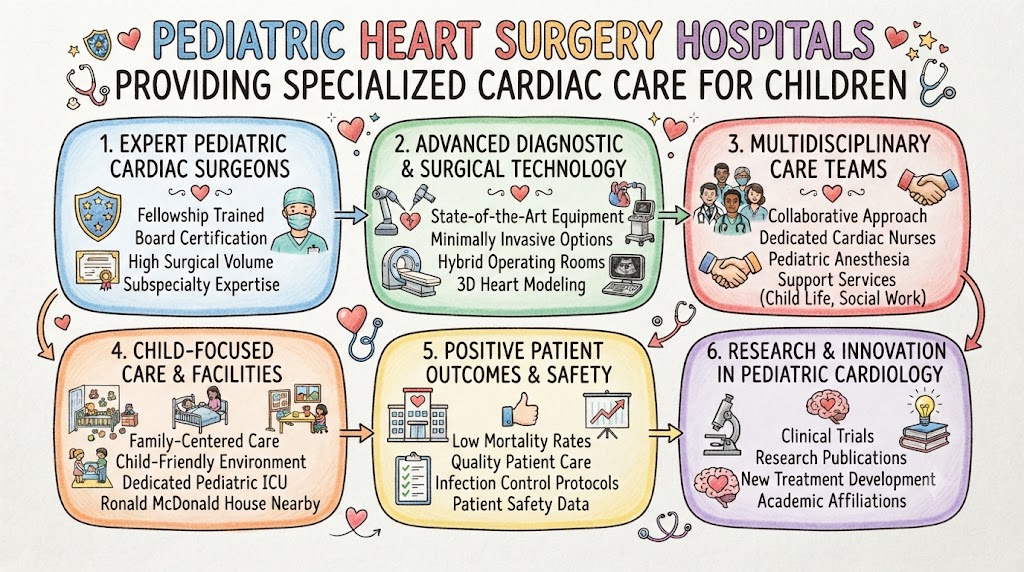
A pediatric heart surgery hospital should offer more than an operating room. Children with complex heart conditions may need coordinated services before, during, and after surgery.
Pediatric cardiac surgeons
The surgeon should be trained and experienced in congenital and pediatric cardiac surgery. Families should ask about experience with the child’s specific procedure, especially when the condition is rare, complex, or requires multiple stages.
A surgeon who regularly performs one type of operation may be better suited to that case than a doctor whose experience is mainly in adult heart surgery.
Pediatric cardiologists
Pediatric cardiologists diagnose heart conditions, interpret tests, recommend treatment options, and monitor the child after surgery. Interventional pediatric cardiologists may also perform catheter-based treatments.
The cardiologist and surgeon should review the child’s condition together rather than making decisions separately.
Pediatric cardiac anaesthesia
Anaesthesia for infants and young children requires age-specific knowledge. Pediatric cardiac anaesthesiologists manage breathing, circulation, medicines, blood loss, temperature, and pain during surgery.
Families may ask whether a dedicated pediatric cardiac anaesthesia team will be involved throughout the operation.
Pediatric cardiac intensive care
After major surgery, a child may require treatment in a pediatric cardiac intensive care unit. This unit should have professionals experienced in monitoring children following congenital heart operations.
Depending on the case, support may include ventilators, invasive monitoring, temporary pacing, blood-pressure medicines, dialysis, or mechanical heart and lung support.
Multidisciplinary care
Complex pediatric heart care may involve congenital surgeons, cardiologists, intensivists, anaesthesiologists, nurses, respiratory therapists, nutrition specialists, pharmacists, physiotherapists, developmental specialists, psychologists, and social workers.
Developmental and emotional support can be especially important for infants and children who experience prolonged hospitalization or repeated procedures.
Comparing Pediatric Heart Surgery Hospitals
No hospital should be selected solely because of advertising, online ratings, building size, or an unsupported claim that it is the “best.” Families need information that relates directly to the child’s diagnosis and expected procedure.
| Selection criterion | What families should verify |
|---|---|
| Procedure-specific experience | How often the team treats the child’s particular heart condition |
| Surgeon qualifications | Training in congenital and pediatric cardiac surgery |
| Surgical outcomes | Whether results are risk-adjusted and separated by procedure complexity |
| Cardiac ICU | Availability of pediatric cardiac intensivists and trained nurses |
| Diagnostic facilities | Pediatric echocardiography, CT, MRI, catheterization, and laboratory support |
| Emergency services | Availability of emergency surgery, blood bank, imaging, and critical-care support |
| Infection control | Written prevention practices and monitored infection rates |
| Multidisciplinary review | Whether cases are discussed jointly by cardiologists, surgeons, and other specialists |
| Family communication | Clear explanations, consent procedures, language support, and regular updates |
| Rehabilitation and follow-up | Nutrition, developmental care, physiotherapy, cardiology reviews, and transition planning |
| Cost transparency | Written estimate showing inclusions, exclusions, and possible additional expenses |
Hospitals participating in recognised clinical databases may publish outcome information. However, raw survival percentages should not be compared without considering the complexity of cases treated. Risk-adjusted reporting attempts to account for differences in procedures and patient factors.
Evaluating Surgical Volume and Outcomes
Families commonly ask how many operations a hospital performs. Surgical volume can provide useful context, but total numbers alone do not prove that a hospital is appropriate for every child.
Ask for the number of procedures performed for the specific condition, not only the hospital’s total number of heart operations. A centre may have a high overall volume but limited experience with a rare repair.
Outcome discussions should cover more than mortality. Relevant measures may include complications, infection, unplanned reoperations, duration of ventilation, length of ICU stay, readmission, neurological concerns, and the need for future procedures.
The medical team should explain how the child’s individual risk differs from an average result. Congenital surgery outcomes are influenced by the procedure, anatomy, age, weight, additional medical conditions, urgency, and previous operations.
Diagnostic and Preoperative Evaluation
Before surgery, the hospital may perform:
- Physical examination and medical-history review
- Echocardiography
- Electrocardiogram
- Blood and urine tests
- Chest imaging
- Cardiac CT or MRI
- Cardiac catheterization
- Oxygen-level assessment
- Dental or infection evaluation when appropriate
- Genetic, neurological, kidney, or respiratory assessment
The exact tests depend on the child’s diagnosis. Results help the team confirm the anatomy, plan the operation, estimate risks, and prepare for possible intensive-care needs.
Parents should provide a complete list of medicines, allergies, previous procedures, infections, feeding problems, and other medical conditions. Instructions regarding fasting and medicines should be followed exactly.
Hospital Stay and Early Recovery
After surgery, the child is usually transferred to a cardiac ICU. Parents may initially see breathing tubes, drains, monitoring lines, dressings, and several machines. The clinical team should explain the purpose of each device and provide regular progress updates.
Recovery milestones may include:
- Stable breathing and circulation
- Removal of the breathing tube
- Reduction of intravenous medicines
- Removal of drains and monitoring lines
- Restarting feeding
- Pain control
- Sitting, walking, or age-appropriate movement
- Transfer from intensive care to a regular room
- Parent education before discharge
Hospital stay varies widely. A straightforward repair may require a shorter stay, while a newborn, medically fragile child, or complex staged operation may require extended intensive care.
Recovery and Follow-Up at Home
Before discharge, parents should receive written instructions covering medicines, wound care, feeding, activity, bathing, sleep, pain control, warning signs, and emergency contacts.
A child may need time to return to normal eating, sleeping, activity, and school routines. Recovery should be guided by the surgical and cardiology teams rather than a general timeline.
Follow-up may include cardiology appointments, echocardiograms, blood tests, nutrition support, developmental assessment, physiotherapy, or cardiac rehabilitation. Regular cardiac review can remain important even when the surgical repair appears successful, because some congenital heart conditions require lifelong monitoring.
Possible Risks and Complications
All heart surgery carries risks, although the type and level of risk vary significantly. Possible complications may include:
- Bleeding
- Infection
- Abnormal heart rhythm
- Breathing difficulties
- Blood clots
- Fluid accumulation
- Kidney or neurological complications
- Feeding difficulties
- Reaction to medicines
- Need for another procedure
- Longer-than-expected ICU care
Parents should ask the surgeon to discuss risks that apply specifically to their child. General online percentages cannot replace an individualized assessment.
Urgent symptoms before or after treatment should be evaluated promptly. Families should not delay emergency care while waiting for an online opinion or a planned consultation elsewhere.
Understanding Pediatric Heart Surgery Costs
The final cost may be influenced by the child’s condition, procedure complexity, hospital category, city, surgeon and anaesthesia fees, diagnostic tests, operating-room charges, ICU duration, room type, medicines, blood products, implants, nutrition, rehabilitation, and follow-up care.
A written estimate should explain whether it includes:
- Surgeon, assistant, and anaesthesia fees
- Preoperative investigations
- Operating-room and equipment charges
- Cardiac ICU and room expenses
- Medicines and consumables
- Blood products
- Valves, conduits, patches, or other implants
- Specialist consultations
- Rehabilitation
- Post-discharge reviews
- Treatment of complications
- Extended hospitalization
A package estimate should not be treated as a guaranteed final price. Families should ask what circumstances could increase the cost and how additional charges will be approved.
Planning Treatment Away From Home
Families travelling to another city or country should consider more than the operation date. Planning may include medical-record transfer, visa arrangements, accommodation, translation support, blood-donor policies, local transport, payment methods, and travel after discharge.
Ask how long the child should remain near the hospital after leaving inpatient care. Air travel may not be appropriate immediately after surgery, and medical clearance should come from the treating team.
Families should also arrange communication between the surgical centre and the child’s local pediatrician or cardiologist. Copies of operative notes, discharge summaries, medication lists, imaging, and emergency instructions should be collected before returning home.
Questions to Ask Before Choosing a Hospital or Surgeon
- What is my child’s exact diagnosis?
- Does surgery need to be performed now, or can it be safely planned later?
- Are catheter-based or non-surgical options appropriate?
- How often does this team perform the proposed procedure?
- Which surgeon will perform the operation?
- What experience does the surgeon have with similar cases?
- Will the case be reviewed by a multidisciplinary team?
- What risks apply specifically to my child?
- What tests are required before surgery?
- Is a dedicated pediatric cardiac ICU available?
- What is included and excluded from the cost estimate?
- How long may hospitalization and local recovery take?
- What follow-up support is available after discharge?
- Is cardiac, nutritional, or developmental rehabilitation recommended?
- Who should be contacted if an urgent problem occurs?
- Would a second opinion be helpful for this case?
Frequently Asked Questions
1. How should parents identify the best hospital for pediatric cardiac surgery?
Compare procedure-specific experience, surgeon training, cardiac ICU support, risk-adjusted outcomes, multidisciplinary services, communication, costs, and long-term follow-up. The most suitable centre depends on the child’s diagnosis and medical needs.
2. Is pediatric heart surgery the same as adult heart surgery?
No. Children may have congenital structural conditions that are uncommon in adults. Their smaller size, growth, medication needs, anaesthesia, intensive care, and future development require pediatric expertise.
3. Do all congenital heart defects require surgery?
No. Some defects only require monitoring or medicines, while others can be treated through catheterization. Surgery is recommended only when the medical team believes it is suitable for the specific condition.
4. Should families choose the hospital with the highest surgical volume?
Volume is one consideration, but it should be reviewed alongside experience with the exact procedure, case complexity, outcomes, staffing, ICU resources, and follow-up services.
5. Are minimally invasive procedures available for children?
Certain defects may be treated through catheter-based or limited-incision procedures. These options are not suitable for every condition, and open surgery may provide the safest or most complete repair in some cases.
6. How long does a child remain in hospital?
The stay depends on the operation, age, recovery, complications, feeding, breathing support, and other medical conditions. The treating team can provide a case-specific estimate.
7. Can parents obtain a second opinion?
Yes. A second opinion can be helpful before major, complex, staged, or high-risk treatment. Families should share complete imaging, reports, and previous operative records with the reviewing specialist.
8. What should be included in a hospital cost estimate?
It should describe professional fees, tests, surgery, ICU care, room charges, medicines, consumables, implants, blood products, rehabilitation, follow-up, and possible additional costs.
9. Will surgery permanently cure a congenital heart condition?
Some repairs provide long-term correction, while other conditions require continued monitoring, medicines, catheter procedures, or future surgery. Parents should discuss the expected long-term plan with the cardiologist.
10. What support might a child need after surgery?
Depending on the case, support may include cardiology reviews, wound care, medication management, nutrition advice, physiotherapy, developmental assessment, school planning, emotional support, and activity guidance.
Key Takeaways
- Choose a hospital according to the child’s specific diagnosis and procedure.
- Confirm that the surgeon has dedicated congenital and pediatric cardiac experience.
- Compare risk-adjusted outcomes rather than relying on advertisements or simple rankings.
- Ensure that pediatric cardiac intensive care and emergency support are available.
- Request a written cost estimate with clear inclusions and exclusions.
- Consider a second opinion for complex, staged, or high-risk surgery.
- Plan rehabilitation, follow-up, travel, and home support before treatment begins.
Conclusion
Pediatric heart surgery hospitals provide highly specialized care for children whose heart conditions may require surgical or catheter-based treatment. Families should carefully compare surgeon experience, procedure-specific results, cardiac ICU resources, multidisciplinary services, communication, cost transparency, and long-term follow-up. No hospital is universally right for every child, and treatment suitability depends on detailed medical evaluation. Consultation with qualified pediatric cardiologists and congenital cardiac surgeons can help parents understand the available options and make an informed decision based on their child’s individual needs.