Introduction
The concept of an Astro Pilot career represents a modern blend of aviation, aerospace engineering, space science, and advanced flight technologies. It is not limited to traditional flying roles but extends into spacecraft operations, drone systems, satellite navigation, and future space travel technologies.
For students from a science background, especially those studying Physics and Mathematics, this career path is highly relevant. Science education builds the logical thinking, analytical ability, and technical foundation required in aviation and aerospace industries.
With rapid growth in commercial aviation, drone technology, and private space exploration, new career opportunities are emerging for young science students. This makes the question very important: Can science students really build Astro Pilot careers? The answer is yes, and this blog explains how.
What is an Astro Pilot Career?
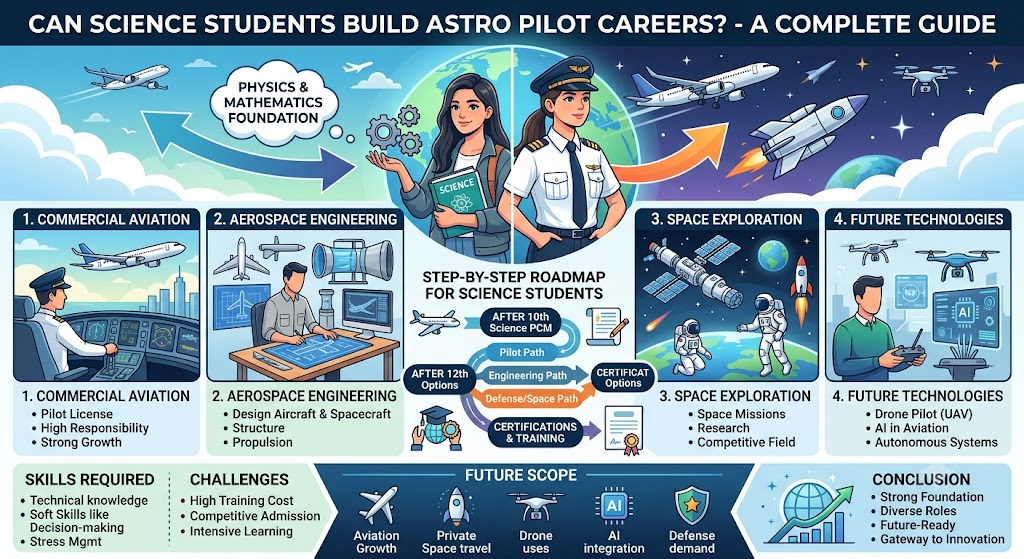
An Astro Pilot career is a broad term that includes multiple aviation and space-related professions. It is not a single job but a category of advanced aerospace roles.
It includes:
- Commercial aviation (flying passenger and cargo aircraft)
- Aerospace engineering and aircraft design
- Space science and astronaut programs
- Drone and UAV operations
- Aviation technology and AI systems
In simple terms, an Astro Pilot is a professional trained to operate, manage, or design advanced flying systems, including aircraft and spacecraft technologies.
Why Science Students Are Ideal for Astro Pilot Careers
Science students already have a strong academic foundation that matches aviation requirements.
Academic Strengths
- Physics helps in understanding motion, force, and aerodynamics
- Mathematics supports navigation, calculations, and flight systems
- Logical reasoning improves decision-making skills
Personal Traits Required
- Discipline and consistency
- Focus under pressure
- Interest in aviation or space science
- Problem-solving mindset
These qualities make science students strong candidates for aviation and aerospace careers.
Career Paths in Astro Pilot Domain
Science students can choose multiple career directions based on their interests.
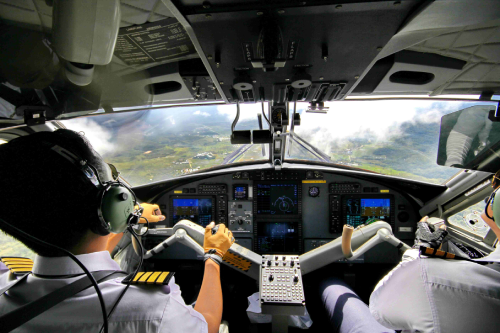
1. Commercial Pilot
A commercial pilot operates passenger and cargo aircraft.
- Requires formal flight training and licensing
- Involves high responsibility and precision
- Offers strong career growth in aviation industry
2. Aerospace Engineer
Aerospace engineers design and develop aircraft and spacecraft systems.
- Works on aircraft structure, propulsion, and systems
- Involved in defense, aviation, and space industries
3. Aircraft Maintenance Engineer
Responsible for ensuring aircraft safety and technical maintenance.
- Performs inspections and repairs
- Ensures aircraft are safe for operation
4. Astronaut or Space Scientist
Works in space missions, research, and exploration programs.
- Highly competitive field
- Requires advanced education and training
5. Drone Pilot or UAV Specialist
Operates unmanned aerial systems used in various industries.
- Agriculture, surveillance, logistics, and mapping
- One of the fastest-growing aviation fields
6. Aviation Technology and AI Specialist
Works with modern aviation systems powered by AI and automation.
- Flight data analysis
- Predictive maintenance systems
- Smart navigation technologies
Step-by-Step Roadmap for Science Students
After 10th Grade
- Choose Science stream with Physics and Mathematics
- Build strong fundamentals in science subjects
- Develop interest in aviation and space fields
After 12th Grade Options
Pilot Path
- Join flying school
- Complete required medical tests
- Obtain Commercial Pilot License
Engineering Path
- Pursue Aerospace or Mechanical Engineering
- Specialize in aviation-related technologies
Defense or Space Path
- Appear for defense aviation exams
- Pursue higher studies in aerospace or space science
Certifications and Training
- Pilot licensing programs
- Drone operation certifications
- Aerospace internships
- Simulation-based training
Skills Required for Success
Technical Skills
- Aerodynamics and physics understanding
- Flight navigation systems
- Aviation safety regulations
- Mathematics and data interpretation
Soft Skills
- Decision-making ability
- Communication skills
- Leadership qualities
- Stress management
Physical Requirements
- Good health and fitness
- Vision standards as per aviation rules
- Mental alertness and stability
Challenges in Astro Pilot Careers
High Training Cost
Pilot training and aerospace education require significant financial investment.
Competitive Field
Admission into aviation and space programs is highly competitive.
Medical Standards
Strict medical fitness requirements must be met.
Intensive Learning
Requires continuous training and technical knowledge upgrades.
Industry Pressure
Aviation and aerospace roles demand high responsibility and precision.
Future Scope of Astro Pilot Careers
Aviation Industry Growth
Increasing global air travel demand is creating more job opportunities.
Space Exploration Expansion
Private companies are developing commercial space travel programs.
Drone Technology Growth
Drones are widely used in delivery, agriculture, and surveillance.
AI Integration in Aviation
Artificial intelligence is transforming flight systems and safety management.
Defense and Security Demand
Advanced aircraft and surveillance systems are increasingly needed worldwide.
Why This Career is Future-Ready
Astro Pilot careers combine traditional aviation with future technologies. This includes automation, robotics, AI systems, and space exploration.
Science students who enter this field will not only work in current aviation systems but also in future technologies that are still evolving.
FAQs
1. Can science students become Astro Pilots?
Yes, science students with Physics and Mathematics can easily enter aviation and aerospace-related careers with proper training.
2. Is PCM required for Astro Pilot careers?
PCM is highly recommended as it builds the foundation needed for aviation, navigation, and aerospace engineering.
3. What is the salary of an Astro Pilot career?
Salary varies widely depending on the role, from entry-level drone pilots to highly paid commercial pilots and aerospace engineers.
4. Is becoming a pilot expensive?
Yes, pilot training can be expensive, but scholarships and financing options may be available.
5. Can I become an astronaut after science?
Yes, but it requires advanced education, physical training, and selection through highly competitive programs.
6. What are the main job options in this field?
Options include commercial pilot, aerospace engineer, drone operator, and space scientist.
7. Do I need perfect eyesight to become a pilot?
Good eyesight is required, but minor corrections may be allowed depending on regulations.
8. Is drone piloting a good career option?
Yes, drone technology is growing rapidly and offers strong career opportunities.
9. What skills are most important for Astro Pilot careers?
Physics knowledge, decision-making ability, discipline, and technical understanding are essential.
10. Is this career future-proof?
Yes, because aviation, AI, and space industries are continuously expanding.
Conclusion
Science students have a strong foundation to build successful Astro Pilot careers. With Physics, Mathematics, and analytical thinking skills, they are naturally suited for aviation and aerospace fields.
The career options are diverse, including pilot roles, aerospace engineering, drone operations, and space science. While the journey requires dedication, training, and financial investment, the long-term opportunities are highly rewarding.
As aviation and space industries continue to grow, Astro Pilot careers will become even more important in the future. For science students, this is not just a career choice but a gateway to becoming part of the next generation of aviation and space innovation.