Introduction
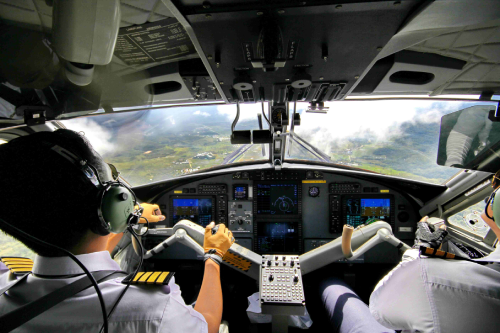
Space missions and aircraft flights operate in very different environments, but they share many important principles. Astronauts travel beyond Earth’s atmosphere, while pilots operate inside it. However, both depend on accurate planning, reliable technology, disciplined communication, strong teamwork, and careful decision-making.
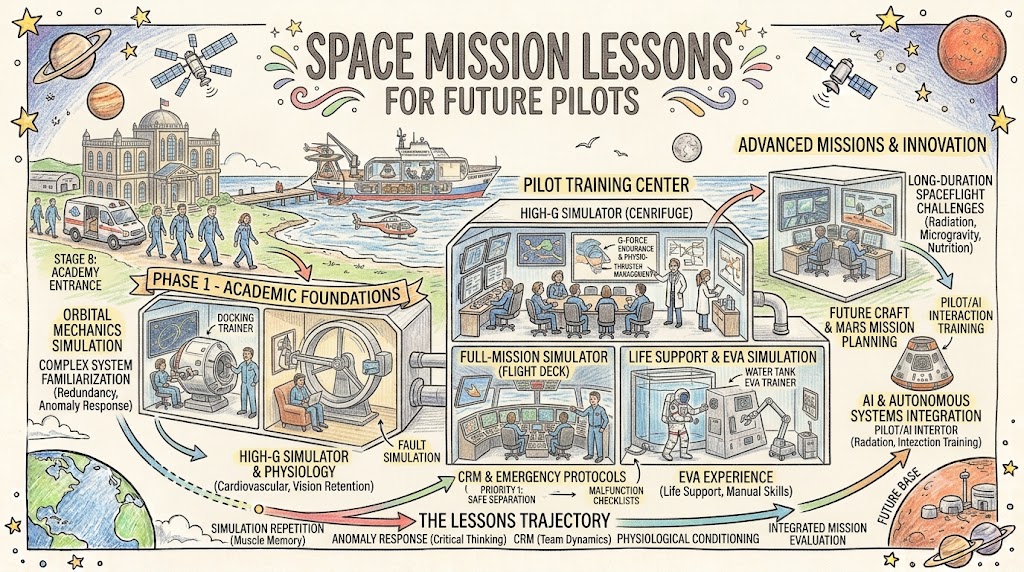
Every space mission provides valuable lessons about risk management, human performance, navigation, emergencies, and system reliability. These lessons are useful not only for astronauts and spacecraft engineers but also for student pilots, professional aviators, flight instructors, and future aviation leaders.
Future pilots can learn how to prepare for unexpected events, communicate under pressure, manage workload, trust automation correctly, and remain focused during long or difficult operations.
This guide explains the most important space mission lessons that can help future pilots become safer, more capable, and more responsible aviation professionals.
Why Future Pilots Should Study Space Missions
Aviation and spaceflight are both safety-critical industries.
In these environments, small errors can quickly develop into serious problems. Pilots and astronauts must therefore follow procedures, monitor systems, communicate clearly, and make decisions with limited time.
Space missions are especially useful for aviation students because they demonstrate how teams prepare for high-risk operations.
Future pilots can study space missions to improve their understanding of:
- Mission planning
- Situational awareness
- Risk management
- Human factors
- Crew coordination
- Automation
- Emergency procedures
- Technical discipline
- Fatigue control
- Post-flight learning
The goal is not to copy spaceflight procedures exactly. The goal is to understand the safety principles behind them.
Lesson One: Detailed Planning Prevents Major Problems
Space missions are planned in great detail.
Teams study the launch route, spacecraft systems, weather, crew health, communication coverage, emergency options, landing zones, and recovery procedures.
Pilots also require careful planning before every flight.
A professional pre-flight plan should include:
- Weather conditions
- Fuel requirements
- Aircraft performance
- Route selection
- Alternate airports
- Airspace restrictions
- Passenger and cargo weight
- Communication frequencies
- Emergency options
- Personal fitness
Good planning does not guarantee that every flight will be perfect. However, it gives pilots more options when conditions change.
Lesson Two: Always Prepare Backup Plans
Space missions include backup systems and alternative procedures.
A spacecraft may carry additional communication equipment, emergency oxygen, backup computers, extra navigation systems, or alternative landing procedures.
Pilots should follow the same principle.
A safe flight should never depend on only one plan.
Examples of aviation backup planning include:
- Selecting an alternate airport
- Carrying reserve fuel
- Identifying escape routes
- Knowing emergency frequencies
- Preparing for equipment failure
- Monitoring changing weather
- Reviewing rejected take-off procedures
- Understanding diversion options
A backup plan reduces pressure when the original plan becomes unsafe.
Lesson Three: Checklists Support Human Memory
Astronauts use checklists for launch, docking, scientific work, emergencies, reentry, and landing.
They do not depend only on memory, even after extensive training.
Pilots also use checklists because people can forget important steps, especially during stress, distraction, or fatigue.
Checklists help confirm that critical tasks are completed in the correct sequence.
Common aviation checklists include:
- Pre-flight inspection
- Before-start checklist
- Before-take-off checklist
- Cruise checklist
- Descent checklist
- Landing checklist
- Shutdown checklist
- Emergency checklist
A checklist is not a replacement for knowledge. Pilots must understand why each item matters.
Lesson Four: Clear Communication Saves Time
Space crews communicate with mission control using clear and standard language.
Important information is repeated, confirmed, and recorded.
Pilots must also communicate accurately with:
- Air traffic controllers
- Co-pilots
- Cabin crew
- Ground teams
- Maintenance engineers
- Passengers
- Flight dispatchers
Good communication should be brief, clear, and complete.
During high-workload situations, confusing or incomplete information can increase risk.
Future pilots should practise:
- Standard aviation phraseology
- Readbacks
- Confirmation of instructions
- Speaking up when uncertain
- Giving clear emergency information
- Avoiding unnecessary conversation during critical phases
Lesson Five: Teamwork Is More Important Than Individual Pride
Space missions succeed because many people work together.
Astronauts rely on engineers, doctors, flight controllers, scientists, recovery personnel, and communication specialists.
Aviation also depends on teamwork.
Even a highly experienced captain cannot safely operate without support from other professionals.
Crew Resource Management teaches pilots to use all available resources, including:
- Other crew members
- Aircraft systems
- Checklists
- Air traffic control
- Weather services
- Maintenance teams
- Operational manuals
Future pilots should learn to listen, share information, and accept useful advice.
Lesson Six: Speak Up When Something Seems Wrong
Space agencies encourage crew members to report unusual conditions.
A small vibration, unusual smell, warning message, or communication problem may provide the first sign of a larger issue.
Pilots must also develop the confidence to speak up.
A junior co-pilot should question a decision if it appears unsafe.
An instructor should encourage students to report confusion.
A pilot should never ignore a warning because of fear, embarrassment, or authority pressure.
Professional communication may include statements such as:
- “I am not comfortable with this approach.”
- “The weather is below our planned limit.”
- “Please confirm the clearance.”
- “We should consider going around.”
- “This system indication is abnormal.”
Safety must always be more important than ego.
Lesson Seven: Situational Awareness Must Be Continuous
Astronauts constantly monitor their position, speed, systems, mission timeline, and surrounding environment.
Pilots must maintain similar awareness throughout a flight.
Situational awareness means understanding:
- Where the aircraft is
- Where it is going
- What the aircraft is doing
- What the weather is doing
- What other traffic is nearby
- What may happen next
- Which options remain available
Loss of situational awareness can lead to navigation errors, unstable approaches, airspace violations, or controlled flight into terrain.
Pilots can improve awareness by:
- Scanning instruments regularly
- Verifying navigation information
- Monitoring weather changes
- Reviewing the next flight phase
- Cross-checking with another crew member
- Avoiding unnecessary distractions
Lesson Eight: Manage Workload Before It Becomes Overwhelming
Astronauts follow carefully planned schedules because too much workload can increase errors.
Pilots also face periods of high workload, particularly during:
- Take-off
- Bad-weather operations
- Abnormal situations
- Busy airspace
- Approach
- Landing
- Diversions
Good workload management includes completing tasks early whenever possible.
For example, pilots can prepare approach information before descent rather than waiting until the aircraft reaches a busy terminal area.
They can also use task sharing.
One pilot may fly the aircraft while the other handles communication, checklists, navigation changes, and system monitoring.
Lesson Nine: Automation Must Be Monitored
Modern spacecraft use advanced automation for navigation, engine control, docking, life support, and landing.
Modern aircraft also use autopilots, flight management systems, automatic throttles, navigation computers, and warning systems.
Automation reduces workload, but it creates new risks.
Pilots may become confused about:
- Which mode is active
- What the aircraft will do next
- Whether the system has received the correct input
- When manual control is required
Future pilots should follow three basic principles:
- Understand the system.
- Monitor the system.
- Be ready to take control.
Automation should support pilot judgment, not replace it.
Lesson Ten: Train for Emergencies Before They Happen
Astronauts practise emergencies repeatedly before a mission.
They train for:
- Fire
- Pressure loss
- Communication failure
- Navigation failure
- Medical emergencies
- Equipment malfunction
- Emergency landing
Pilots also need repeated emergency training.
Training creates familiarity and reduces panic.
Important aviation emergency scenarios include:
- Engine failure
- Electrical failure
- Radio failure
- Cabin depressurisation
- Fire
- Severe weather
- Unstable approach
- Bird strike
- Fuel shortage
- Medical emergency
The purpose of emergency practice is not to predict every situation. It is to build disciplined thinking under pressure.
Lesson Eleven: Follow Procedures but Continue Thinking
Space crews rely on procedures, but unexpected situations may require careful judgment.
Pilots must also balance procedural discipline with professional decision-making.
A checklist may provide the correct response for a known failure. However, pilots still need to understand the larger situation.
They should ask:
- Is the aircraft under control?
- Is the current flight path safe?
- Is immediate landing necessary?
- Is the procedure producing the expected result?
- Are there additional threats?
Pilots must never follow a procedure mechanically while ignoring what is happening around them.
Lesson Twelve: Control the Aircraft First
During any aircraft emergency, the first priority is maintaining control.
This principle is often expressed as:
- Aviate
- Navigate
- Communicate
Space crews follow a similar order by stabilising the spacecraft before handling secondary tasks.
A pilot experiencing an abnormal event should avoid becoming focused only on warning lights, checklists, or radio calls.
The aircraft must remain safely controlled.
After control is established, the pilot can manage navigation, communicate the situation, and complete procedures.
Lesson Thirteen: Respect Weather and Environmental Limits
Space missions can be delayed because of wind, storms, clouds, lightning, waves, or landing-zone conditions.
This demonstrates an important lesson: operational pressure should never override environmental limits.
Pilots may feel pressure to complete a flight because of passengers, schedules, cost, or personal expectations.
However, weather does not respond to pressure.
Future pilots must learn to:
- Respect visibility limits
- Avoid thunderstorms
- Monitor wind changes
- Understand icing risk
- Review turbulence reports
- Consider runway conditions
- Divert before fuel becomes critical
- Cancel when conditions are unsafe
Choosing not to fly can be a sign of excellent airmanship.
Lesson Fourteen: Human Health Affects Performance
Space agencies carefully monitor astronaut health because physical and mental conditions directly affect mission safety.
Pilots should apply the same principle.
A pilot’s performance may be reduced by:
- Illness
- Medication
- Stress
- Alcohol
- Fatigue
- Dehydration
- Emotional pressure
- Poor nutrition
- Lack of sleep
Future pilots should complete an honest self-assessment before flight.
A pilot who is medically legal may still be personally unfit for a particular flight.
Professionalism includes recognising personal limitations.
Lesson Fifteen: Fatigue Is a Serious Safety Risk
Astronauts follow controlled sleep schedules because fatigue affects memory, reaction time, attention, and judgment.
Pilots also need to manage fatigue carefully.
Fatigue can cause:
- Slow responses
- Poor communication
- Missed checklist items
- Reduced situational awareness
- Weak decision-making
- Increased emotional reactions
Pilots should not treat tiredness as a minor inconvenience.
Fatigue management includes:
- Adequate sleep
- Proper scheduling
- Hydration
- Regular meals
- Rest during long operations
- Honest reporting
- Avoiding unnecessary late-night flights during training
Lesson Sixteen: Small Problems Should Be Reported Early
Space crews report minor technical issues before they grow into major failures.
Pilots should also avoid delaying the reporting of aircraft defects.
Examples may include:
- Unusual engine sound
- Weak brake response
- Intermittent warning light
- Navigation display problem
- Cabin smell
- Abnormal vibration
- Difficult control movement
Ignoring small problems can allow risk to increase.
Early reporting gives engineers and maintenance teams time to investigate.
Lesson Seventeen: Never Ignore Warning Signs
Warning systems are designed to attract attention, but they are useful only when crews respond correctly.
Pilots should never silence, cancel, or dismiss a warning without understanding its cause.
A warning may relate to:
- Terrain
- Traffic
- Stall
- Fire
- Low fuel
- Cabin pressure
- Configuration
- System failure
Pilots must evaluate the warning, maintain aircraft control, and complete the appropriate procedure.
Repeated false warnings should be investigated rather than casually ignored.
Lesson Eighteen: Stable Approaches Improve Landing Safety
Spacecraft must follow a controlled path during reentry and landing.
Aircraft also require stable approaches.
A stable approach generally includes:
- Correct speed
- Correct descent rate
- Proper aircraft configuration
- Alignment with the runway
- Completed checklists
- Manageable workload
If the approach becomes unstable, the safest action may be a go-around.
Future pilots should understand that a go-around is a normal safety procedure, not a failure.
Lesson Nineteen: Landing Is Not the End of the Operation
After a spacecraft lands, recovery, medical evaluation, vehicle inspection, and mission review continue.
Similarly, a flight does not end when the aircraft touches the runway.
Pilots must still manage:
- Runway control
- Braking
- Taxi instructions
- After-landing checks
- Passenger safety
- Aircraft shutdown
- Technical reporting
- Flight documentation
Many incidents occur after landing because crews relax too early.
Concentration should continue until the aircraft is safely parked and secured.
Lesson Twenty: Every Flight Should Produce Learning
After a space mission, astronauts participate in detailed debriefings.
They explain what worked, what failed, what felt difficult, and what should change.
Pilots should also develop a post-flight review habit.
Useful questions include:
- What went well?
- What created unnecessary workload?
- Was the planning accurate?
- Were any procedures unclear?
- Did I miss any radio calls?
- Was the approach stable?
- What should I practise before the next flight?
Honest self-review helps pilots improve continuously.
Space Mission Lesson Comparison for Student Pilots
| Space Mission Practice | Aviation Application | Pilot Benefit |
|---|---|---|
| Detailed mission planning | Pre-flight planning | Better preparation |
| Backup systems | Alternate airports and reserve fuel | More options |
| Crew checklists | Aircraft operating checklists | Fewer missed steps |
| Mission control communication | Air traffic control communication | Clearer coordination |
| Crew debriefing | Post-flight review | Continuous improvement |
| Emergency simulation | Simulator and flight training | Better response |
| System monitoring | Instrument scanning | Earlier problem detection |
| Medical monitoring | Pilot fitness assessment | Safer performance |
| Automated navigation | Autopilot and flight management systems | Lower workload |
| Recovery planning | Diversion and emergency planning | Faster decision-making |
Common Mistakes Future Pilots Should Avoid
Rushing Pre-Flight Preparation
Skipping planning or inspection can hide important risks.
Continuing Into Unsafe Weather
Pressure to reach the destination can lead to poor decisions.
Depending Too Much on Automation
Pilots must understand what the aircraft is doing.
Avoiding a Go-Around
Trying to save an unstable landing can create serious danger.
Failing to Speak Up
Silence can allow an unsafe situation to continue.
Ignoring Fatigue
Tired pilots may overestimate their ability.
Hiding Mistakes
Mistakes should be reported and studied so that they are not repeated.
Best Practices for Future Pilots
Future pilots can apply space mission lessons by developing disciplined habits.
Recommended practices include:
- Prepare every flight carefully.
- Review alternate plans.
- Use checklists correctly.
- Communicate clearly.
- Monitor aircraft systems continuously.
- Practise emergency procedures.
- Respect weather limits.
- Maintain personal fitness.
- Ask for help when needed.
- Review every flight honestly.
- Report technical problems.
- Remain willing to go around or divert.
- Keep learning from instructors and other pilots.
How Spaceflight Can Shape the Future of Aviation
The connection between aviation and spaceflight will become stronger in the future.
New pilots may eventually work with:
- High-altitude aircraft
- Supersonic passenger aircraft
- Reusable spaceplanes
- Commercial spacecraft
- Autonomous flight systems
- Advanced air mobility vehicles
- Suborbital tourism vehicles
These technologies will require strong knowledge of both aviation and spaceflight safety principles.
Future aerospace pilots may need to understand:
- High-speed flight
- Pressurised systems
- Reentry procedures
- Advanced navigation
- Automated flight control
- Crew survival
- Human performance in unusual environments
Learning from space missions can therefore prepare pilots for emerging aerospace careers.
Key Takeaways
- Space missions teach valuable lessons about planning, safety, teamwork, and decision-making.
- Pilots should always prepare backup options.
- Checklists support memory and reduce missed steps.
- Clear communication is essential during normal and emergency operations.
- Teamwork is more important than individual pride.
- Pilots should speak up when they identify a risk.
- Automation must always be monitored.
- Emergency training develops calm and disciplined responses.
- Weather and personal limits must be respected.
- Post-flight debriefing helps pilots improve continuously.
Frequently Asked Questions
Can aviation students learn from space missions?
Yes. Space missions provide useful lessons about planning, teamwork, automation, emergency management, and human performance.
What is the most important lesson for future pilots?
The most important lesson is to maintain safety through preparation, situational awareness, disciplined procedures, and sound judgment.
Why do astronauts and pilots use checklists?
Checklists reduce dependence on memory and help crews complete critical tasks in the correct order.
How does astronaut teamwork relate to aviation?
Both astronauts and pilots depend on effective communication, task sharing, leadership, and mutual support.
What can pilots learn from mission control?
Pilots can learn the importance of accurate communication, monitoring, expert support, and coordinated decision-making.
Why is backup planning important for pilots?
Weather, equipment, or airport conditions may change unexpectedly. Backup plans provide safer alternatives.
Should pilots always trust automation?
No. Pilots should use automation but continuously monitor it and remain prepared to take manual control.
What is the aviation equivalent of a space mission debriefing?
A post-flight review allows pilots to evaluate their planning, decisions, communication, and technical performance.
How do space missions teach emergency preparedness?
Astronauts repeatedly practise emergencies before flight, demonstrating the value of realistic training and procedural discipline.
Can these lessons help commercial pilots?
Yes. The same principles support safe operations in student flying, commercial aviation, military flying, and future aerospace transportation.
Conclusion
Space mission lessons can help future pilots become more disciplined, aware, and safety-focused aviation professionals. Detailed planning, backup options, teamwork, clear communication, checklist use, automation monitoring, and emergency preparation are essential in both aviation and spaceflight. By studying how astronauts and mission teams manage complex risks, future pilots can develop the judgment and professional habits needed for safer flights and emerging aerospace careers.