Introduction
Becoming an astronaut is a dream for many students who are fascinated by space, science, exploration, and technology. Astronauts represent the combination of curiosity, discipline, advanced knowledge, and the ability to work in some of the most challenging environments. However, becoming an astronaut requires much more than an interest in space. It involves years of education, technical skill development, physical preparation, and professional experience.
For students who want to explore an astronaut career, early preparation can create a strong foundation. Building knowledge in science, technology, engineering, mathematics, and problem-solving helps students understand the requirements of human space exploration.
Astronaut training is designed to prepare individuals for the physical, technical, and psychological challenges of working beyond Earth. From spacecraft operations and scientific research to emergency response and teamwork, astronauts must develop a wide range of abilities before participating in space missions.
This guide explains the complete astronaut training journey for students, including education pathways, required skills, training activities, preparation strategies, and career opportunities related to space exploration.
Real-World Examples of Astronaut Career Paths
Astronauts come from different professional backgrounds. Many have experience in engineering, science, aviation, medicine, and research.
- Engineers may become astronauts because they understand spacecraft systems, robotics, and advanced technology.
- Scientists contribute knowledge in areas such as physics, biology, chemistry, and space research.
- Medical professionals can support human health studies and space medicine.
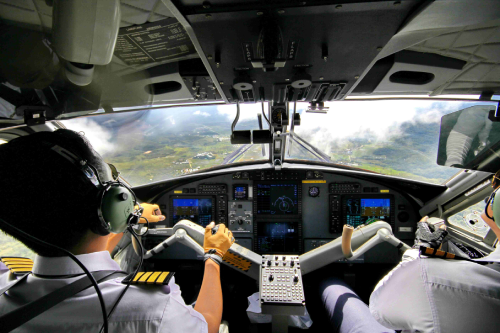
- Military pilots often develop flight experience, leadership skills, and decision-making abilities useful for space missions.
The astronaut profession is not limited to one educational path. Students from different scientific and technical backgrounds can work toward a future career in space exploration.
What Does an Astronaut Do?
An astronaut is a trained professional who works on space missions and performs scientific, technical, and operational tasks. Their responsibilities depend on the mission objectives and spacecraft requirements.
Some important astronaut responsibilities include:
- Conducting scientific experiments in space environments.
- Operating spacecraft systems and equipment.
- Maintaining spacecraft technology.
- Performing spacewalk activities.
- Collecting research data.
- Supporting mission operations with other astronauts and ground teams.
- Managing emergency situations.
Astronauts must be prepared to work independently and as part of a highly coordinated team. Their work requires accuracy, patience, and the ability to make decisions under pressure.
Educational Requirements to Become an Astronaut
Education is one of the most important parts of an astronaut career journey. Students should focus on developing strong knowledge in science and technology from an early stage.
School-Level Preparation
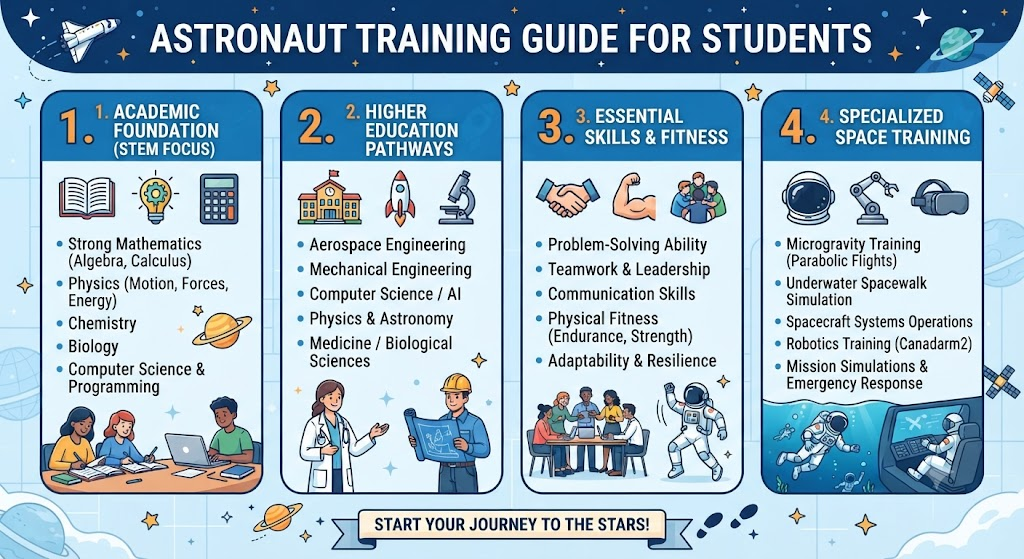
Students interested in becoming astronauts should build a strong foundation in STEM subjects.
Important subjects include:
Mathematics
Mathematics helps students understand:
- Space calculations.
- Navigation systems.
- Engineering concepts.
- Scientific measurements.
- Data analysis.
Strong mathematical skills are valuable for understanding spacecraft operations and scientific research.
Physics
Physics is one of the most important subjects for future astronauts. It helps students learn about:
- Motion and forces.
- Gravity.
- Energy.
- Space environment.
- Flight principles.
Chemistry
Chemistry helps students understand:
- Materials used in spacecraft.
- Life-support systems.
- Fuel technology.
- Scientific experiments.
Biology
Biology is important because astronauts study how living organisms respond to space environments.
Computer Science
Technology plays a major role in modern space missions. Programming and computer skills help students understand:
- Robotics.
- Automation.
- Data processing.
- Space technology systems.
Higher Education Pathways for Future Astronauts
After school education, students can choose different academic pathways based on their interests.
Aerospace Engineering
Aerospace engineering focuses on:
- Aircraft design.
- Spacecraft systems.
- Rocket technology.
- Flight mechanics.
Students interested in spacecraft development can consider this field.
Mechanical Engineering
Mechanical engineers contribute to:
- Spacecraft structures.
- Mechanical systems.
- Robotics.
- Equipment development.
Computer Science and Artificial Intelligence
Technology specialists help develop:
- Space software.
- Autonomous systems.
- Mission control technology.
- Data analysis platforms.
Physics and Astronomy
Students interested in understanding the universe can study:
- Space science.
- Astrophysics.
- Planetary research.
- Scientific exploration.
Medicine and Biological Sciences
Medical professionals contribute to:
- Human health research.
- Space biology.
- Astronaut medical support.
Essential Skills Students Need for Astronaut Training
Academic knowledge alone is not enough to become an astronaut. Students need to develop several personal and professional skills.
Scientific Thinking
Astronauts must analyze situations, understand experiments, and solve unexpected problems.
Problem-Solving Ability
Space missions involve complex challenges. Astronauts need logical thinking and decision-making skills.
Communication Skills
Astronauts communicate with:
- Other crew members.
- Mission control teams.
- Scientists and engineers.
Clear communication is essential for mission success.
Teamwork and Leadership
Astronauts work in small teams where cooperation and trust are extremely important.
Physical Fitness
Space environments affect the human body. Strong physical fitness helps astronauts handle demanding training and mission conditions.
Adaptability
Space missions require professionals who can adjust to new situations and manage uncertainty.
Astronaut Training Process Explained
Astronaut training prepares candidates for the challenges of living and working in space.
1. Academic and Technical Preparation
Before advanced training begins, astronauts develop expertise in their professional fields.
This preparation includes:
- Advanced scientific knowledge.
- Engineering concepts.
- Research experience.
- Technical problem-solving.
Astronaut candidates must understand spacecraft technology, scientific equipment, and mission procedures.
2. Physical Fitness Training
Astronauts experience unique physical conditions during space missions. Fitness training helps prepare their bodies for these challenges.
Physical preparation includes:
- Strength exercises.
- Endurance training.
- Cardiovascular fitness.
- Swimming practice.
- Coordination exercises.
Good physical condition improves performance during training and missions.
3. Space Environment Training
Astronauts must learn how the human body reacts in space-like conditions.
Training activities may include:
Microgravity Training
Students and astronaut candidates practice movement and task performance in reduced-gravity environments.
Underwater Training
Large underwater facilities are used to simulate spacewalk conditions because underwater movement can resemble working in space.
Survival Training
Astronauts learn emergency survival skills in different environments.
4. Spacecraft and Mission Training
Astronauts spend significant time learning spacecraft systems and mission operations.
Training includes:
- Spacecraft controls.
- Communication procedures.
- Emergency response.
- Scientific experiments.
- Mission simulations.
Simulation-based training helps astronauts prepare for real mission situations.
Important Astronaut Training Activities
Astronaut preparation includes many specialized activities.
Zero-Gravity Training
Astronauts practice working in environments where gravity effects are reduced.
This helps them understand:
- Movement techniques.
- Equipment handling.
- Body control.
Robotics Training
Robotics knowledge helps astronauts operate robotic systems used in space missions.
Spacecraft Simulation
Simulators recreate spacecraft environments and allow astronauts to practice:
- Launch procedures.
- Landing operations.
- Emergency situations.
Spacewalk Preparation
Astronauts train for activities outside spacecraft using specialized equipment and simulated environments.
Team Mission Exercises
Crew members practice communication, teamwork, and problem-solving through mission scenarios.
How Students Can Start Preparing for an Astronaut Career
Students can begin preparing for an astronaut pathway by developing knowledge, skills, and experience.
Focus on STEM Education
Strong science and mathematics knowledge creates the foundation for future space careers.
Participate in Science Activities
Students can join:
- Science competitions.
- Astronomy clubs.
- Research projects.
- Technology programs.
Learn Programming Skills
Coding knowledge can help students understand modern space technology.
Improve Physical Fitness
Regular exercise helps develop discipline and physical readiness.
Develop Curiosity About Space
Students should read about:
- Astronomy.
- Space missions.
- Aerospace technology.
- Scientific discoveries.
Build Communication Skills
Astronauts need excellent teamwork and communication abilities.
Best Subjects for Future Astronauts
Students interested in astronaut careers should focus on:
| Subject | Importance |
|---|---|
| Mathematics | Helps with calculations, engineering, and mission planning |
| Physics | Provides understanding of forces, motion, and space science |
| Chemistry | Supports knowledge of materials and scientific experiments |
| Biology | Helps understand human health in space |
| Computer Science | Supports software, robotics, and automation knowledge |
| Engineering | Builds spacecraft and technology understanding |
| Astronomy | Develops knowledge about space and exploration |
Common Challenges During Astronaut Training
Astronaut training is demanding and requires continuous improvement.
High Competition
Many talented professionals apply for astronaut programs, making selection highly competitive.
Intensive Training
Training requires dedication, discipline, and long-term commitment.
Physical and Mental Pressure
Astronauts must remain calm and focused in challenging environments.
Continuous Learning
Space technology changes constantly, so astronauts must continue improving their knowledge.
Astronaut Training Equipment and Technologies
Modern astronaut preparation uses advanced technology to simulate space conditions.
Important training technologies include:
- Spacecraft simulators.
- Virtual reality training systems.
- Robotics equipment.
- Space suits.
- Flight simulators.
- Scientific experiment systems.
These technologies help astronauts gain practical experience before participating in missions.
Career Opportunities Related to Space Exploration
Students interested in space do not have to become astronauts to work in the space industry.
Other career options include:
Aerospace Engineer
Designs and develops aircraft, spacecraft, and related systems.
Space Scientist
Studies planets, stars, and space environments.
Mission Controller
Supports astronauts by managing mission operations from Earth.
Satellite Engineer
Develops and maintains satellite technologies.
Robotics Specialist
Creates robotic systems used for exploration and research.
Space Medicine Professional
Studies human health challenges related to space travel.
Astronaut Training Guide for Students: Preparation Checklist
Students can follow this checklist to build a strong foundation:
- Develop strong STEM knowledge.
- Maintain physical fitness.
- Improve communication skills.
- Learn programming and technology.
- Participate in research activities.
- Build teamwork abilities.
- Stay updated with space science developments.
- Develop problem-solving skills.
Frequently Asked Questions
1. What education is required to become an astronaut?
Students usually need strong education in science, engineering, mathematics, medicine, or technology-related fields. Advanced education and professional experience can improve career opportunities.
2. Can students become astronauts without being pilots?
Yes. Astronauts can come from engineering, science, medical, and research backgrounds. A pilot background is only one possible pathway.
3. What subjects should future astronauts study?
Mathematics, physics, chemistry, biology, computer science, engineering, and astronomy are important subjects for students interested in space careers.
4. How does astronaut training prepare people for space?
Astronaut training includes physical conditioning, spacecraft simulations, scientific training, emergency preparation, and teamwork exercises.
5. Is astronaut training difficult?
Yes. Astronaut training is challenging because it requires technical knowledge, physical fitness, mental strength, and the ability to handle complex situations.
6. What skills are important for astronauts?
Important skills include problem-solving, communication, teamwork, leadership, adaptability, and technical expertise.
7. Can engineers become astronauts?
Yes. Engineering is one of the common backgrounds among astronauts because spacecraft missions require strong technical knowledge.
8. When should students start preparing for astronaut careers?
Students can begin preparing early by focusing on science subjects, developing skills, staying curious about space, and participating in educational activities.
9. What careers are connected with space exploration?
Space careers include astronauts, aerospace engineers, scientists, mission controllers, satellite specialists, robotics experts, and space medicine professionals.
10. How can students improve their chances of becoming astronauts?
Students can improve their chances by building strong academic knowledge, gaining technical experience, maintaining fitness, and developing teamwork and leadership abilities.
Conclusion
Becoming an astronaut requires dedication, education, technical skills, and continuous learning. Students who dream of exploring space can begin their journey by developing strong foundations in science, technology, mathematics, and problem-solving.
Astronaut training is not only about traveling into space. It represents years of preparation, teamwork, research, and commitment to exploration. By building the right skills and staying focused on their goals, students can prepare themselves for exciting opportunities in the future space industry.