Introduction
Space exploration is one of the most challenging fields where humans combine science, engineering, technology, and teamwork to achieve missions beyond Earth. Behind every successful space mission is a long and carefully designed training process that prepares astronauts and mission teams for the unique conditions of space.
Space mission training is the process of preparing astronauts to operate spacecraft, perform scientific activities, manage emergencies, and work effectively in extreme environments. It helps astronauts develop the technical knowledge, physical ability, and mental readiness required for space missions.
Many people imagine astronauts only learning how to fly spacecraft, but their preparation involves much more. They study science, practice spacecraft operations, complete survival training, participate in simulations, and learn how to handle unexpected situations.
For students interested in space careers, understanding space mission training provides valuable insight into the skills and dedication required to become part of future space exploration programs.
Real-world examples:
- An astronaut candidate practices spacecraft procedures in a simulator before participating in an actual mission.
- A crew member completes underwater training to experience conditions similar to spacewalk activities.
- A mission team performs emergency response exercises to prepare for possible spacecraft challenges.
Evaluation Criteria for Understanding Space Mission Training
Before learning about space mission training, students and space enthusiasts should understand several important factors that influence astronaut preparation.
Mission Type and Objectives
Training requirements depend on the purpose of the mission. A scientific research mission, exploration mission, or technology demonstration mission may require different skills.
Required Astronaut Skills
Astronauts need a combination of scientific knowledge, technical abilities, communication skills, and teamwork capabilities.
Physical and Mental Preparation
Space environments create unique challenges, including microgravity, isolation, and limited resources. Training prepares astronauts to manage these conditions.
Technical Training Requirements
Astronauts must understand spacecraft systems, equipment operation, navigation procedures, and mission technology.
Simulation and Practical Exercises
Realistic simulations allow astronauts to practice mission activities and improve their decision-making skills.
Team Collaboration Skills
Space missions require strong cooperation between astronauts, engineers, scientists, and mission control teams.
Emergency Preparedness
Astronauts must know how to respond to unexpected situations and safety challenges during missions.
Scientific Responsibilities
Many missions involve research activities, so astronauts need preparation for conducting experiments and collecting scientific information.
What Is Space Mission Training?
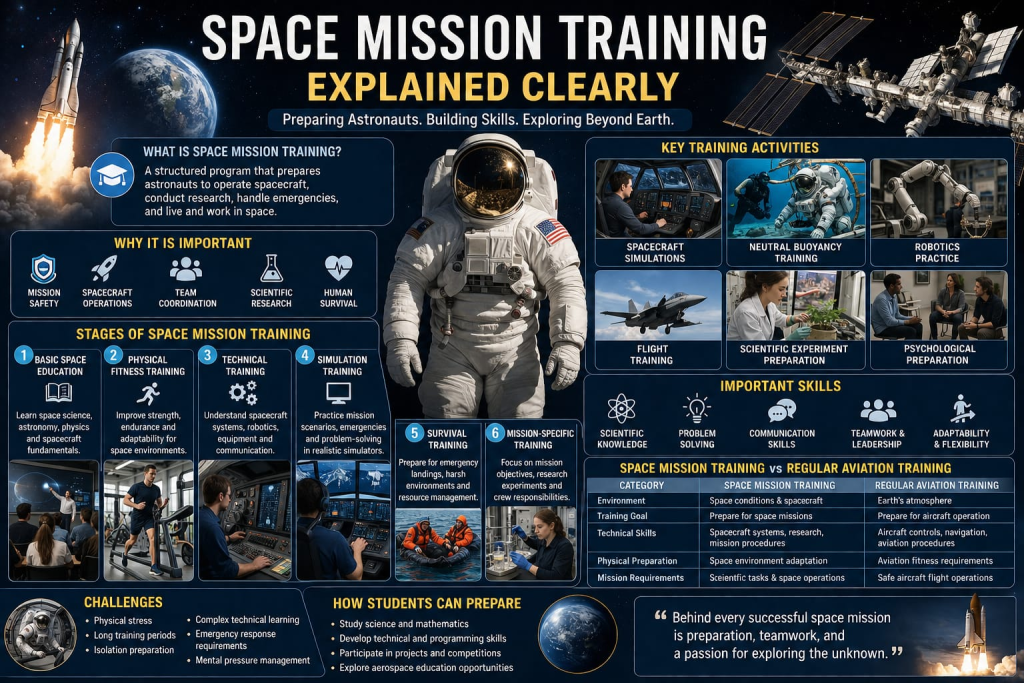
Space mission training is a structured preparation program designed to help astronauts safely perform tasks during space missions. It combines academic learning, technical instruction, physical conditioning, simulations, and practical exercises.
Astronaut training is not limited to one specific skill. It involves preparing individuals to manage spacecraft systems, perform scientific research, communicate with mission teams, and handle the physical and psychological challenges of living in space.
Different space organizations may design training programs based on their mission requirements, spacecraft technology, and operational goals.
Space mission training generally focuses on:
- Understanding space environments
- Operating spacecraft systems
- Managing mission responsibilities
- Performing scientific experiments
- Handling emergencies
- Working as part of a team
Why Space Mission Training Is Important
Mission Safety
Safety is one of the most important goals of astronaut training. Space missions involve complex technology and challenging environments, so astronauts must be prepared for different situations.
Training helps astronauts understand procedures, practice emergency responses, and make better decisions during missions.
Spacecraft Operations
Astronauts need detailed knowledge of spacecraft systems. Training helps them understand controls, equipment, communication systems, and operational procedures.
Team Coordination
Space missions require cooperation between astronauts and ground teams. Training develops communication skills and teamwork abilities needed for successful mission execution.
Scientific Research
Many space missions focus on scientific discoveries. Astronauts receive training to operate research equipment, conduct experiments, and collect accurate data.
Human Survival in Space
Space environments are different from Earth. Training prepares astronauts to adapt to microgravity, limited living spaces, and other mission conditions.
Different Stages of Space Mission Training
Space mission training is divided into multiple stages that gradually develop astronaut knowledge and abilities.
1. Basic Space Education
The first stage focuses on developing a strong foundation in science and space concepts.
Astronaut candidates learn about:
- Space science
- Astronomy
- Physics principles
- Spacecraft basics
- Human spaceflight concepts
This knowledge helps astronauts understand the environment where they will operate.
2. Physical Fitness Training
Physical preparation is an important part of astronaut training because space travel affects the human body.
Training activities may include:
- Strength development
- Endurance exercises
- Coordination activities
- Physical adaptation exercises
Astronauts need strong physical condition to manage launch forces, space environments, and mission activities.
3. Technical Training
Astronauts must understand complex spacecraft and mission technology.
Technical training may include:
- Spacecraft systems
- Navigation procedures
- Robotics operations
- Equipment handling
- Communication systems
This preparation allows astronauts to operate important mission tools effectively.
4. Simulation Training
Simulation training creates realistic mission scenarios without going into space.
Astronauts practice:
- Spacecraft operations
- Mission procedures
- Emergency situations
- Communication with mission control
- Problem-solving activities
Simulations help astronauts develop confidence and improve their ability to respond under pressure.
5. Survival Training
Astronauts may need to handle emergency situations where survival skills become important.
Survival training can include:
- Emergency landing preparation
- Environmental adaptation
- Resource management
- Team survival exercises
This training helps astronauts remain prepared for unexpected situations.
6. Mission-Specific Training
Before a mission, astronauts receive specialized training based on their responsibilities.
This may involve:
- Research experiments
- Spacecraft procedures
- Crew responsibilities
- Mission objectives
- Equipment operations
Mission-specific preparation ensures every crew member understands their role.
Important Skills Required for Space Mission Training
Scientific Knowledge
Astronauts require strong understanding of science, technology, engineering, and space-related concepts.
Scientific knowledge helps them perform research activities and understand mission objectives.
Problem-Solving Ability
Space missions can involve unexpected situations. Astronauts must analyze problems and find effective solutions quickly.
Communication Skills
Clear communication between astronauts and mission control teams is essential for mission success.
Leadership and Teamwork
Astronauts work in small teams where cooperation and responsibility are extremely important.
Adaptability
Space environments can change quickly. Astronauts must adjust to new situations and follow mission procedures effectively.
Astronaut Training Activities
Astronaut preparation includes many practical activities designed to simulate space conditions.
Spacecraft Simulator Sessions
Simulators allow astronauts to practice spacecraft operations and mission procedures.
Neutral Buoyancy Training
Underwater environments can help astronauts practice movements similar to spacewalk activities.
Robotics Practice
Astronauts learn to operate robotic systems used during missions.
Flight Training
Flight activities help develop coordination, decision-making, and technical understanding.
Scientific Experiment Preparation
Astronauts practice conducting research activities that may be performed during missions.
Psychological Preparation
Mental preparation helps astronauts manage isolation, teamwork challenges, and mission pressure.
Space Mission Training Challenges
Becoming prepared for a space mission requires dedication because astronauts face many challenges.
Physical Stress
Space environments can affect the human body, requiring astronauts to maintain physical readiness.
Long Training Periods
Astronaut preparation involves extensive learning and repeated practice.
Isolation Preparation
Astronauts must learn how to work effectively in confined environments away from Earth.
Complex Technical Learning
Spacecraft systems and mission technology require advanced understanding.
Emergency Response Requirements
Astronauts must remain prepared for unexpected situations during missions.
Mental Pressure Management
Space missions require focus, patience, and emotional stability.
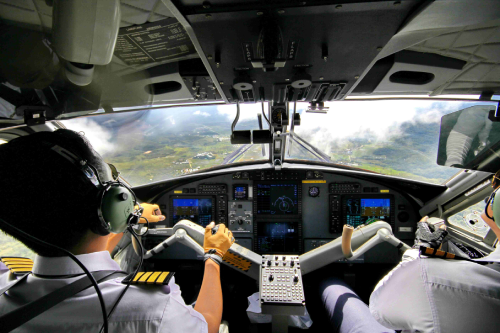
Space Mission Training vs Regular Aviation Training
| Category | Space Mission Training | Regular Aviation Training |
|---|---|---|
| Environment | Designed for space conditions and spacecraft operations | Designed for aircraft operations within Earth’s atmosphere |
| Training Goal | Preparing astronauts for space missions | Preparing pilots for aircraft operation |
| Technical Skills | Spacecraft systems, research equipment, mission procedures | Aircraft controls, navigation, aviation procedures |
| Physical Preparation | Includes space environment adaptation | Focuses on aviation fitness requirements |
| Mission Requirements | Includes scientific tasks and space operations | Focuses on safe aircraft flight operations |
How Students Can Start Preparing for a Space Career
Students interested in space careers can begin developing important skills early.
Study Science and Mathematics
Strong knowledge of physics, mathematics, and technology provides a foundation for aerospace careers.
Learn About Space and Astronomy
Understanding planets, spacecraft, and space exploration helps develop interest and awareness.
Develop Technical Skills
Programming, engineering concepts, and problem-solving skills can support future opportunities.
Participate in Science Projects
Practical projects help students improve creativity and technical thinking.
Explore Aerospace Education
Learning about aerospace fields can help students understand possible career pathways.
Common Misconceptions About Space Mission Training
Astronaut Training Is Only About Flying Rockets
Astronaut preparation includes science, engineering, research, teamwork, and survival skills.
Physical Fitness Is the Only Requirement
Physical ability is important, but astronauts also require technical knowledge and mental preparation.
Space Missions Are Completed Individually
Space missions depend on teamwork between astronauts, engineers, scientists, and mission control teams.
Technology Replaces Human Preparation
Advanced technology supports missions, but trained professionals are still essential.
Training Ends After Reaching Space
Astronauts continue learning and preparing throughout their mission careers.
Benefits of Learning About Space Mission Training
Understanding space mission training provides valuable knowledge for students and future space professionals.
Better Understanding of Astronaut Careers
Students can learn what skills and preparation are required for space-related careers.
Improved Space Knowledge
Learning about training helps people understand how space missions are planned and executed.
Inspiration for STEM Learning
Space exploration encourages interest in science, technology, engineering, and mathematics.
Awareness of Aerospace Opportunities
Students can explore different career paths connected to space exploration.
Preparation for Future Space Industries
Knowledge of astronaut training helps students understand emerging opportunities in aerospace fields.
Frequently Asked Questions
1. What is space mission training?
Space mission training is a preparation process that teaches astronauts the skills needed to operate spacecraft, perform mission tasks, and handle space environments safely.
2. Why do astronauts need extensive training?
Astronauts face complex technical, physical, and psychological challenges. Training helps them develop the abilities needed for safe and successful missions.
3. How long does astronaut training take?
The duration depends on mission requirements, training programs, and the responsibilities assigned to astronauts.
4. What skills are required for space missions?
Astronauts need scientific knowledge, technical skills, communication abilities, teamwork, and problem-solving capabilities.
5. What physical training do astronauts complete?
Astronauts complete fitness programs designed to improve strength, endurance, and adaptation to challenging environments.
6. Why do astronauts practice underwater training?
Underwater training helps astronauts practice movements and procedures similar to activities performed during spacewalks.
7. Do all astronauts receive the same training?
Training varies depending on mission goals, spacecraft systems, and individual responsibilities.
8. How do students prepare for a space career?
Students can study science, develop technical skills, participate in projects, and learn about aerospace fields.
9. What role do simulations play in astronaut training?
Simulations allow astronauts to practice mission activities, emergency procedures, and spacecraft operations in realistic environments.
10. Is space mission training only for astronauts?
No. Space missions also require engineers, scientists, technicians, and mission support professionals who receive specialized preparation.
Conclusion
Space mission training is a combination of scientific education, technical learning, physical preparation, and teamwork. It prepares astronauts to operate spacecraft, conduct research, solve problems, and safely complete missions beyond Earth.
For students interested in space exploration, understanding this training process provides a clear view of the dedication and skills required for aerospace careers. Space missions are achieved through years of preparation, collaboration, and continuous learning.
Learning about space mission training can inspire future generations to explore opportunities in science, technology, and space exploration.