
Introduction
Stepping out of the academic environment and into the competitive professional job market requires more than just a university degree and a standard transcript. Recruiters and hiring managers increasingly search for tangible proof of your skills, curiosity, and practical execution before extending an interview offer. Building a student portfolio through a personal blog provides an exceptional way to showcase your academic projects, independent research, and continuous learning journey. Furthermore, modern digital publishing tools remove all financial and technical roadblocks, allowing you to launch a professional showcase in a matter of minutes. Let us explore how students can leverage a free blogging platform to build a standout portfolio that captures the attention of future employers.
Why Every Student Needs a Digital Portfolio
Relying solely on a one-page resume often fails to capture the depth of projects, teamwork, and problem-solving abilities you developed throughout your studies. A digital portfolio transforms theoretical knowledge into concrete evidence that you can apply your skills in the real world.
- Demonstrating Practical Execution: Writing about your coding projects, lab experiments, design case studies, or economic research proves you understand how to execute concepts from scratch.
- Proving Initiative and Passion: Maintaining a blog outside of mandatory coursework signals to recruiters that you possess genuine curiosity and self-motivation.
- Improving Communication Skills: Translating complex academic jargon into clear, readable articles helps you master the art of explaining technical concepts to non-technical stakeholders.
Choosing the Right Projects to Feature
When building your student portfolio, your blog should reflect both your academic focus and your personal career aspirations. Selecting the right content categories ensures your published articles appeal directly to industry recruiters within your target field.
[Academic Assignments] + [Side Experiments] + [Internship Learnings] ---> [Comprehensive Student Portfolio]
- Capstone and Thesis Summaries: Break down your final-year projects into engaging, digestible case studies highlighting the challenges faced and solutions implemented.
- Hackathon and Competition Entries: Document fast-paced building sessions, architectural decisions, and lessons learned from collaborative team events.
- Self-Taught Explorations: Share write-ups detailing how you learned a new software tool, programming language, or analytical framework outside of class.
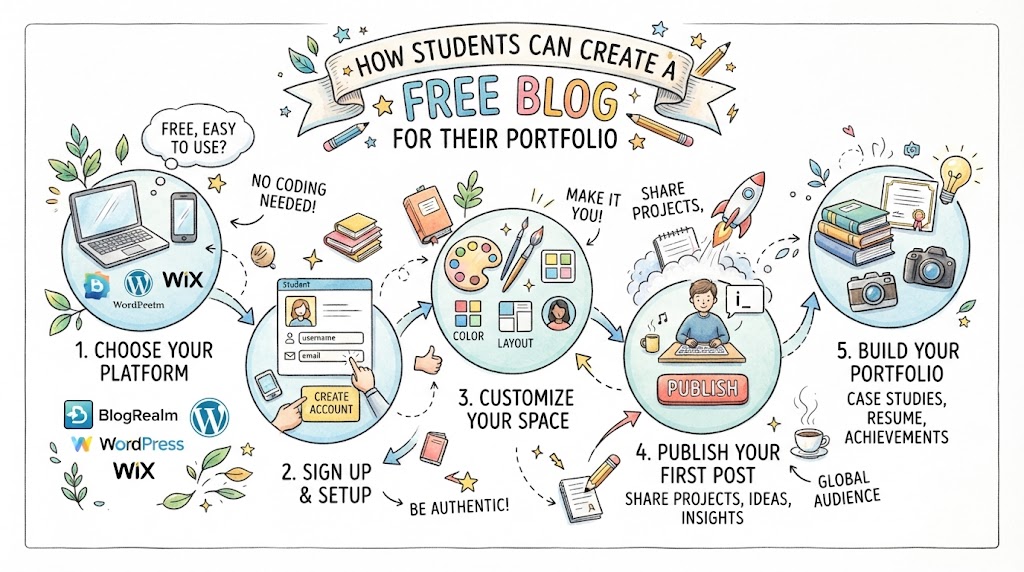
Step-by-Step Guide to Launching Your Student Blog
Getting your portfolio online does not require learning HTML, configuring complex databases, or paying expensive monthly hosting fees. Modern publishing platforms are designed specifically for speed, simplicity, and zero friction.
- Register Your Profile: Choose a clean, professional username that reflects your real name or personal brand identity.
- Configure Your Author Bio: Write a compelling introduction detailing your current field of study, career goals, and core technical skills.
- Format Your First Post: Use an intuitive text editor to draft your project overview, add relevant tags, and upload clean screenshots or header images.
- Publish and Share: Hit publish to instantly make your work accessible globally, then link your new blog directly from your resume and LinkedIn profile.
Integrating Your Blog with Professional Profiles
A portfolio blog achieves its maximum impact when active recruiters and industry professionals can easily discover it. Treating your publishing space as a living extension of your resume bridges the gap between academia and industry.
- LinkedIn Integration: Add your blog URL to the featured section of your LinkedIn profile so hiring managers see your work immediately.
- Resume Hyperlinks: Include direct links to specific project write-ups next to your educational credentials on your CV.
- Networking Outreach: When connecting with industry mentors or alumni, sharing a relevant article you wrote demonstrates proactive engagement and mutual interest.
Best Practices for Student Portfolio Blogging
To ensure your student blog effectively advances your career prospects, keep these foundational principles in mind:
- Focus on the “Why” and “How”: Do not just display the final result; explain the decision-making process, obstacles encountered, and how you debugged or solved them.
- Maintain Clean Formatting: Use clear headings, short paragraphs, and bullet points so busy recruiters can quickly skim your technical insights.
- Publish Consistently: Even adding one project write-up or reflection per month demonstrates steady momentum and continuous growth.
- Keep It Professional: Treat your blog posts as public documents that future employers, professors, and industry peers will evaluate carefully.
Frequently Asked Questions About Student Portfolio Blogs
Is it really free to maintain a student portfolio blog?
Yes, dedicated publishing platforms provide completely free hosting, secure infrastructure, and unlimited publishing capabilities without hidden subscription fees.
Do I need coding experience to set up my student portfolio?
Not at all. Modern writing environments feature drag-and-drop simplicity and clean visual editors that let you publish beautifully structured articles without touching code.
Should I write about failed projects on my portfolio?
Sharing challenges and how you overcame them actually highlights critical problem-solving skills and resilience, which recruiters value immensely.
Can I use a student blog if I am studying liberal arts instead of tech?
Absolutely. Students across literature, history, business, design, and science benefit equally from curating essays, research summaries, and creative works online.
How can I drive traffic to my student portfolio articles?
Sharing your published posts across professional networks, university forums, and niche online communities helps attract targeted readers and industry mentors.
Final Thoughts
Transitioning from a student to a working professional becomes significantly smoother when you have concrete proof of your capabilities ready to share. Building a free portfolio blog gives you absolute control over your career narrative, allowing you to display your projects, passion, and continuous learning to the world. Remember that clarity, consistency, and a focus on practical problem-solving remain the true drivers of professional recognition. Take the initiative today, publish your first project breakdown, and let your digital portfolio open doors to your future career.