Introduction
Spaceflight is no longer only a dream for scientists, astronauts, and government space agencies. With the growth of commercial spaceflight, reusable spacecraft, space tourism, private aerospace companies, and advanced mission training, many students are now exploring future careers beyond traditional aviation. One exciting path is becoming an astro pilot.
An astro pilot is not a science-fiction role. It represents a future-facing aviation and spaceflight career where strong flying knowledge, aerospace education, simulator training, physical fitness, teamwork, and spacecraft systems understanding all come together.
This guide is designed for new aspirants who want to understand how to prepare for astro pilot training. It explains the skills, education, training pathways, challenges, and career opportunities connected with aviation and human spaceflight.
What Is an Astro Pilot?
An astro pilot is someone trained to support or operate advanced flight systems related to spaceflight, commercial spacecraft, high-altitude vehicles, or astronaut-style missions. The role may vary depending on the organization, vehicle type, mission profile, and level of automation.
An astro pilot may be involved in:
- Spacecraft operations
- Commercial spaceflight support
- Space tourism missions
- High-altitude flight operations
- Mission simulation
- Emergency response
- Crew coordination
- Flight systems monitoring
- Aerospace testing
An airline pilot mainly operates aircraft within Earth’s atmosphere. An astronaut may perform scientific, engineering, or mission-specialist duties in space. A commercial space pilot may combine aviation skill, spacecraft knowledge, and mission operations training.
Skills Required to Become an Astro Pilot
Astro pilot training requires more than interest in space. Aspirants must build technical, physical, mental, and teamwork skills.
Important skills include:
- Technical knowledge of aviation and spacecraft systems
- Decision-making under pressure
- Clear communication with crew and mission control
- Leadership during complex situations
- Teamwork in confined and high-pressure environments
- Adaptability during unexpected events
- Problem-solving during technical challenges
- Situational awareness during fast-changing missions
- Discipline during long training programs
- Emotional control during stress
Spaceflight operations demand calm thinking, strong preparation, and reliable teamwork.
Educational Requirements
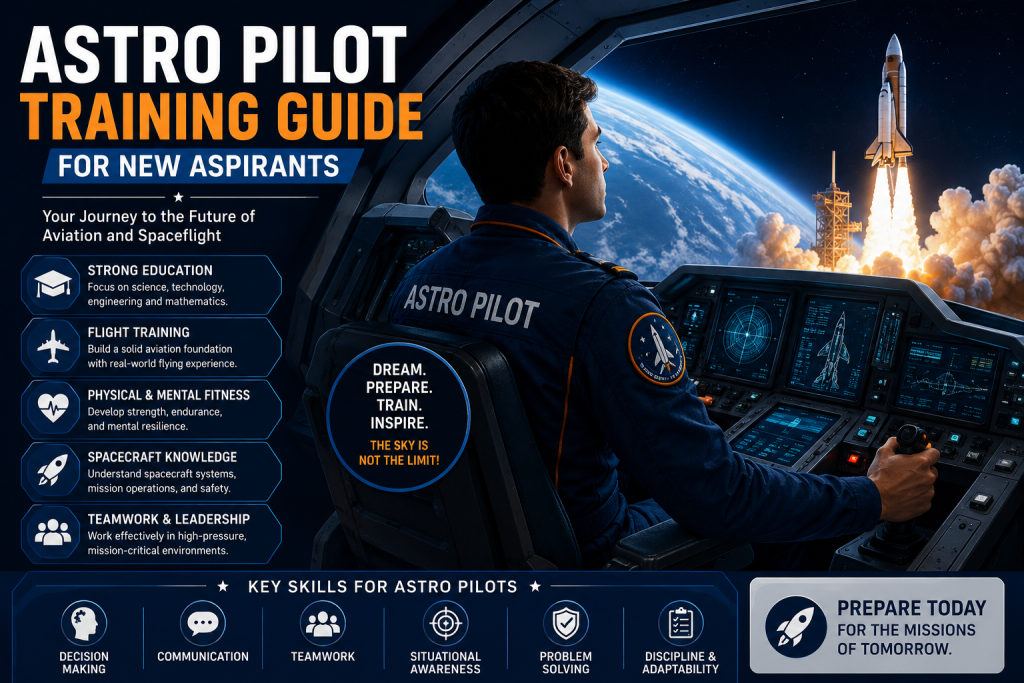
Education is the foundation of astro pilot preparation. New aspirants should focus on science, technology, engineering, and mathematics subjects from an early stage.
Helpful subjects include:
- Mathematics
- Physics
- Computer science
- Aerospace engineering
- Mechanical engineering
- Electrical engineering
- Robotics
- Aviation science
- Data systems
- Materials science
A degree in aerospace engineering is useful, but it may not be the only path. Aviation, physics, engineering, computer science, or other technical degrees can also support a spaceflight career.
Students should build strong knowledge in:
- Motion and forces
- Aerodynamics
- Propulsion
- Orbital mechanics
- Navigation
- Electronics
- Control systems
- Programming basics
- Human factors
- Safety systems
Strong education helps aspirants understand both aircraft and spacecraft behavior.
Flight Training Foundation
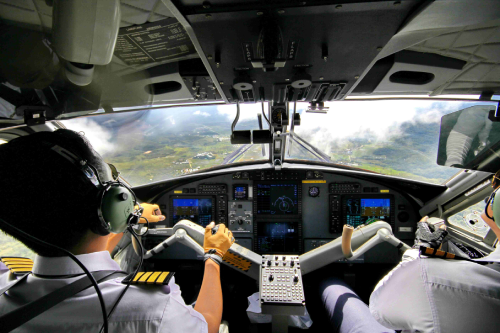
Aviation experience is valuable for future astro pilots because it teaches real-world flying discipline, cockpit communication, decision-making, and emergency handling.
A typical aviation foundation may include:
- Student pilot training
- Private Pilot License
- Instrument rating
- Commercial Pilot License
- Multi-engine training
- Simulator training
- Advanced aircraft experience
- Crew resource management
Flight training helps students understand:
- Aircraft control
- Weather decision-making
- Navigation
- Radio communication
- Emergency procedures
- Checklists
- Flight planning
- Pilot discipline
Even if a future space vehicle is highly automated, aviation experience helps build judgment, confidence, and operational thinking.
Physical and Medical Fitness
Astro pilot aspirants must take physical and medical fitness seriously. Spaceflight and high-performance aviation can place stress on the body and mind.
Important fitness areas include:
- Good vision standards
- Cardiovascular health
- Physical endurance
- Strength and flexibility
- Balance and coordination
- Mental fitness
- Stress management
- Sleep discipline
- Healthy lifestyle habits
Medical requirements may vary depending on the organization and mission type. Aspirants should focus on long-term fitness rather than short-term preparation.
Mental fitness is equally important. Astro pilots may need to work in confined spaces, follow strict procedures, handle emergencies, and cooperate with crew members for long periods.
Spacecraft Knowledge
A future astro pilot must understand how spacecraft systems work. Spacecraft are different from aircraft because they operate beyond normal atmospheric flight and rely on specialized systems for survival, navigation, propulsion, and mission control.
Important spacecraft knowledge areas include:
- Propulsion systems
- Guidance and navigation
- Orbital mechanics
- Docking systems
- Environmental control systems
- Life-support systems
- Electrical systems
- Communication systems
- Thermal control
- Emergency systems
- Re-entry basics
- Mission planning
Aspirants do not need to master everything at the beginning, but they should gradually build strong technical understanding.
Simulation Training
Simulation is a major part of astronaut and spaceflight preparation. Simulators allow trainees to practice missions, emergencies, decision-making, and crew coordination in a safe environment.
Simulation training may include:
- Flight simulators
- Space mission simulators
- Cockpit procedure trainers
- Emergency response scenarios
- Docking and navigation practice
- Launch and re-entry simulations
- Crew communication exercises
- Mission planning drills
Simulation helps aspirants build confidence before real operations. It also improves reaction time, teamwork, and procedural accuracy.
Survival and Emergency Training
Spaceflight and advanced aviation require serious emergency preparation. Astro pilot aspirants may need training in survival, evacuation, and emergency procedures.
Training may include:
- Water survival
- Wilderness survival
- Emergency evacuation
- Fire response
- First aid basics
- Pressure suit training
- Cabin emergency procedures
- Communication failure response
- Off-nominal mission scenarios
Emergency training builds confidence and teaches aspirants how to stay calm when conditions change quickly.
Teamwork and Leadership
Space missions depend on teamwork. No astro pilot works alone. Every mission requires coordination between pilots, mission specialists, engineers, ground control, medical teams, and support crews.
Important teamwork skills include:
- Listening carefully
- Speaking clearly
- Respecting procedures
- Sharing information
- Supporting crew members
- Managing conflict professionally
- Taking responsibility
- Leading when required
- Following when needed
Leadership in spaceflight is not about ego. It is about safety, clarity, discipline, and mission success.
Common Challenges for New Aspirants
Astro pilot training is exciting, but it is also demanding. New aspirants should understand the challenges before starting.
Common challenges include:
- Competitive selection process
- Strong academic expectations
- Physical fitness requirements
- High training cost
- Long preparation period
- Limited direct career pathways
- Continuous technical learning
- Emotional pressure
- Need for teamwork and discipline
- Rapidly changing aerospace technology
The best way to handle these challenges is to prepare step by step. Start with education, fitness, aviation knowledge, and practical skills.
Career Opportunities
Astro pilot preparation can open doors to several aviation and aerospace careers.
Possible career paths include:
- Commercial space pilot
- Space tourism pilot
- Astronaut
- Test pilot
- Mission specialist
- Flight instructor
- Aerospace operations specialist
- Flight simulation specialist
- Space mission planner
- Spacecraft systems trainer
- Aerospace safety specialist
- High-altitude research pilot
Not every aspirant will become a spacecraft commander, but strong aerospace preparation can support many valuable roles in aviation and space industries.
Future of Astro Pilot Careers
The future of astro pilot careers is connected with commercial spaceflight, space tourism, reusable launch systems, private aerospace companies, orbital missions, lunar exploration, and advanced spacecraft technology.
Future opportunities may grow in areas such as:
- Space tourism operations
- Commercial astronaut training
- Reusable spacecraft missions
- Private space stations
- Lunar mission support
- High-altitude research vehicles
- Advanced simulation training
- Spaceflight safety operations
- Aerospace education and training
The field is still developing, so aspirants should stay flexible and keep learning.
Tips for New Aspirants
New aspirants can start preparing early with practical steps:
- Build a strong STEM foundation
Focus on mathematics, physics, computer science, and engineering basics. - Learn aviation fundamentals
Study aircraft, aerodynamics, navigation, weather, and flight safety. - Improve English communication
Clear communication is essential in aviation and space operations. - Stay physically fit
Develop endurance, strength, flexibility, and healthy habits. - Gain flight experience
Pilot training can help build operational discipline and confidence. - Practice teamwork
Join group projects, competitions, clubs, or technical teams. - Use simulators wisely
Flight simulators and space simulators can help improve procedural thinking. - Follow aerospace developments
Stay updated on spaceflight technology, mission operations, and aviation innovation. - Develop problem-solving skills
Spaceflight requires calm and logical thinking during complex situations. - Be patient and consistent
Astro pilot preparation is a long-term journey, not a quick course.
Key Takeaways
- Astro pilot training combines aviation, aerospace education, physical fitness, and mission operations.
- Strong STEM knowledge is important for understanding aircraft and spacecraft systems.
- Flight training builds discipline, communication, and real-world decision-making skills.
- Simulation training is essential for practicing complex and emergency scenarios.
- Physical and mental fitness are important for high-performance aerospace roles.
- Teamwork and leadership are critical for mission safety.
- Career opportunities may include commercial spaceflight, astronaut training, aerospace operations, and simulation roles.
- New aspirants should start with education, fitness, aviation basics, and continuous learning.
FAQs
1. What is an astro pilot?
An astro pilot is a future-focused aviation and spaceflight professional trained to understand advanced flight systems, spacecraft operations, mission procedures, and crew coordination. The role may vary depending on the mission and organization.
2. Do I need to become an airline pilot first?
Not always. Airline pilot experience can be useful, but astro pilot pathways may also come through test piloting, aerospace engineering, military aviation, research, or commercial spaceflight training.
3. Which degree is best for astro pilot training?
Aerospace engineering is very useful, but degrees in aviation, physics, mechanical engineering, electrical engineering, computer science, or related technical fields can also support this career path.
4. Is aerospace engineering mandatory?
Aerospace engineering is not always mandatory, but it provides strong knowledge of aircraft, spacecraft, aerodynamics, propulsion, and mission systems. Other STEM backgrounds may also be valuable.
5. What physical fitness is required?
Astro pilot aspirants should maintain strong cardiovascular health, good vision, physical endurance, flexibility, coordination, and mental resilience. Exact medical standards depend on the mission and organization.
6. How important is flight simulator training?
Flight simulator training is very important because it helps trainees practice procedures, emergency handling, navigation, crew coordination, and decision-making without real-world risk.
7. Can commercial pilots become space pilots?
Commercial pilots may have useful experience for spaceflight roles because they understand aircraft operations, communication, navigation, and safety procedures. However, additional spaceflight and spacecraft systems training would be required.
8. What skills are most valuable?
The most valuable skills include technical knowledge, decision-making, communication, teamwork, leadership, discipline, problem-solving, and situational awareness.
9. How long does training take?
Astro pilot preparation can take many years because it may involve education, flight training, physical conditioning, technical experience, simulation training, and mission-specific preparation.
10. What career opportunities exist in commercial spaceflight?
Career options may include commercial space pilot, astronaut, mission specialist, spacecraft systems trainer, flight simulation specialist, aerospace operations specialist, test pilot, and space mission planner.
Conclusion
Becoming an astro pilot requires dedication, patience, technical learning, physical fitness, and a strong passion for aviation and spaceflight. It is not a simple or instant career path, but it is one of the most exciting directions for new aspirants who want to be part of the future of human space exploration.
The best preparation begins with strong education, aviation fundamentals, simulator practice, teamwork, and a disciplined lifestyle. As commercial spaceflight continues to grow, future astro pilot careers may offer new opportunities for those who prepare early and keep learning.
For aspiring astro pilots, the journey starts with curiosity, but success comes from consistent preparation, realistic planning, and the courage to pursue a career beyond the sky.