Introduction
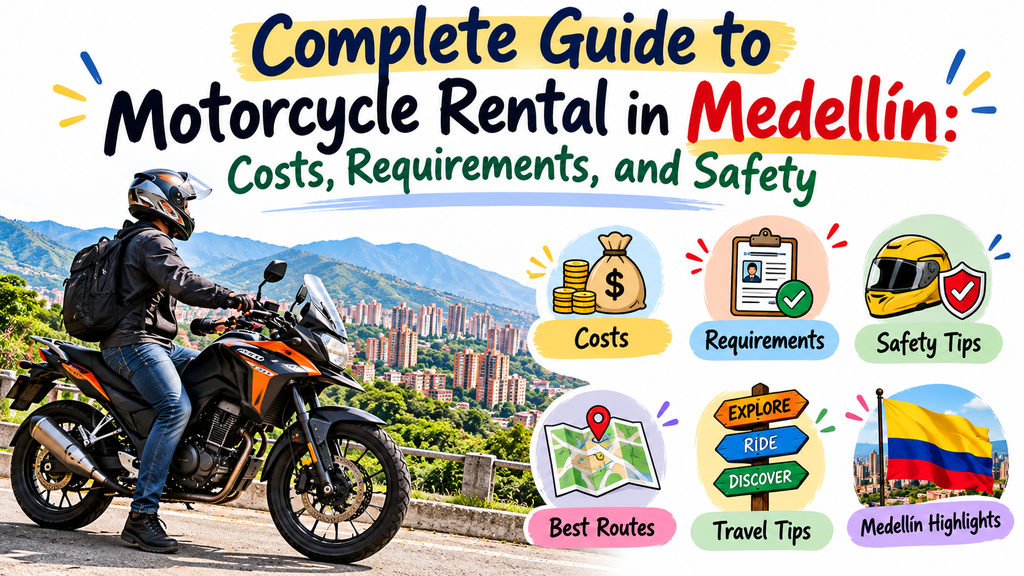
Medellín is one of South America’s most exciting destinations for motorcycle riders. With its winding mountain roads, pleasant year-round climate, and stunning Andean scenery, exploring the Aburrá Valley and beyond on two wheels offers an unmatched sense of freedom. Whether you want an agile scooter for navigating urban traffic or a powerful adventure motorcycle for a cross-country journey, renting a vehicle gives you the flexibility to travel at your own pace.
This guide covers everything you need to know about motorcycle rentals in Medellín. You will learn about legal requirements, international driving permits, typical costs, essential insurance considerations, and practical safety tips. By understanding these details before you arrive, you can choose the right vehicle, avoid common mistakes, and make informed transportation decisions across Colombia.
Understanding Motorcycle Rental Options in Medellín
Before you book a rental, it helps to understand the different categories of motorcycles and scooters available. Rental providers in Medellín typically stock a range of models suited to different riding styles and terrains.
The table below provides a quick side-by-side comparison of the primary motorcycle categories available for rent:
| Vehicle Type | Engine Size | Best Used For | Key Features & Performance |
| Scooter | 110cc – 150cc | City commuting, short urban trips, light errands | Automatic transmission, lightweight, fuel-efficient, easy to maneuver in traffic |
| Standard / Street | 150cc – 250cc | Daily commuting, suburban roads, intermediate trips | Manual gearbox, upright seating position, balanced efficiency and highway power |
| Adventure / Touring | 300cc – 800cc+ | Long-distance road trips, steep mountain passes, off-road | High-travel suspension, powerful engine, luggage capacity, all-day ergonomics |
Scooters and Small-Displacement Motorcycles
- Engine Size: 110cc to 150cc
- Best For: City commuting, short sightseeing trips, and light errands.
- Characteristics: Automatic transmissions, easy handling, lightweight frames, and excellent fuel economy. They are ideal for navigating dense urban traffic but lack the power required for steep, high-altitude highway climbs with a passenger or heavy luggage.
Standard and Street Motorcycles
- Engine Size: 150cc to 250cc
- Best For: Daily commuting, suburban travel, and intermediate riders.
- Characteristics: Manual gearboxes, upright seating positions, and balanced performance. These bikes handle city streets and paved secondary roads comfortably while offering better highway acceleration than smaller scooters.
Adventure and Touring Motorcycles
- Engine Size: 300cc to 800cc+
- Best For: Long-distance road trips, unpaved mountain tracks, and experienced riders.
- Characteristics: Long-travel suspension, robust engine power, luggage mounting options, and upright ergonomics designed for all-day comfort. These motorcycles excel on Colombia’s varied terrain, including gravel roads and steep mountain passes.
Legal Requirements and Licensing for Foreigners
Riding a motorcycle in Colombia requires strict adherence to local traffic laws and documentation rules. Failure to carry the correct paperwork can result in heavy fines, vehicle impoundment, or insurance invalidation.
Driving Licence Requirements
Foreign visitors planning to rent a motorcycle must hold a valid driver’s licence from their home country that explicitly permits motorcycle operation.
- International Driving Permit (IDP): While many rental agencies accept a valid national licence accompanied by an English translation, carrying an International Driving Permit alongside your domestic licence is strongly recommended. Traffic authorities across Colombia frequently inspect documentation at roadside checkpoints.
- Licence Class: Your licence must cover the engine displacement of the motorcycle you rent. A standard car licence is never sufficient for a motorcycle or scooter in Colombia.
Identification and Documentation
Always carry your original passport (or a certified copy if required by local guidelines), your physical driving licence, and the rental contract or vehicle registration documents provided by the agency. Local police have the authority to stop riders at any time to verify vehicle ownership and operator credentials.
Rental Costs, Deposits, and Financial Considerations
Understanding the true cost of a rental helps you budget effectively and prevents unexpected expenses at the end of your trip.
Base Rental Rates
Rental prices in Medellín vary based on the vehicle type, engine displacement, rental duration, and seasonal demand. Smaller scooters and entry-level street bikes command lower daily rates, while large adventure and touring motorcycles carry premium pricing due to their capability and maintenance costs. Weekly and monthly rentals often include discounted daily rates compared to short weekend bookings.
Security Deposits and Holds
Most rental providers require a security deposit before handing over the keys. This deposit is typically held as a credit card pre-authorization to cover potential damage, missing accessories, or unpaid traffic fines. Ensure you understand the exact deposit amount and the timeline for releasing the hold after you return the vehicle in good condition.
Additional Fees to Anticipate
- Insurance Coverage: Basic third-party liability insurance is generally included, but comprehensive coverage often costs extra.
- Equipment Rentals: Helmets, jackets, gloves, and phone mounts may carry separate daily rental fees unless bundled into a promotional rate.
- Mileage Limits: Some providers enforce daily distance caps with additional charges for excess kilometers, while others offer unlimited mileage.
- Delivery and Drop-Off: Requesting hotel delivery or returning the vehicle to a different city may incur logistics fees.
Essential Insurance and Liability Terms
Insurance policies for vehicle rentals in Colombia differ significantly from standard agreements in North America or Europe. Read the fine print carefully before signing any agreement.
- SOAT (Seguro Obligatorio de Accidentes de Tránsito): This is Colombia’s mandatory statutory traffic accident insurance. It covers medical expenses for injuries sustained in an accident involving the vehicle. Every legally operating rental vehicle must have an active SOAT policy.
- Third-Party Liability (TPL): TPL covers damage or injury caused to other people or property. Verify the policy limits to ensure adequate protection.
- Collision Damage Waiver (CDW): CDW reduces your financial responsibility if the rental motorcycle is damaged. Note that CDW policies often include a deductible or excess amount that you must pay out of pocket in the event of an accident.
- Exclusions: Many insurance policies exclude damage caused by riding under the influence of alcohol, operating on unpaved roads without prior authorization, or allowing an unauthorized person to drive the motorcycle.
Pre-Rental Inspection and Return Procedures
A thorough vehicle inspection protects you from being held liable for pre-existing scratches, mechanical issues, or missing parts.
Inspection Checklist
- Bodywork and Frame: Walk around the motorcycle and inspect the fairings, fuel tank, handlebars, and exhaust for dents, cracks, or deep scratches.
- Tyres and Brakes: Check the tread depth on both tyres and test the front and rear brakes before leaving the rental yard.
- Electrical Systems: Test the headlight, taillight, brake light, turn signals, horn, and instrument cluster.
- Photographic Evidence: Take clear, timestamped photographs and videos of every side of the motorcycle, focusing on any existing cosmetic blemishes.
- Tool Kit and Accessories: Confirm that the motorcycle includes basic tools, a functional helmet, and any contracted luggage cases.
Fuel Policies and Return Conditions
Most agencies operate on a “like-for-like” fuel policy, meaning you must return the motorcycle with the same fuel level it had when rented. Refuel the vehicle at a standard petrol station just before returning it to avoid inflated service charges. Ensure the return is conducted during staffed business hours so an agent can sign off on the vehicle’s condition and release any temporary card holds.
Navigating Medellín and Colombian Roads
Riding in Medellín and the surrounding Antioquia department presents unique challenges and rewards.
Urban Riding in Medellín
Medellín features busy streets, dense motorcycle traffic, and complex topography. Local motorcyclists frequently filter through stationary traffic. If you are unaccustomed to urban Latin American riding, remain alert, maintain a safe following distance, and avoid aggressive lane splitting. Watch out for metal expansion joints, painted road markings, and tram tracks, which become extremely slippery during heavy rain.
Mountain Touring and Weather Conditions
Riding outside the city into the Andes involves steep gradients, sharp switchbacks, and rapidly changing weather.
- Rain and Visibility: Tropical downpours can reduce visibility to near zero within minutes and turn dirt roads into slick mud. Pull over safely under shelter if conditions become hazardous.
- Topography: Mountain routes demand active gear selection, engine braking, and constant attention to larger commercial vehicles that may swing wide on narrow curves.
- Altitude: As you climb into the mountains, temperatures drop noticeably. Pack appropriate thermal layers, even if it feels warm in the valley.
Common Mistakes to Avoid
- Riding Beyond Experience Level: Renting a large, heavy adventure bike without prior off-road or high-displacement riding experience creates unnecessary safety risks on steep mountain roads.
- Ignoring International Licence Rules: Assuming your standard domestic car licence permits you to operate a scooter or motorcycle without proper endorsement.
- Skipping the Pre-Rental Inspection: Failing to document existing scratches or mechanical issues, which can result in disputed repair charges upon return.
- Underestimating Travel Times: Calculating mountain route distances based solely on kilometers rather than realistic average speeds affected by winding roads and traffic.
- Riding Without Proper Safety Gear: Wearing inadequate clothing instead of sturdy riding boots, gloves, long pants, and a certified full-face helmet.
- Neglecting Insurance Exclusions: Assuming all damage is covered without checking the specific deductible, excess amounts, and off-road riding restrictions.
- Forgetting Fuel Planning: Traveling through remote rural areas without checking fuel gauge levels, as petrol stations can be sparse outside major towns.
- Riding After Dark in Rural Areas: Navigating unfamiliar rural highways at night when unlit livestock, potholes, and road debris are difficult to spot.
- Failing to Secure Required Documents: Leaving your passport, international permit, or rental agreement behind at the hotel instead of carrying them securely while riding.
- Parking in Unsecured Locations: Leaving a rented motorcycle unattended on the street overnight rather than paying for secure indoor parking lots (parqueaderos).
- Overloading the Vehicle: Exceeding the maximum weight capacity of the motorcycle or luggage racks, which alters handling and braking performance.
- Rushing Return Procedures: Dropping off a vehicle in a hurry without getting a signed inspection clearance form confirming the return condition.
Important Considerations
- Licence Eligibility: Ensure your driving credentials match local legal requirements before confirming any reservation.
- Financial Liability: Clarify the exact deductible amount on your collision insurance and confirm your credit card limit can support the security deposit.
- Route Planning: Match your chosen vehicle category to the actual road conditions of your planned itinerary.
- Emergency Preparedness: Keep emergency contact numbers for the rental provider, local medical services, and traffic police saved in your phone.
- Weather Awareness: Monitor local forecasts in Antioquia, as seasonal rains frequently cause temporary road closures or mudslides.
- Secure Parking: Always use guarded indoor parking facilities overnight to protect the rental vehicle from theft or vandalism.
- Marketplace Options: Travelers exploring various vehicle types across Colombia can compare available options and rental conditions through platforms like MotoShare.co.
Frequently Asked Questions (FAQs)
1. Do I need an International Driving Permit to rent a motorcycle in Medellín?
An International Driving Permit is strongly recommended alongside your valid home-country motorcycle licence. While some rental agencies accept a standard licence, traffic police frequently request an IDP during roadside stops.
2. Can I rent a scooter with a standard car driving licence?
No. Colombian law and rental agency policies require a specific motorcycle endorsement on your driving licence to rent and operate any two-wheeled motorized vehicle.
3. What is the minimum age requirement for motorcycle rentals?
Most rental providers in Medellín require riders to be at least 21 years old, and some premium adventure bike rentals require drivers to be 25 or older with verified riding experience.
4. Are helmets included in the rental price?
Basic helmets are typically included with most motorcycle and scooter rentals. However, many riders prefer bringing their own helmet or upgrading to a certified full-face helmet for better safety and comfort.
5. What kind of insurance is mandatory for rental motorcycles in Colombia?
All legal rental vehicles must carry SOAT (mandatory traffic accident insurance). Commercial rental providers also include basic third-party liability, though collision damage waivers for the motorcycle itself may require an additional daily fee.
6. How much is the security deposit for a motorcycle rental?
Security deposits vary widely depending on the engine size and value of the motorcycle, typically ranging from several hundred to over a thousand US dollars held as a temporary credit card authorization.
7. Can I take a rental motorcycle across international borders from Colombia?
Most standard rental agreements restrict vehicles to Colombian territory. Crossing into Ecuador, Peru, or Venezuela requires specialized international permits, prior authorization, and specific cross-border insurance.
8. What should I do if the motorcycle breaks down on a rural road?
Contact your rental provider immediately using the emergency support numbers provided in your contract. Do not attempt unauthorized mechanical repairs that could void your agreement or damage the vehicle further.
9. Are there mileage limits on motorcycle rentals in Medellín?
Some agencies enforce daily distance limits with extra charges per kilometer over the cap, while others offer unlimited mileage packages. Always confirm the mileage terms before signing your contract.
10. Is it safe to ride a motorcycle at night in Colombia?
Riding at night on rural highways is strongly discouraged due to unlit vehicles, livestock on the road, potholes, and reduced visibility. Stick to daylight hours for intercity travel.
11. What fuel type do rental motorcycles use in Colombia?
Most standard street motorcycles and scooters run on regular unleaded gasoline (corriente), while larger performance and adventure models require premium fuel (extra). Check with your rental provider before fueling.
12. How do I find vehicle rental options in Medellín?
You can research local providers directly or explore available vehicle categories, pricing structures, and rental conditions across Colombia using online marketplaces such as MotoShare.co.
Conclusion
Renting a motorcycle or scooter in Medellín opens up extraordinary travel opportunities across Colombia’s diverse landscapes. By ensuring your driving credentials are in order, choosing a vehicle that matches your skill level, understanding insurance policies, and practicing defensive riding habits, you set the stage for a memorable and trouble-free journey. Always prioritize safety, inspect your vehicle thoroughly before departure, and respect local road regulations. Whether you choose a nimble scooter for city streets or an adventure bike for the Andes, proper preparation ensures an unforgettable Colombian road trip.