
Introduction
Organizations expanding their technical footprints encounter continuous challenges when trying to monitor and manage escalating infrastructure bills across distributed cloud platforms. Industry leaders actively implement reliable practices to eliminate wasteful spending while accelerating software delivery schedules. FinOps Training provides the essential technical expertise needed to connect engineering efficiency with disciplined financial management. Forward-looking businesses utilize these structured methodologies to convert reactive cost-cutting measures into proactive budgeting strategies across Amazon Web Services, Microsoft Azure, and Google Cloud environments.
What Is FinOpsSchool?
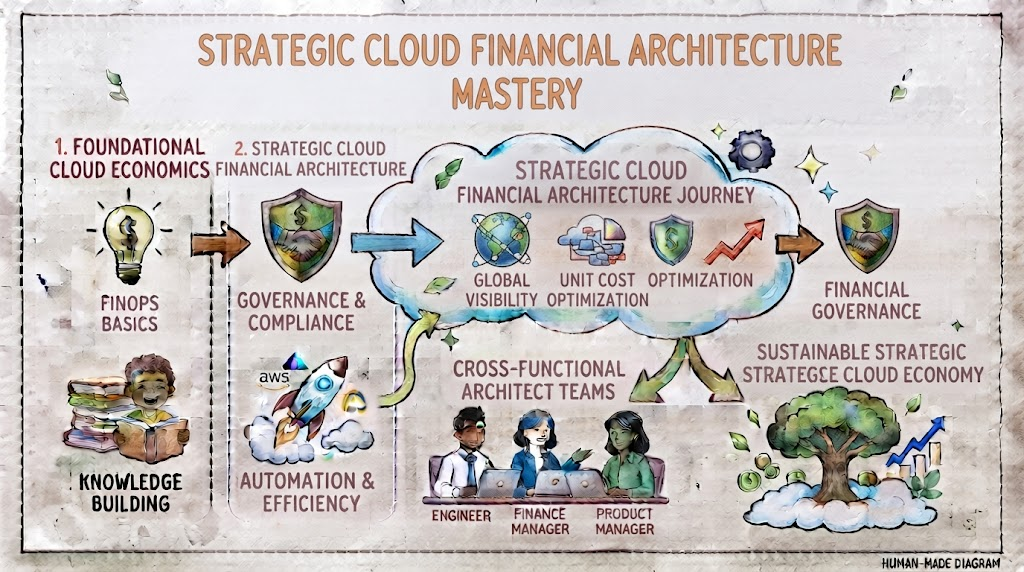
FinOpsSchool functions as a specialized educational hub dedicated to advancing cloud financial operations through practical, career-oriented curricula. Systems engineers, technical architects, and finance professionals leverage this ecosystem to extract maximum business value from complex technology investments. Unlike traditional academic programs, this initiative emphasizes realistic deployment scenarios, covering everything from granular cost allocation to advanced budget forecasting. Bridging the gap between software development squads and corporate finance divisions empowers organizations to execute rigorous governance and seamless cross-functional collaboration.
Why FinOpsSchool Matters for Modern Engineering Teams
Rapid software deployment workflows frequently conflict with legacy financial budgeting models, generating friction between developers and corporate finance departments. FinOpsSchool resolves this operational barrier by establishing infrastructure expense as a core metric of engineering performance, matching standard metrics like system latency or uptime. Developers who understand the financial impact of their code naturally design cleaner, highly efficient architectures that minimize resource consumption. This cultural evolution eliminates unexpected budget surprises at the end of every billing cycle while granting technical squads greater ownership over their operational environments.
Core Components of a FinOpsSchool Program
A comprehensive FinOps Course addresses several foundational pillars required for thriving in today’s competitive cloud market. Programs examine granular cloud billing decomposition, automated tagging enforcement, and transparent showback or chargeback reporting models. Instructors guide participants through modern forecasting techniques and the strategic utilization of Reserved Instances or Savings Plans. Practical laboratory exercises teach learners how to execute precise rightsizing procedures that remove excessive overhead without degrading application performance or system reliability.
Security in CI/CD Pipelines
Automating security checks directly within software delivery pipelines safeguards operational integrity and corporate budgets before code reaches production environments. FinOpsSchool demonstrates how embedding automated security validation prevents the accidental deployment of oversized or vulnerable cloud assets. Detecting misconfigured storage containers or unauthorized instance types during the build phase eliminates costly post-deployment remediation cycles. Secure pipelines automate compliance enforcement while guaranteeing that only optimized, cost-effective infrastructure scales into live environments.
Policy as Code
Policy as Code converts governance rules into version-controlled text files that automatically govern cloud environments against strict financial and security boundaries. Organizations deploy these automated guardrails to prevent accidental infrastructure surges, such as unauthorized instance launches or restricted regional deployments. FinOps Training highlights tools that evaluate these constraints dynamically during the deployment phase, allowing engineering teams to move swiftly without violating corporate standards. This methodology replaces subjective manual reviews with transparent, auditable guardrails.
Kubernetes Security
Managing containerized systems efficiently requires balancing strict security baselines with precise resource requests and cluster auto-scaling mechanisms. FinOps Engineer Training demonstrates that an over-allocated Kubernetes cluster represents both an expensive financial liability and an expanded security attack surface. Practitioners learn to implement pod-level visibility and precise cost allocation to ensure microservices consume only necessary resources. Proper container orchestration curbs cluster sprawl and maintains strict cost discipline across large-scale microservice architectures.
Cloud Security and FinOpsSchool
Cloud security operations and FinOps share the identical mission of safeguarding and optimizing enterprise technological assets. Collaborative efforts between security specialists and financial practitioners establish safer, highly optimized operational ecosystems. FinOpsSchool curricula demonstrate how strict Identity and Access Management policies function simultaneously as vital cost-control mechanisms. Limiting administrative privileges stops unauthorized resource creation that quietly inflates monthly cloud expenditures. Furthermore, continuous security monitoring supplies vital data streams for spotting anomalous spending patterns early.
Vulnerability Management
Neglecting systematic vulnerability patching introduces severe operational risks that ultimately result in catastrophic financial losses and prolonged downtime. FinOpsSchool integrates automated vulnerability lifecycle management into its core curriculum to help organizations minimize technical debt. Swiftly resolving software flaws prevents expensive emergency remediation workflows that bypass standard corporate financial controls. Treating vulnerability management as a core element of infrastructure hygiene guarantees that cloud assets operate on secure, highly efficient software configurations.
Compliance Automation
Highly regulated industries demand continuous audit trails, making compliance automation a mandatory requirement for sustainable cloud architectures. FinOps Training provides the technical know-how needed to automate compliance data collection, keeping cloud utilization inside legal parameters. Automated reporting dashboards prove adherence to budget caps and security baselines without requiring tedious manual audits. This automated visibility preserves organizational agility, freeing technical personnel to focus on feature innovation rather than manual compliance checks.
Building a FinOpsSchool Culture
Establishing true financial accountability requires shifting cultural mindsets across engineering, finance, and executive leadership groups. FinOpsSchool demonstrates that total financial transparency gives individual squads the clarity needed to take direct ownership of their resource consumption. This collaborative environment replaces finger-pointing with shared accountability, rewarding engineers for architectural efficiency. Breaking down traditional organizational silos builds a sustainable, cost-aware ecosystem dedicated to continuous improvement and mutual business growth.
Common FinOpsSchool Mistakes
Many organizations fail to achieve sustainable cost savings because they rely exclusively on automated software tools while ignoring people and processes. A frequent error involves imposing top-down financial mandates without consulting the engineering squads responsible for implementation. Another critical misstep involves neglecting tagging hygiene, which destroys granular cost visibility and attribution accuracy. Avoiding these pitfalls requires a balanced strategy that pairs enterprise tooling with continuous education, cross-functional alignment, and cultural transformation.
How FinOpsSchool Training Can Help
Structured educational programs supply the practical competencies required to master complex cloud financial ecosystems. Participants explore modern cost optimization methodologies, data-driven forecasting frameworks, and cross-functional communication strategies through immersive modules. Real-world case studies give learners actionable frameworks that translate directly into daily workplace routines. This practical exposure accelerates an organization’s cloud financial maturity, unlocking maximum return on investment across every deployed cloud asset.
Who Can Benefit From FinOpsSchool Learning?
Diverse technology professionals leverage FinOpsSchool pathways to accelerate their careers and optimize enterprise cloud environments.
| Target Role | Professional Benefit |
| Cloud Engineers | Build cost-effective architectures and optimize underlying infrastructure. |
| DevOps Professionals | Integrate automated cost governance directly into software delivery pipelines. |
| Finance Specialists | Gain precise operational visibility into cloud budgets and expenditure forecasting. |
| Procurement Officers | Negotiate vendor contracts using deep insights into cloud billing models. |
| Technology Leaders | Cultivate accountability frameworks that maximize enterprise cloud ROI. |
FinOpsSchool Online Training
Virtual delivery models provide distributed enterprise teams with the flexibility to master cloud financial operations at their own pace. Instructor-led online sessions replicate the rigor of traditional classrooms using interactive labs, collaborative exercises, and remote mentorship. Virtual classrooms enable worldwide organizations to upskill entire technical departments simultaneously, establishing uniform financial standards across every office. Peer networking and expert guidance make online education an ideal option for busy technology professionals seeking career advancement.
FinOpsSchool Training in India
Rapid digital transformation across Indian enterprises drives heavy demand for specialized cloud financial talent. Regional training initiatives address localized market challenges, including multi-cloud management across expanding digital footprints. Specialized educational tracks equip Indian technology professionals with the advanced strategies needed to lead organizational cost-control initiatives. This tailored focus ensures regional enterprises maintain financial sustainability while scaling innovative applications on global cloud platforms.
FinOpsSchool Engineer Certification
Advanced technical credentials validate a professional’s mastery of cloud cost analytics and engineering-led optimization techniques. Candidates demonstrate their ability to enforce tagging standards, manage complex container clusters, and build automated cost dashboards. Holding this professional certification signals proven competence to prospective employers, confirming the bearer can drive measurable financial savings within complex cloud environments.
Becoming a Certified FinOpsSchool Professional
Achieving formal certification demands dedicated study, practical lab work, and rigorous examination across the cloud financial lifecycle. Candidates master budgeting, forecasting, governance, and resource optimization through structured training paths. Earning this designation connects graduates to a global network of specialized practitioners dedicated to advancing cloud financial management standards and driving enterprise efficiency.
Choosing the Right FinOpsSchool Learning Program
Selecting an ideal educational program requires evaluating curriculum depth, hands-on laboratory exposure, and alignment with individual career objectives. Top-tier programs provide expert mentorship, up-to-date industry methodologies, and actionable scenarios mirroring real corporate challenges. Assessing course modules for anomaly detection and forecasting capabilities ensures your educational investment yields maximum professional growth.
FinOpsSchool’s Practical Learning Approach
Experiential learning forms the cornerstone of every educational offering at FinOpsSchool. Direct interaction with cloud billing datasets, tagging structures, and optimization utilities ensures concepts translate into workplace execution. Immersive case studies challenge participants to solve authentic enterprise engineering problems, building absolute confidence in deploying scalable cost-control frameworks.
Frequently Asked Questions About FinOpsSchool
1. What core competencies does certification training deliver to participants?
Programs supply practical expertise in bridging engineering decisions with financial metrics to maximize corporate cloud value.
2. How do non-technical finance teams utilize practitioner training?
Finance professionals gain essential cloud literacy to manage budgets, forecasting, and resource allocation models accurately.
3. In what ways does optimization training influence daily development?
Developers treat infrastructure expense as a primary performance indicator, resulting in highly efficient code architecture.
4. Is virtual instruction effective for distributed enterprise teams?
Virtual classrooms offer flexible, instructor-led synchronization that aligns distributed teams across multiple time zones.
5. Which technical proficiencies receive focus during engineering instruction?
Curricula emphasize container cost management, infrastructure automation, and advanced cloud cost analytics.
6. Why is regional training critical for technology firms in India?
Specialized instruction helps local enterprises control surging multi-cloud expenditures while maintaining rapid business growth.
7. How does professional certification enhance career progression?
Credentials validate specialized competencies, positioning professionals favorably for senior technical and leadership opportunities.
8. Do enterprise corporate programs incorporate organization-specific scenarios?
Corporate packages feature customized case studies addressing unique infrastructure challenges within the client’s environment.
9. How do FinOps courses differ from standard cloud technical training?
FinOps programs focus strictly on financial management, governance, and operational culture rather than basic infrastructure setup.
10. What timeline should teams follow when reviewing optimization strategies?
Organizations must evaluate their financial frameworks quarterly to adapt smoothly to changing cloud consumption trends.
Final Takeaways
Mastering cloud financial operations requires ongoing education, cross-functional collaboration, and unwavering commitment to operational excellence. FinOpsSchool equips modern technology professionals with the specialized skills required to navigate intricate multi-cloud ecosystems successfully. Cultivating a culture of shared accountability allows enterprises to convert cloud expenditures into a powerful competitive advantage. Begin your optimization journey today to build a streamlined, highly profitable future.