Introduction
Can Pilots Become Astronauts is a question that inspires thousands of aviation students and space enthusiasts around the world. The idea of mastering aircraft in Earth’s atmosphere and then moving beyond it to explore outer space represents one of the most advanced career transitions in human history.
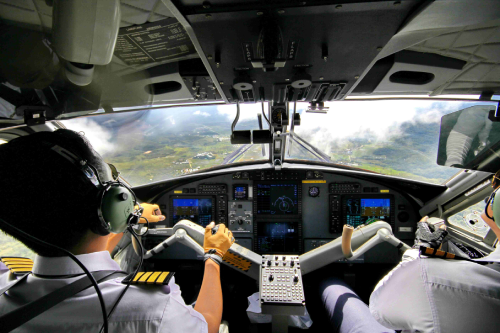
Aviation and space exploration are deeply connected fields. Pilots already operate in high-speed, high-pressure environments, which closely resemble some of the challenges faced in space missions. This is why many astronauts across the world come from aviation backgrounds, especially military and test pilots.
In this blog, we will explore whether pilots can become astronauts, why aviation experience is valuable, what requirements are needed, and how this unique career path actually works in real life.
Who is a Pilot?
A pilot is a trained professional responsible for operating and controlling aircraft safely. Pilots ensure that flights are conducted efficiently, following strict safety and navigation rules.
Types of Pilots
- Commercial Pilots
- Private Pilots
- Military Pilots
- Cargo Pilots
Responsibilities of Pilots
- Operating aircraft systems during flight
- Ensuring passenger and flight safety
- Communicating with air traffic control
- Handling emergencies and unexpected situations
- Following aviation regulations and procedures
Pilots are highly skilled professionals trained to manage complex flight systems in challenging environments.
Who is an Astronaut?
An astronaut is a specially selected individual trained to travel into space and carry out missions beyond Earth’s atmosphere. Astronauts work on space stations, spacecraft, and scientific missions that explore space.
Responsibilities of Astronauts
- Conducting scientific experiments in space
- Operating spacecraft systems
- Performing spacewalks
- Managing life-support systems
- Communicating with mission control on Earth
Astronauts represent one of the most elite professions in science and engineering.
Can Pilots Become Astronauts?
Yes, pilots can become astronauts. In fact, many astronauts have started their careers as pilots. However, becoming an astronaut requires much more than flying experience alone.
Pilots are strong candidates for astronaut selection because they already have experience in:
- High-speed decision-making
- Complex system operations
- Navigation and control systems
- Emergency response under pressure
Even though aviation experience helps significantly, astronauts must also meet strict educational, physical, and psychological requirements.
Why Pilots Make Strong Astronaut Candidates
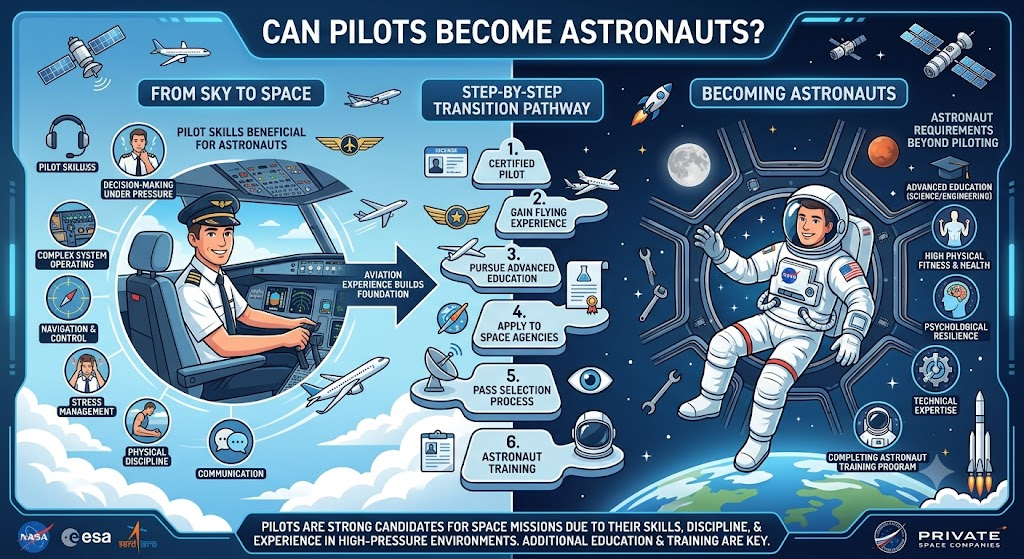
Pilots often have an advantage in astronaut selection programs because of the following skills:
Decision-Making Skills
Pilots are trained to make quick and accurate decisions in emergencies, which is essential in space missions.
Technical Knowledge
They understand advanced navigation systems, flight instruments, and control mechanisms.
Stress Management
Flight training prepares pilots to stay calm under pressure in critical situations.
Physical and Mental Discipline
Pilots undergo strict training that builds endurance, focus, and resilience.
Communication Skills
Constant communication with air traffic control helps pilots develop strong coordination skills, similar to astronauts working with mission control.
Requirements to Become an Astronaut
Even though pilots have an advantage, astronaut selection requires additional qualifications.
Educational Requirements
- Degree in science, engineering, mathematics, or medicine
- Advanced technical knowledge or research experience preferred
Physical Requirements
- Excellent overall health
- High level of physical fitness
- Ability to handle extreme environments
Selection Process
- Application to space agencies such as NASA, ESA, or ISRO
- Academic and professional screening
- Psychological and medical evaluations
- Completion of astronaut training program
The selection process is extremely competitive and selective.
Step-by-Step Path from Pilot to Astronaut
The journey from pilot to astronaut typically follows these steps:
Step 1: Become a Certified Pilot
Complete aviation training and obtain a valid pilot license.
Step 2: Gain Flying Experience
Work as a commercial or military pilot to build real-world experience.
Step 3: Pursue Advanced Education
Study science, engineering, or related technical fields.
Step 4: Apply to Space Agencies
Submit applications to astronaut recruitment programs.
Step 5: Selection Process
Pass physical, psychological, and technical assessments.
Step 6: Astronaut Training
Complete intensive training in spacecraft systems, survival skills, and space operations.
Challenges in Becoming an Astronaut
The transition from pilot to astronaut is extremely challenging due to several factors:
- Very limited number of astronaut positions worldwide
- Extremely high competition
- Long training and selection process
- Strict physical and psychological requirements
- Need for advanced academic qualifications
Even experienced pilots may not be selected unless they meet all criteria.
Why Many Astronauts Have Aviation Backgrounds
Many astronauts, especially in earlier space programs, were military or test pilots. This is because:
- They were already trained in high-performance machines
- They had experience handling extreme flight conditions
- They understood advanced navigation systems
- They were used to high-risk environments
Even today, aviation remains one of the strongest pathways into astronaut careers.
Future of Pilot and Astronaut Careers
The future of both aviation and space exploration is rapidly expanding.
Key Developments
- Commercial space tourism growth
- Private space companies entering exploration missions
- Artificial intelligence in aviation systems
- Reusable rockets and spacecraft technology
- Human missions to the Moon and Mars
These advancements are creating new opportunities for both pilots and astronauts.
FAQs
1. Can pilots really become astronauts?
Yes, pilots can become astronauts if they meet additional educational, physical, and selection requirements.
2. Is pilot experience required to become an astronaut?
It is not mandatory, but it is highly beneficial for astronaut selection.
3. What type of pilots are preferred by space agencies?
Military and test pilots are often preferred due to their advanced training.
4. Do astronauts need higher education?
Yes, most astronauts require degrees in science, engineering, or related fields.
5. Is it easier to become a pilot or astronaut?
Becoming a pilot is much easier compared to the highly competitive astronaut selection process.
6. Can commercial pilots apply for astronaut programs?
Yes, commercial pilots can apply if they meet the required qualifications.
7. Why do astronauts often come from aviation backgrounds?
Because pilots already have experience handling complex systems and high-pressure situations.
8. How long does it take to become an astronaut from a pilot career?
It can take several additional years of education, experience, and training.
9. Which space agencies hire astronauts?
NASA, ESA, ISRO, and other international space organizations hire astronauts.
10. Is astronaut training harder than pilot training?
Yes, astronaut training is more complex, longer, and more physically demanding.
Conclusion
Can Pilots Become Astronauts is not just a question of possibility but also of preparation and dedication. Pilots already possess many of the core skills needed for space missions, such as decision-making, technical understanding, and stress management. However, becoming an astronaut requires much more than aviation experience.
Additional education, physical fitness, and successful completion of highly competitive selection processes are essential. While not every pilot becomes an astronaut, aviation experience significantly increases the chances of entering space programs.
For students aspiring to reach beyond the skies, pilot training can be an excellent foundation for a future in space exploration. It represents the first step toward a journey that could lead from Earth’s atmosphere all the way into outer space.