
Introduction
Finding the right rental vehicle can make any trip easier. A family holiday may need a spacious car. A weekend adventure may call for a motorcycle. Short city trips may work better with a scooter. Today, travelers can explore both traditional rental companies and peer-to-peer marketplaces. These options offer different vehicles, rental terms, and booking experiences. However, a good choice requires more than comparing daily prices. You should check vehicle condition, insurance, license rules, mileage limits, and pickup details. Platforms such as motoshare.us also give renters and vehicle owners another way to explore the growing vehicle-sharing market across the United States.
Start With a Clear Vehicle Rental Plan
Before searching for a rental, think about your journey. Your destination, travel time, passenger count, and budget all affect your choice. A small car may suit a short city visit. A larger vehicle may work better for a family road trip. A motorcycle may offer a more enjoyable experience on scenic routes.
First, decide what you need from the vehicle. This simple step can save time and prevent poor choices.
Consider these important points:
- Trip purpose: Choose a vehicle that suits your planned activities.
- Travel distance: Check whether the vehicle can handle your route.
- Passenger space: Make sure everyone has enough room.
- Luggage capacity: Check storage space before booking.
- Road conditions: Consider highways, city streets, and rural roads.
- Driving experience: Select a vehicle that matches your skills.
- Rental budget: Include deposits, fuel, mileage, and extra charges.
- Rental duration: Compare daily and longer rental terms.
A clear plan makes the search process easier. It also helps you compare similar vehicles instead of choosing the first available option.
Explore the Main Types of Vehicle Rentals
American travelers can choose from several vehicle rental options. Each type serves a different purpose. Cars work well for daily travel, while motorcycles suit riders who enjoy open-road journeys. Scooters can help with shorter local trips.
Peer-to-peer marketplaces add another option. They connect renters with independent vehicle owners who want to share eligible vehicles.
| Vehicle type | Common purpose | Important checks |
|---|---|---|
| Cars | Daily travel and road trips | Mileage, fuel, and passenger space |
| SUVs | Family trips and extra luggage | Size, fuel use, and storage |
| Motorcycles | Scenic rides and leisure travel | License, experience, and safety gear |
| Scooters | Short local journeys | Local laws, range, and parking |
| Vans | Group travel and larger loads | Seating, capacity, and driving rules |
Do not assume that every rental follows the same rules. Different providers may set different age limits, deposits, mileage allowances, and insurance conditions.
Compare the complete rental agreement before making a decision.
Find the Right Car Rentals Near Me
A search for car rentals near me can help you explore vehicles around your location. Nearby pickup points may save time and make travel easier. However, location should not become your only deciding factor.
A suitable rental should also match your travel needs and budget.
Check these details before booking:
- Vehicle make, model, and year
- Passenger capacity
- Luggage space
- Pickup and return locations
- Daily rental rate
- Mileage allowance
- Fuel policy
- Security deposit
- Insurance and protection terms
- Cancellation conditions
Read the full agreement before confirming your booking. Some rentals include mileage limits or additional charges for late returns. Others may require a specific fuel level when you return the vehicle.
Inspect the car during pickup. Take photos of existing scratches, dents, and other visible damage. Ask the provider to record any issues before you leave.
These simple checks can help prevent misunderstandings later.
Understand the Peer-to-Peer Car Rental Model
A peer-to-peer car rental marketplace connects car owners with people who need temporary transportation. Instead of depending only on traditional rental fleets, renters can explore vehicles listed by independent owners.
This model creates another way to access cars. It may also help owners explore rental opportunities for vehicles they do not use every day.
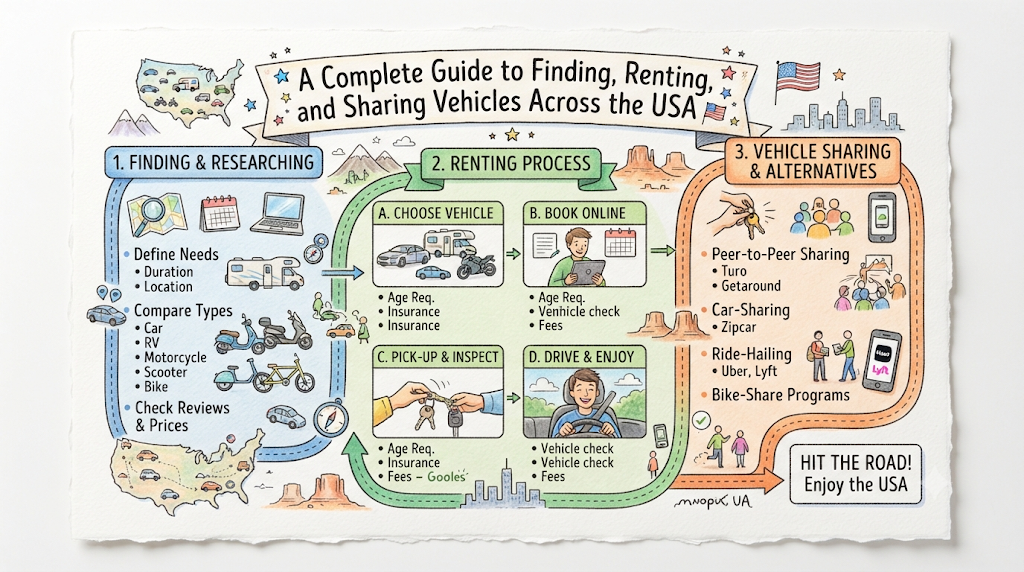
A typical rental process may include these steps:
- Search for a car in your preferred area.
- Compare vehicle details and rental conditions.
- Review owner instructions and eligibility rules.
- Check the total rental cost.
- Follow the platform’s booking process.
- Confirm pickup arrangements.
- Inspect the vehicle before driving.
- Return the car according to the agreement.
Peer-to-peer rentals can offer different vehicle choices. However, each owner may set specific conditions.
Check insurance coverage, mileage rules, deposits, and damage responsibilities. Also, confirm whether the vehicle and rental arrangement meet local legal requirements.
Choose a Motorcycle That Matches Your Riding Skills
Motorcycle rentals appeal to travelers who enjoy scenic routes and open roads. They can also offer a different way to explore popular destinations.
However, not every motorcycle suits every rider. Engine size, weight, seat height, and handling can affect comfort and control.
Before booking a motorcycle, review these details:
- Motorcycle make and model
- Engine size and power
- Required motorcycle endorsement
- Minimum rider age
- Rider experience requirements
- Helmet and safety equipment rules
- Mileage limits
- Insurance coverage
- Roadside assistance terms
- Pickup and return instructions
A beginner should avoid choosing a powerful motorcycle without enough experience. A manageable model can offer better control and confidence.
Inspect the motorcycle before riding. Check the tires, brakes, lights, mirrors, and controls. Ask about any special operating instructions.
Wear suitable protective gear and follow traffic laws. Good preparation can make your ride safer and more enjoyable.
Explore Peer-to-Peer Motorcycle Rental Options
A peer-to-peer motorcycle rental marketplace allows motorcycle owners to connect with riders who need temporary access to a bike.
This model can help riders compare different motorcycle types. A traveler may want a touring motorcycle for a longer journey. Another rider may prefer a smaller model for a short weekend trip.
Before choosing a motorcycle, consider the following:
- Does the motorcycle suit your riding experience?
- Does your license cover that model?
- Does the rental agreement allow your planned route?
- Does the owner provide or require safety gear?
- What happens if the motorcycle develops a problem?
- Does the insurance policy cover rental activity?
- Are there mileage or location restrictions?
Never select a motorcycle based only on appearance or engine power. Comfort, control, and safety should guide your decision.
Also, review the return conditions. Check whether the owner expects a specific fuel level or requires a particular return location.
Search for Scooter Rentals Near Me
Scooters can offer a practical option for short local journeys. They may suit visitors who want to explore nearby areas without renting a larger vehicle.
A search for scooter rentals near me can help you discover local rental choices. Before booking, check the scooter type and local rules.
Scooters with different engine sizes may have different legal requirements. Electric models may also follow separate rules from gasoline-powered scooters.
Review these points before renting:
- Scooter type and engine size
- Required driving license
- Helmet requirements
- Minimum age
- Allowed riding areas
- Battery range for electric models
- Charging instructions
- Parking rules
- Rental duration
- Insurance and damage conditions
Do not assume that every scooter works on every road. Some areas restrict certain vehicle types or require specific safety equipment.
Choose a scooter that matches your route and experience. Also, check the battery or fuel level before departure.
Find a Suitable Car Rental on Hilton Head Island
Hilton Head Island attracts visitors with its beaches, outdoor activities, golf courses, and coastal atmosphere. Many travelers prefer a rental car because it gives them more control over their daily plans.
A search for car rental Hilton Head Island can help you compare local options. However, the right vehicle depends on your group size and travel plans.
A compact car may suit a couple. A family may need an SUV or a larger vehicle. Travelers with beach equipment may prefer extra storage space.
Before confirming a rental, check:
- Pickup location
- Distance from your hotel or accommodation
- Passenger capacity
- Luggage space
- Daily mileage limit
- Fuel policy
- Rental duration
- Parking requirements
- Deposit and payment terms
- Insurance conditions
Plan your pickup around your arrival time. This can help you avoid unnecessary delays.
Also, review local parking rules before visiting popular beaches and busy areas. A little planning can make your island visit more comfortable.
Consider Motorcycle Rental on Hilton Head Island
A motorcycle can offer a different way to enjoy coastal surroundings. Riders may appreciate the open-air experience and the freedom to explore scenic roads.
However, a motorcycle rental requires careful planning. Weather, road conditions, and local traffic rules can affect the journey.
A search for motorcycle rental Hilton Head Island can help you explore relevant rental options. Compare the motorcycle model and rental conditions before making a choice.
Check these details:
- Required motorcycle license
- Minimum rider age
- Motorcycle condition
- Helmet and protective gear rules
- Insurance coverage
- Mileage restrictions
- Allowed riding areas
- Pickup and return instructions
Coastal weather can change quickly. Rain and strong winds may affect motorcycle handling. Check the weather before departure and avoid riding in unsafe conditions.
Choose a motorcycle that matches your skills. A comfortable and manageable bike can help you enjoy the journey with greater confidence.
How to Rent Out My Motorcycle
Motorcycle owners sometimes leave their bikes unused for weeks or months. A peer-to-peer marketplace may offer another way to explore rental opportunities.
If you want to rent out my motorcycle, start by checking legal and insurance requirements. Do not assume that a personal motorcycle policy covers rental activity.
Prepare your motorcycle before creating a listing.
Owner preparation checklist:
- Review your motorcycle insurance policy.
- Ask your insurer about rental activity.
- Check state and local rental rules.
- Confirm registration requirements.
- Inspect the motorcycle.
- Complete necessary maintenance.
- Take clear vehicle photos.
- Write accurate motorcycle details.
- Set clear pickup instructions.
- Explain mileage and return conditions.
- Review renter eligibility requirements.
Owners should also plan for damage, theft, accidents, and late returns. These issues can create financial and legal responsibilities.
Keep maintenance records and inspection photos. Written rental terms can also help both parties understand their responsibilities.
Rental activity does not guarantee income or regular bookings. Owners should review costs and risks before listing a motorcycle.
Learn How to List My Car for Rent
Car owners may also explore ways to share vehicles they do not use every day. A peer-to-peer marketplace can connect owners with people looking for temporary transportation.
If you want to list my car for rent, prepare the vehicle and its documents first. A complete listing gives renters useful information before they make a decision.
Follow these steps:
- Check the vehicle’s condition.
- Review insurance coverage.
- Confirm local legal requirements.
- Gather registration details.
- Take clear photos of the car.
- Describe its features accurately.
- Set rental conditions.
- Explain pickup and return rules.
- Confirm renter requirements.
- Keep maintenance records updated.
Include details such as transmission type, seating capacity, luggage space, and fuel type. Mention any important restrictions or known issues.
Owners should also plan for cleaning, maintenance, inspections, and customer communication.
Before accepting bookings, confirm that your insurance allows rental use. A standard personal policy may exclude paid rentals.
Understand Free Car Rental Software
Rental businesses often manage many daily tasks. They handle bookings, vehicle records, customer details, maintenance, and payments.
Some operators search for free car rental software to manage these activities without a large starting expense. Free tools may support basic operations, but their features can vary.
Compare these common features:
| Software feature | Business benefit |
|---|---|
| Booking management | Organizes rental dates and reservations |
| Vehicle records | Stores vehicle details and status |
| Customer records | Keeps renter information organized |
| Maintenance tracking | Records service and repair schedules |
| Payment records | Helps track rental payments |
| Reports | Shows basic business activity |
| Availability calendar | Helps prevent scheduling conflicts |
Do not choose software only because it offers a free plan. Some tools limit users, vehicles, reports, or storage.
Check the provider’s pricing terms before entering business information. Review data security, customer support, and export options too.
The best software should solve real business problems. A small rental operator may only need basic booking and vehicle records. A larger fleet may require more advanced tools.
Improve Daily Work With Rental Management Tools
Vehicle rental businesses need clear records and organized processes. Without them, owners may struggle with booking changes, customer questions, and vehicle maintenance.
Rental management software can help bring important information together. Depending on the product, it may support booking administration, customer records, and fleet operations.
A simple management process can help:
- Record every confirmed booking.
- Update vehicle availability.
- Track maintenance dates.
- Store customer details securely.
- Keep rental terms easy to access.
- Record payments and deposits.
- Organize pickup and return instructions.
- Review vehicle condition after each rental.
Owners should choose tools that match their business size. A small operator may not need a complex system.
Before choosing a platform, review its features and pricing. Also, check whether the system supports your rental process and local business requirements.
Good records can help owners manage daily work more clearly.
Prepare Every Vehicle Before Handover
Vehicle condition affects safety and the rental experience. Owners should inspect vehicles before every handover. Renters should also check the vehicle before leaving.
A basic inspection can help both sides identify problems early.
Vehicle handover checklist:
- Clean the vehicle.
- Check tires and visible damage.
- Test lights and indicators.
- Check mirrors and controls.
- Review warning lights.
- Confirm the fuel or battery level.
- Check required vehicle documents.
- Remove personal belongings.
- Record existing scratches and dents.
- Share important operating instructions.
For motorcycles, inspect the brakes, tires, lights, and safety equipment. For cars, check seat belts, mirrors, doors, and warning signals.
Take photos during pickup and return. Keep records of any damage or concerns.
Never ignore a serious safety problem. Contact the owner or provider before using a vehicle that appears unsafe.
Compare the Full Rental Cost
The advertised rental price does not always show the complete cost. Additional charges and rental conditions can affect your final payment.
Compare the full agreement before booking.
| Cost item | What you should confirm |
|---|---|
| Base rental rate | What does the listed price include? |
| Security deposit | How much must you pay upfront? |
| Mileage | Does the rental include unlimited miles? |
| Fuel or charging | What level must you maintain or return? |
| Late return | What charges apply after the agreed time? |
| Cleaning | Can extra cleaning fees apply? |
| Cancellation | What refund rules apply? |
| Insurance | What protection and exclusions apply? |
Ask questions before making payment. Keep written confirmation of important rental terms.
A low daily rate may not offer the best value. Consider vehicle condition, location, included services, and the complete cost.
Follow Safe Rental Practices
Renting a vehicle does not reduce your responsibility on the road. You must follow traffic laws and use the vehicle carefully.
Before departure, adjust the seat and mirrors. Learn the controls and check the dashboard. Make sure the vehicle feels safe before starting your journey.
Follow these basic safety habits:
- Follow posted speed limits.
- Wear seat belts or required helmets.
- Avoid phone use while driving.
- Never drive under the influence.
- Keep a safe distance from other vehicles.
- Follow local traffic laws.
- Use only permitted roads.
- Report damage or accidents promptly.
- Keep emergency contact details available.
If an accident occurs, move to a safe place when possible. Contact emergency services when needed. Follow the rental agreement’s reporting process.
Check insurance and roadside assistance terms before departure. Never assume that every rental includes the same protection.
Explore Vehicle Sharing Through MotoShare USA
MotoShare USA provides a marketplace for people interested in vehicle rentals and sharing. It connects renters with independent vehicle owners and providers.
The platform focuses on vehicle categories such as cars, motorcycles, and scooters. This gives users another place to explore rental options.
MotoShare also promotes rental management software for owners and operators. Such tools can help organize parts of the rental process. Users should review the current platform details to understand its available features.
Renters can use a marketplace to:
- Explore vehicle listings.
- Compare different vehicle types.
- Review vehicle details.
- Check rental conditions.
- Understand pickup arrangements.
- Review terms before confirming a booking.
Owners can explore ways to:
- Present eligible vehicles.
- Share accurate vehicle information.
- Connect with potential renters.
- Review rental conditions.
- Organize customer and vehicle records.
- Manage parts of the rental process.
MotoShare promotes a model without additional marketplace commissions or booking fees. However, users should review current platform terms and any owner-set rental charges.
Visit motoshare.us to explore the marketplace and learn more about its current services.
Avoid Common Vehicle Rental Mistakes
A few simple checks can prevent many rental problems. Renters should read the agreement and inspect the vehicle. Owners should explain their rules and keep accurate records.
Avoid these common mistakes:
- Choosing only by price: Compare the complete cost and conditions.
- Ignoring license rules: Confirm that your license covers the vehicle.
- Skipping inspection: Record existing damage before departure.
- Overlooking insurance: Check coverage and exclusions.
- Ignoring mileage limits: Match the allowance to your travel plan.
- Forgetting return rules: Confirm the time, place, and vehicle condition.
- Assuming every listing has the same terms: Review each rental separately.
- Leaving questions unanswered: Ask for written clarification before payment.
Clear communication helps prevent confusion. Both renters and owners should understand the agreement before the rental begins.
Build a Better Experience for Renters and Owners
A good rental experience needs preparation from both sides. Renters should compare vehicles and understand the terms. Owners should maintain their vehicles and share accurate information.
Renters should focus on:
- Choosing a suitable vehicle
- Checking license requirements
- Comparing total rental costs
- Inspecting vehicle condition
- Reviewing insurance details
- Confirming pickup and return rules
Owners should focus on:
- Maintaining vehicle safety
- Creating accurate listings
- Setting clear rental conditions
- Checking insurance requirements
- Communicating with renters
- Keeping complete records
These steps can support better decisions. They also help both sides understand their responsibilities.
Frequently Asked Questions
1. How can I find car rentals near me?
Search for rental companies and peer-to-peer vehicle listings in your area. Compare vehicle types, pickup locations, prices, and rental conditions. Check mileage limits, deposits, and insurance details before booking. Choose a car that fits your passenger count, luggage, and travel plans.
2. What is a peer-to-peer car rental?
A peer-to-peer car rental connects independent vehicle owners with people who need temporary transportation. Owners can list eligible cars, while renters can compare available options. Each rental may have different rules. Both sides should review insurance, vehicle condition, payment terms, and damage responsibilities.
3. Can beginners use peer-to-peer motorcycle rental services?
Beginners may find suitable motorcycles, but they must choose carefully. Check license requirements, riding experience, motorcycle size, and safety equipment. Avoid powerful models that exceed your skills. Review insurance terms and local laws before booking. Safety should always come before appearance or engine power.
4. What should I check before booking scooter rentals near me?
Check the scooter type, engine size, license requirements, and helmet rules. For electric scooters, review battery range and charging instructions. Confirm the allowed riding areas and parking rules. Also, check pickup details, rental duration, and insurance conditions before confirming your booking.
5. How can I find a car rental on Hilton Head Island?
Search for local rental companies and vehicle listings serving Hilton Head Island. Compare pickup locations, vehicle sizes, rental terms, and total costs. Check current availability directly before making plans. Choose a car that suits your group size, luggage, and planned activities.
6. What should I know about motorcycle rental on Hilton Head Island?
Check your motorcycle license, rider experience, helmet requirements, and rental conditions. Review the motorcycle’s condition before departure. Confirm insurance coverage, mileage restrictions, and allowed riding areas. Also, check weather conditions because rain and strong winds can affect motorcycle handling.
7. How can I rent out my motorcycle?
Start by reviewing your insurance policy and local rental laws. Confirm that your insurer allows rental activity. Prepare the motorcycle, complete maintenance, and take clear photos. Write accurate vehicle details and set clear pickup, return, and damage rules. Review renter eligibility before accepting bookings.
8. What do I need to list my car for rent?
Prepare the car, registration details, and accurate vehicle information. Check your insurance policy and local rental requirements first. Take clear photos and explain important features. Set rental terms, mileage limits, pickup instructions, and return rules. Keep maintenance records updated and review renter requirements.
9. Is free car rental software useful for small businesses?
Free car rental software may help small operators manage basic bookings and vehicle records. However, free plans may limit users, storage, or advanced features. Review pricing, data security, support, and export options before choosing a system. Select software that fits your current business needs.
10. Does MotoShare USA charge additional marketplace booking fees?
MotoShare USA promotes a model without additional marketplace commissions or booking fees. However, users should review current platform terms before using the service. Vehicle owners may set their own rental charges, and other rental conditions may apply. Always check the complete cost before confirming a booking.
Conclusion
Vehicle rentals give travelers more ways to explore the United States. Cars support daily travel, motorcycles suit scenic rides, and scooters can help with short local trips. Peer-to-peer marketplaces also connect renters with independent vehicle owners. However, every rental needs careful planning. Compare prices, inspect vehicles, check license rules, and understand insurance conditions. Owners should review legal requirements before listing their vehicles. They should also maintain clear records and rental terms. Whether you want to rent a vehicle or share one, focus on safety, value, and honest communication. These habits can help create a more organized rental experience for everyone.