
Introduction
Europe hosts events for people with many different interests. Music lovers enjoy concerts and festivals. Professionals attend business meetings and industry conferences. Travellers explore local culture through exhibitions, food events, and live shows. These activities create exciting opportunities for visitors and event organizers.
However, planning an event experience takes more than finding an interesting title. Visitors need accurate dates, clear ticket details, and useful venue information. Organizers must prepare event pages, manage registrations, and share updates.
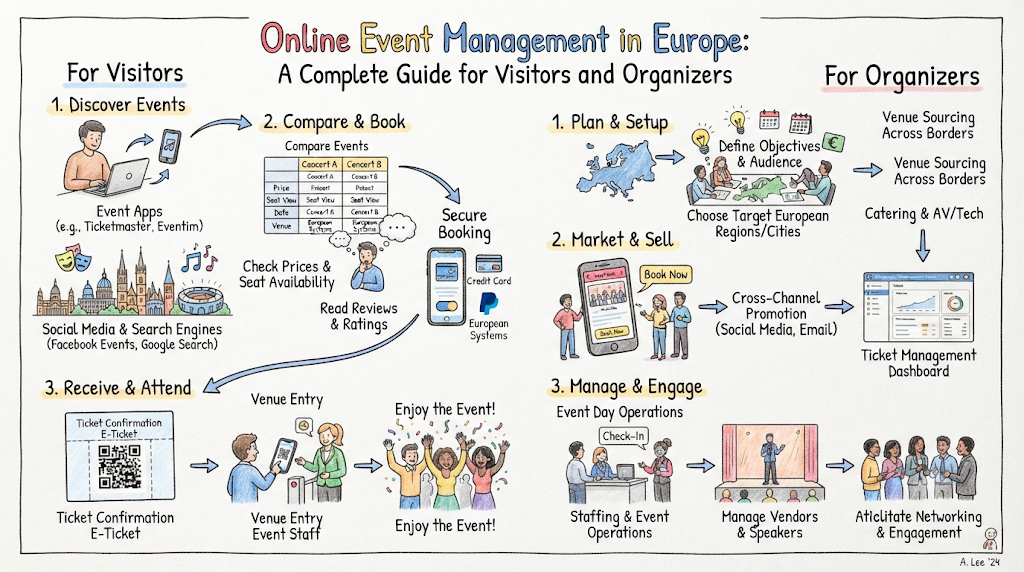
Online platforms make these tasks easier to organize. They bring event information and interested audiences together. This guide explains how people can discover events across Europe. It also covers practical steps for planning, promoting, and managing successful events.
Explore Europe’s Event Scene Through Different Experiences
Every European destination offers its own event experiences. Some cities attract visitors through music and nightlife. Others offer art exhibitions, business gatherings, and cultural celebrations.
Choosing the right event starts with understanding your interests.
Music and entertainment
Concerts, live shows, and music festivals attract audiences throughout Europe. Visitors can explore different music styles and performers. Before booking, check the artist details, venue, and event schedule.
Business and professional gatherings
Business conferences help professionals learn about industry changes. They also create opportunities to share ideas and meet other people. Technology, finance, marketing, and business events serve different professional groups.
Arts and cultural activities
Art exhibitions, theatre performances, film events, and cultural festivals offer local experiences. These activities can help travellers understand a city’s creative side.
Learning and skill development
Workshops and training events offer practical learning opportunities. Visitors can explore sessions related to technology, design, business, and personal interests.
Trade fairs and exhibitions
Trade fairs bring companies, buyers, and industry professionals together. Visitors can explore products, services, and new business ideas.
Finding the Right Event in a European City
A large number of event choices can make planning confusing. A simple search method helps narrow the options.
Start by deciding what you want from the experience. Then compare the event details before booking.
Search by Interest
Choose an event category that matches your plans. For example, search for concerts if you enjoy live music. Look for conferences if you want professional learning opportunities.
You can also explore workshops, festivals, exhibitions, and family activities.
Choose Your Destination
Your location can affect travel time and overall costs. Search for events in your preferred city or nearby areas.
Berlin and Paris offer different types of cultural and professional experiences. You can also explore events in other European destinations.
Check the Event Schedule
Review the event date and starting time. Check whether the event includes multiple sessions or activities.
If you plan to attend several events, compare their schedules. This helps you avoid timing conflicts.
Review Ticket Information
Read the available ticket details before choosing an option. Compare prices, entry conditions, and any stated benefits.
Never assume that every ticket category includes the same services.
Confirm the Venue
Check the full venue address. Look at nearby public transport options and local travel routes.
If you travel from another country, consider the distance from your accommodation.
What Makes Berlin and Paris Important Event Destinations?
Berlin and Paris attract visitors through culture, entertainment, and professional activities. Both cities offer different experiences for local and international audiences.
Berlin has a strong connection with music, art, and creative communities. Visitors can explore concerts, electronic music events, exhibitions, and professional gatherings.
The city also attracts people interested in technology and business discussions. Before choosing an event, review its venue and travel requirements.
Useful planning checks include:
- Confirm the event date and starting time.
- Check the venue address.
- Review ticket categories and entry conditions.
- Look for schedule updates.
- Plan your transport before arrival.
Paris offers opportunities for visitors interested in art, fashion, music, and business. People can explore exhibitions, live performances, cultural events, and professional meetings.
The city also attracts international visitors. Therefore, checking event language and location can help with planning.
Read the event description carefully. It should explain the main activities, schedule, and attendance requirements.
A Practical Checklist for Booking Event Tickets
A ticket confirms your booking, but good preparation makes the experience smoother. Review these points before completing your purchase.
| What to Check | Useful Details |
|---|---|
| Event Name | Confirm the correct event |
| Date and Time | Check the full schedule |
| Venue | Review the address and location |
| Ticket Price | Compare available categories |
| Entry Rules | Read age and identification requirements |
| Cancellation Terms | Review the stated booking conditions |
| Confirmation | Save your booking details |
After booking, keep your confirmation email or ticket accessible. Check whether the organizer sends any updates before the event.
International visitors should also review travel documents and entry requirements through official sources. A ticket alone does not provide permission to enter another country.
How Event Organizers Can Prepare Better Event Listings
A good event listing answers the questions visitors may ask before booking. It should explain what the event offers and how people can attend.
Organizers can improve their listings with a few simple steps.
Create a Meaningful Event Title
Use a title that clearly describes the event. Include the event type when it helps visitors understand the purpose.
Avoid unclear names that do not explain the activity.
Explain the Event in Simple Language
Describe the main purpose and activities. Mention the intended audience and important highlights.
For example, a technology workshop should explain its topic and expected learning activities. A music festival should describe its performances and schedule.
Share Complete Date and Venue Details
Provide the correct event date, start time, and venue address. Add location instructions when necessary.
For online events, explain how attendees can access the session.
Present Ticket Categories Clearly
If an event offers several ticket types, explain each one. Include the price and any stated differences.
Visitors should understand their options before making a booking decision.
Provide Registration Instructions
Explain how visitors can register. Mention the information they need to submit.
Also, describe what they should expect after completing registration.
Understanding Online Event Ticketing Platforms
An online event ticketing platform helps organizers publish event information and present ticket options. It also gives visitors a digital place to explore available events.
The exact services differ between platforms. Therefore, organizers should compare their requirements with the available features.
| Platform Area | What to Review | Main Purpose |
|---|---|---|
| Event Publishing | Titles, descriptions, dates | Share event information |
| Ticket Options | Categories and prices | Explain booking choices |
| Registration | Sign-up instructions | Guide attendees |
| Event Updates | Schedule and notice details | Share important changes |
| Event Discovery | Categories and listings | Help visitors explore events |
| Support | Available assistance | Address service questions |
A suitable Event Ticketing Platform Europe should make event information easy to understand. Organizers should also check how the platform handles ticket sales and registration.
For businesses that want to sell event tickets online, clear booking instructions are important. Visitors should know what they are purchasing and which conditions apply.
How to Select an Event Registration Platform
Choosing an event registration platform requires careful comparison. A platform that works for a small workshop may not meet the needs of a large conference.
Consider these factors before making a choice.
Simple registration process
Check whether visitors can complete registration without confusion. Clear steps help people understand what information they need.
Ticket presentation
Review how the platform displays ticket types and prices. Make sure the details remain easy to understand.
Event page design
An event page should present the main information clearly. Visitors should find the date, venue, schedule, and description without difficulty.
Pricing structure
Review service charges and other possible costs. Understand the payment and refund terms before choosing a provider.
Organizer controls
Check which event details organizers can edit. Also, understand how they can share updates with registered visitors.
Customer support
Review the support options available to organizers. This matters when they face booking questions or technical issues.
A careful comparison helps organizers select a service that fits their event.
How to List Your Event Online and Reach More People
Online event discovery can help organizers present their activities to a wider audience. However, a listing needs useful information to attract the right visitors.
Follow these steps when preparing an event listing.
- Select a suitable platform: Compare available services and their terms.
- Prepare event details: Write the title, description, date, and location.
- Add ticket information: Explain the available categories and prices.
- Choose the right category: Help visitors find the event through relevant searches.
- Review the listing: Check spelling, dates, prices, and contact information.
- Publish the event: Follow the platform’s publishing process.
- Share the listing: Promote it through suitable channels.
- Update important details: Correct changes as soon as possible.
Organizers who want to list their event online should focus on accuracy. Incorrect information can confuse visitors and create extra work.
Simple Ways to Promote Events Across Europe
Event promotion works best when the message reaches the right audience. Organizers should choose channels that match their event type.
Use Social Media
Share event details through relevant social platforms. Use short messages that explain the event, date, location, and registration process.
Publish updates when important information changes.
Create Useful Event Content
Write a clear event description. Explain the purpose, main activities, and expected audience.
Use relevant search terms naturally. For example, an organizer promoting a concert in France may use the phrase Concert Tickets Europe where it fits the content.
Work With Relevant Communities
Connect with groups that share an interest in the event. Professional communities may help promote conferences. Local cultural groups may help spread information about festivals.
Encourage Early Planning
Publish event information with enough time for visitors to prepare. People may need to arrange transport, accommodation, and work schedules.
Keep Visitors Informed
Share updates about schedules, venues, and registration details. Clear communication helps visitors prepare for the event.
How MyEventsNow EU Connects Events and Audiences
Event discovery and event promotion both need clear information. Visitors want to find suitable activities. Organizers want to present their events to interested people.
MyEventsNow EU serves as a European event discovery, ticket booking, and event management marketplace. It connects event organizers, venues, businesses, and attendees.
Visitors can explore different event categories and review available listings. These may include concerts, festivals, business conferences, workshops, and cultural activities.
Organizers can use the marketplace to present event information. They should prepare accurate descriptions, schedules, venue details, and ticket information before publishing.
A clear listing helps visitors understand the event. It also gives organizers a useful way to share important details with potential attendees.
Common Event Planning Problems and Practical Solutions
Small planning mistakes can affect both visitors and organizers. Understanding these issues helps people prepare better.
Unclear event information: Add complete descriptions, dates, and venue details.
Incorrect ticket prices: Review every ticket category before publishing.
Confusing schedules: Present event timings in a simple format.
Poor communication: Share important changes through suitable channels.
Limited travel planning: Check transport routes and accommodation early.
Unclear registration rules: Explain each registration step and any attendance requirements.
Missing updates: Review the event listing regularly and correct outdated information.
These steps can reduce confusion and help everyone manage event activities more effectively.
Frequently Asked Questions
How can I find upcoming events in Europe?
Search online event platforms, venue websites, and organizer pages. Filter results by city, date, and event category to find suitable activities.
Which types of events can I attend in Europe?
You can explore concerts, music festivals, conferences, exhibitions, workshops, trade fairs, and cultural celebrations. Availability depends on the city and event schedule.
How do I find events in Berlin?
Search by event type, date, and location. Review the listing details before choosing a concert, exhibition, festival, or professional gathering.
Where can I explore events in Paris?
Check online event listings and local venue pages. You can search for art shows, concerts, cultural activities, and business conferences.
How can I book concert tickets in Europe?
Find the event through an organizer or ticketing platform. Review the date, venue, ticket price, and entry conditions before completing your booking.
What information should a business conference listing include?
A useful listing should include the conference topic, date, venue, schedule, registration details, and intended audience. Speaker information can also help visitors decide.
What is an online event ticketing platform?
It is a digital service that helps organizers present events and provide ticket-related information. Some platforms also support registration and event management.
How can I sell event tickets online?
Choose a suitable ticketing service and prepare your event listing. Add accurate ticket categories, prices, dates, and booking instructions.
What should I compare when selecting an event registration platform?
Compare registration steps, ticket presentation, pricing, event page features, organizer controls, and support options. Read the service terms before making a decision.
Can event organizers list events on MyEventsNow EU?
MyEventsNow EU provides a marketplace for event discovery and management across Europe. Organizers can explore the platform and review its available publishing and booking options.
Final Thoughts
Europe offers many opportunities for people who enjoy entertainment, culture, and professional learning. Finding the right event becomes easier with clear searches and careful comparisons. Visitors should review ticket details, schedules, and travel plans before booking.
Organizers also need a strong event plan. Accurate listings, clear registration steps, and regular updates can improve the visitor experience. Online platforms help bring event information and audiences together. With careful preparation, both visitors and organizers can make better use of Europe’s growing event opportunities.