
Introduction
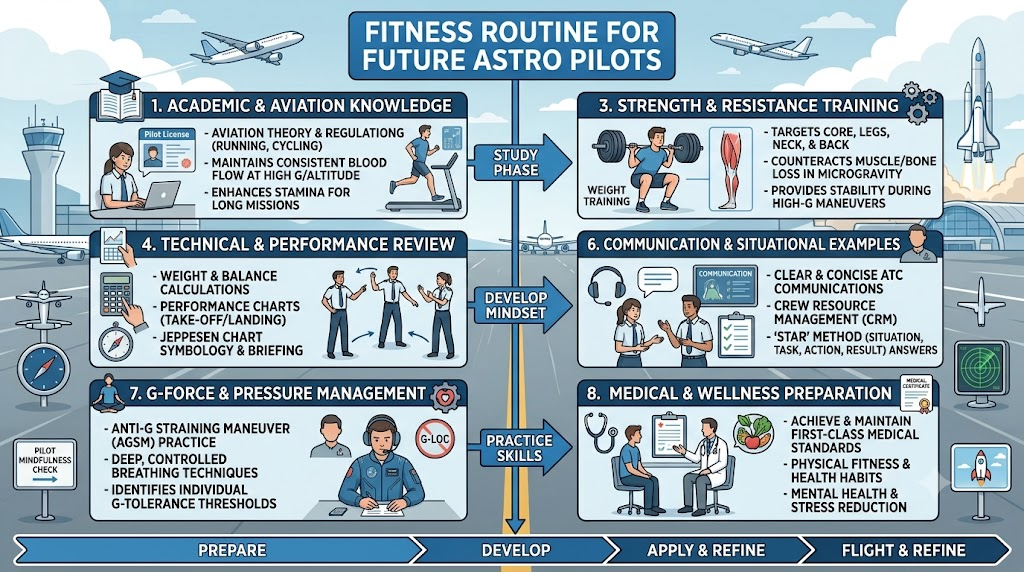
Preparing for a career related to spaceflight requires more than academic knowledge and technical skills. Physical fitness can help future astro pilots develop strength, endurance, mobility, coordination, and the ability to handle demanding training environments. A balanced fitness routine is more useful than extreme workouts or short-term fitness goals. This guide explains practical fitness habits that aspiring astro pilots can gradually incorporate into their preparation.
Main Content
Understanding Fitness for Future Astro Pilots
When people think about preparing for a space-related career, they may imagine intense workouts or highly specialized training. In reality, physical preparation involves several different areas of fitness.
A well-rounded routine can include cardiovascular exercise, strength training, mobility work, balance, coordination, core stability, and proper recovery. These areas support general physical capability and can help an individual prepare for physically demanding training.
Fitness preparation should also be realistic. There is no single workout routine that applies to every person interested in an astronaut or spaceflight-related career. Requirements can vary depending on the organization, role, training stage, and mission.
The goal at the beginning should be to develop healthy and sustainable habits rather than trying to achieve an extreme level of fitness quickly.
Why Physical Fitness Matters
Physical fitness can play an important role in preparing for demanding aviation and aerospace environments. Training may require individuals to remain physically active for extended periods and adapt to different types of physical challenges.
A balanced level of fitness can support:
- Cardiovascular endurance.
- Muscular strength.
- Muscular endurance.
- Body control and coordination.
- Mobility.
- Core stability.
- General physical health.
- Recovery from demanding activities.
Fitness is only one part of preparation. Knowledge, technical ability, communication, discipline, mental readiness, and professional skills are also important for people pursuing aerospace careers.
Cardiovascular Training
Cardiovascular fitness is an important part of a balanced exercise routine. It involves activities that challenge the heart and lungs while using large muscle groups.
Beginners can choose activities that suit their current fitness level, such as walking, jogging, cycling, swimming, or rowing.
The important principle is gradual development. Someone who is not accustomed to regular exercise should not immediately attempt long or highly intense workouts.
A practical approach is to begin with manageable sessions and gradually increase duration or intensity as fitness improves.
Cardiovascular activities can also add variety to a training routine. For example, someone might use cycling on one day and swimming on another instead of performing the same exercise every day.
Strength Training
Strength training is another important component of general physical preparation. It can help develop the ability to produce and control force during different movements.
Beginners do not necessarily need complicated equipment. Bodyweight movements and basic resistance exercises can provide a foundation for developing strength.
Common movement patterns include:
- Squatting.
- Lunging.
- Pushing.
- Pulling.
- Hip-hinge movements.
- Carrying.
- Core stabilization.
Exercises should be performed with proper technique. Increasing resistance too quickly can make it more difficult to maintain good form.
Strength training should also cover different areas of the body rather than focusing exclusively on visible muscles.
Core Strength and Stability
The core includes muscles around the abdomen, back, hips, and pelvis that contribute to stability and controlled movement.
Core training is not simply about developing abdominal muscles. It is also about being able to maintain control of the body during different movements.
Beginner-friendly exercises can include:
- Planks.
- Side planks.
- Bird dogs.
- Dead bugs.
- Controlled bodyweight movements.
The quality of movement is more important than performing a large number of repetitions.
A good core routine should complement strength, cardiovascular, and mobility training rather than replace them.
Mobility and Flexibility
Mobility and flexibility are sometimes treated as the same thing, but they are slightly different.
Flexibility generally refers to how much a muscle or group of muscles can stretch. Mobility involves the ability to move a joint through an appropriate range of motion with control.
Future astro pilots can benefit from maintaining healthy movement in areas such as the shoulders, hips, ankles, and spine.
Mobility work can include controlled movements and appropriate stretching. It should be performed gradually rather than forcing a joint or muscle into an uncomfortable position.
Balance and Coordination
Balance and coordination are useful physical abilities because they involve body awareness and controlled movement.
Simple activities that challenge balance can be included in a general fitness routine. Coordination can also be developed through activities that require the body to work together in controlled patterns.
However, general balance exercises should not be confused with specialized astronaut or aerospace training. Professional training programs may involve equipment and environments that cannot be replicated safely through ordinary workouts.
Recovery and Rest
A fitness routine is not complete without recovery.
Exercise creates physical demands, while rest gives the body an opportunity to recover from those demands. Training continuously without adequate recovery can make it harder to maintain consistent performance.
Useful recovery habits include:
- Getting adequate sleep.
- Including rest or lighter-activity days.
- Maintaining hydration.
- Eating balanced meals.
- Avoiding sudden increases in training volume.
- Paying attention to unusual or persistent discomfort.
Rest should not be viewed as a sign of weakness. It is part of maintaining a sustainable approach to physical training.
Nutrition and Hydration
Exercise and nutrition work together. A balanced diet can provide the energy and nutrients needed to support normal physical activity and recovery.
A general healthy eating pattern can include:
- Protein-rich foods.
- Fruits and vegetables.
- Whole grains or other nutrient-rich carbohydrate sources.
- Healthy sources of fats.
- Adequate fluids.
There is no need to follow an extreme diet simply because someone is interested in an aerospace career.
Nutritional needs differ from person to person. Anyone with specific dietary requirements or health concerns should seek advice from an appropriately qualified professional.
Mental Fitness and Physical Training
Physical preparation also requires consistency and discipline. A person may have an excellent workout plan, but maintaining it over time requires realistic goals and a willingness to adapt.
Mental qualities that can support a fitness routine include:
- Patience.
- Self-discipline.
- Consistency.
- Self-awareness.
- Goal setting.
- Willingness to learn.
- Ability to recover from setbacks.
Missing one workout does not mean that a fitness plan has failed. Long-term consistency is generally more useful than trying to maintain a perfect routine every day.
Creating a Sustainable Fitness Routine
A sustainable routine should fit realistically into a person’s schedule and current fitness level.
Beginners can start by combining several types of activity throughout the week instead of trying to train every physical quality in one session.
For example, a week might include cardiovascular exercise on some days, strength training on others, and mobility or lighter activities between demanding sessions.
The routine can then be adjusted as fitness and experience develop.
Practical Fitness Routine
A practical routine for someone beginning their physical preparation should focus on balance rather than intensity.
A typical week could include several different forms of exercise.
Beginning of the Week
Start with a moderate cardiovascular session. This could involve walking, jogging, cycling, or another activity that matches the person’s fitness level.
A short mobility session can follow if appropriate.
Strength-Focused Session
Another day can focus on basic strength movements involving the major muscle groups.
The emphasis should be on controlled technique rather than lifting the heaviest possible weight.
Mobility and Light Activity
A lighter day can include mobility exercises, walking, gentle cycling, or another comfortable activity.
This provides variety while allowing recovery between more demanding sessions.
Second Strength Session
A second strength session can provide another opportunity to practice basic movement patterns.
The exercises do not have to be identical to the first session. Variety can help develop a broader range of physical abilities.
Cardiovascular Session
Another day can focus on cardiovascular endurance.
The activity should be appropriate for the individual’s current level rather than based on an advanced athlete’s routine.
Recovery Day
At least one day can be reserved for rest or very light activity.
Recovery needs vary between individuals, so the routine should be adjusted according to experience, workload, and overall condition.
Fitness Areas for Future Astro Pilots
| Fitness Area | Example Activities | Main Purpose |
|---|---|---|
| Cardiovascular endurance | Walking, jogging, cycling, swimming | Supports general endurance |
| Strength | Squats, push-ups, resistance exercises | Develops muscular strength |
| Core stability | Planks, bird dogs, dead bugs | Supports controlled body movement |
| Mobility | Controlled joint movements, appropriate stretching | Supports healthy movement |
| Balance and coordination | Balance exercises and coordinated movements | Develops body awareness and control |
| Recovery | Sleep, rest days, light activity | Supports sustainable training |
Common Fitness Mistakes Future Astro Pilots Should Avoid
Training Too Intensely Too Soon
One of the most common mistakes beginners make is increasing exercise intensity too quickly.
A person may feel motivated after deciding to pursue an aerospace career and immediately attempt a demanding training schedule. However, the body needs time to adapt.
Gradual progression is generally a more sustainable approach.
Focusing Only on Strength
Being strong is useful, but strength is only one component of overall fitness.
A routine that ignores cardiovascular endurance, mobility, coordination, and recovery may not provide balanced physical preparation.
Ignoring Cardiovascular Fitness
Some beginners concentrate heavily on resistance training while overlooking endurance.
Activities such as walking, cycling, swimming, or jogging can add an important cardiovascular component to a balanced routine.
Neglecting Mobility
Strength and endurance exercises should be complemented by appropriate mobility work.
Ignoring movement quality can make a routine feel incomplete and may limit the range of activities a person can perform comfortably.
Skipping Recovery
Training every day at a high intensity is not necessarily better than a balanced schedule.
Recovery should be treated as part of the overall routine rather than something that happens only when a person becomes exhausted.
Copying Someone Else’s Workout
A workout designed for an experienced athlete may not be appropriate for a beginner.
Fitness level, age, previous activity, schedule, and individual circumstances can all affect what type of exercise is suitable.
Chasing Unrealistic Goals
Aspiring astro pilots may compare themselves with highly trained professionals or athletes.
Such comparisons can create unnecessary pressure. A better approach is to establish realistic goals based on current abilities and improve gradually.
Ignoring Exercise Technique
Performing an exercise incorrectly simply to complete more repetitions or use heavier resistance can reduce the quality of training.
Learning proper movement patterns should come before trying to increase difficulty.
Treating Nutrition as an Extreme Diet
Aerospace preparation does not require an extreme diet.
Restricting food unnecessarily or following unsupported nutritional trends can make it harder to maintain a healthy and sustainable routine.
Ignoring Persistent Pain or Unusual Symptoms
Normal exercise can sometimes produce temporary fatigue, but persistent pain or unusual symptoms should not simply be ignored.
When there is concern about health or exercise safety, appropriate professional guidance should be sought.
Example Weekly Fitness Plan
| Day | General Training Focus | Example Activities |
|---|---|---|
| Monday | Cardiovascular fitness | Walking, jogging, cycling, or swimming |
| Tuesday | Strength | Basic resistance and bodyweight exercises |
| Wednesday | Mobility and light activity | Mobility work and easy walking |
| Thursday | Strength and core | Full-body resistance exercises and core stability |
| Friday | Cardiovascular fitness | Moderate aerobic activity |
| Saturday | Light activity or coordination | Easy activity, balance, or mobility work |
| Sunday | Recovery | Rest or very light movement |
This schedule is only a general example. It should not be considered an official astronaut training program or a personalized exercise prescription.
Important Considerations
There is no single fitness routine that guarantees success in an astronaut or spaceflight-related career.
Different organizations and roles can have different selection processes, training requirements, and physical standards. Requirements can also change over time.
For this reason, aspiring astro pilots should distinguish between general fitness advice and official requirements associated with a specific career or organization.
It is also important to remember that professional aerospace training cannot be completely replicated through a home or gym workout. Specialized training may involve environments, equipment, procedures, and assessments that require qualified instructors and appropriate facilities.
A general fitness routine should therefore be viewed as a foundation for healthy physical preparation, not a replacement for professional training.
Beginners should also consider their existing fitness level before increasing exercise intensity. Someone who has been inactive for a long period may need a slower progression than someone who already exercises regularly.
If an individual has a medical concern, injury, or specific limitation, qualified professional advice can help determine an appropriate approach.
Finally, physical fitness should not become an obsession with appearance or extreme performance. The purpose of a good routine is to develop useful physical capabilities while maintaining health, consistency, and recovery.
Frequently Asked Questions
1. Why is fitness important for future astro pilots?
Physical fitness can help individuals prepare for demanding training and develop qualities such as endurance, strength, mobility, coordination, and physical resilience. It is one part of broader preparation for aerospace-related careers.
2. What types of exercise should aspiring astronauts include?
A balanced routine can include cardiovascular exercise, strength training, core stability, mobility, balance, coordination, and appropriate recovery.
3. Is cardiovascular fitness important for space-related careers?
Cardiovascular fitness is an important part of general physical conditioning. Activities such as walking, cycling, swimming, or jogging can help develop endurance when performed appropriately.
4. Should future astro pilots focus on strength training?
Strength training can be useful, but it should be part of a balanced routine. Strength should be developed alongside cardiovascular fitness, mobility, coordination, and recovery.
5. How important is core strength?
Core stability can support controlled body movement and posture. Exercises such as planks, bird dogs, and dead bugs can be included in a general fitness routine.
6. How often should beginners exercise?
There is no single schedule that is appropriate for everyone. Beginners should start at a manageable level and gradually build consistency while allowing enough time for recovery.
7. Is rest important in an astronaut fitness routine?
Yes. Rest and recovery are important components of sustainable physical training. Adequate sleep and appropriate rest periods can help individuals maintain consistency.
8. What should beginners eat while following a fitness routine?
A generally balanced diet can include protein-rich foods, fruits, vegetables, nutrient-rich carbohydrates, healthy fats, and adequate fluids. Individual nutritional needs can vary.
9. Can someone start preparing for astronaut fitness without being highly athletic?
Yes. Physical preparation can begin at an appropriate level and progress gradually. A person does not need to start with an advanced workout routine.
10. Is there one official workout routine for future astronauts?
No single routine applies to every aspiring astronaut or spaceflight professional. Training requirements vary according to the organization, role, mission, and stage of preparation.
Conclusion
Preparing physically for a future in aerospace requires a balanced approach rather than an extreme workout routine. Cardiovascular endurance, strength, core stability, mobility, coordination, nutrition, and recovery can all contribute to general physical preparedness.
For beginners, consistency is more important than trying to achieve advanced fitness quickly. A sustainable routine should gradually develop different areas of fitness while allowing enough time for rest and recovery.
It is also important to remember that general exercise is only one part of preparing for an aerospace career. Professional training, technical knowledge, mental readiness, and organization-specific requirements all play their own roles.
The best approach is to build healthy habits gradually, understand personal limitations, and focus on long-term physical development. A well-balanced routine can provide a useful foundation while aspiring astro pilots continue working toward their broader educational and professional goals.