
Introduction
Modern software engineering teams face relentless pressure to ship high-quality updates at incredible velocity. However, manual release steps and fragmented infrastructure tools often cause unexpected downtime and developer burnout.
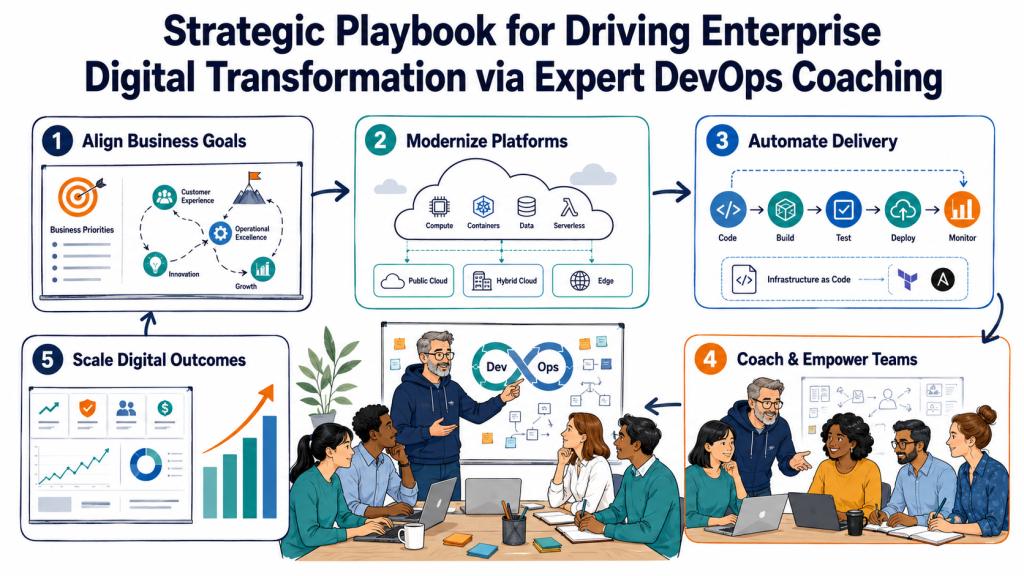
When organizations bridge these technical gaps with a skilled DevOps Trainer, they transform slow delivery channels into streamlined continuous pipelines. Expert mentorship empowers developers and system administrators to master modern automation ecosystems without risking active production stability.
What Does a DevOps Trainer Do?
A dedicated cloud instructor builds real-world technical capabilities by combining architecture strategy with practical problem-solving. Rather than delivering passive video lectures or basic slideshow presentations, a seasoned mentor constructs interactive lab environments tailored to your active technology stack.
Furthermore, they audit active deployment pipelines, eliminate operational bottlenecks, and instruct engineers on provisioning resilient cloud infrastructure using code. Through real-world scenario exercises, trainers equip engineering teams to resolve live operational bottlenecks decisively.
Why Practical DevOps Learning Matters
Theoretical concepts fall short when live applications crash or automated pipelines break down unexpectedly. Engineers build genuine technical capability when they configure live clusters, write automation scripts, and resolve network misconfigurations in real time.
- Interactive Sandbox Labs: Isolated cloud environments allow developers to test complex scripts safely without exposing production systems to risk.
- Scenario-Driven Exercises: Simulating realistic operational outages sharpens critical thinking and speeds up troubleshooting routines.
- Direct Workflow Transfer: Practical learning ensures engineers instantly apply newly acquired skills to their daily coding tasks.
The ‘3C’ Operational Framework
Our practical transformation strategy focuses on three core pillars: Construct (writing infrastructure templates from scratch), Crash (simulating realistic production system failures), and Cure (debugging and restoring cluster stability in real time).
What Should You Look for in a DevOps Trainer?
Selecting the right technical coach requires evaluating real-world production experience alongside proven instructional capabilities. High-performing engineering teams benefit most from instructors who possess broad platform expertise and deep operational backgrounds.
| Selection Criterion | Industry Standard | Direct Business Impact |
| Production Experience | 5+ years managing live infrastructure | Prevents theoretical, outdated teaching |
| Tooling Versatility | Multi-cloud, Containers, Security, CI/CD | Promotes holistic, cross-platform architecture skills |
| Interactive Pedagogy | Focus on practical, scenario-based exercises | Drives higher skill retention and team autonomy |
Additionally, look for instructors who adapt their curriculum to match your company’s unique release goals and compliance needs.
Corporate DevOps Training: What Makes It Different?
Standard self-paced courses cover broad concepts intended for individual professional development. In contrast, tailored Corporate DevOps Training targets your company’s precise application architecture, security policies, and release goals.
Custom corporate programs align entire engineering departments around standardized automation platforms, uniform security practices, and shared release cadences. Consequently, software release cycles accelerate dramatically while overall operational risk drops.
How to Plan Effective Corporate DevOps Training
Structuring a high-impact corporate upskilling initiative requires a disciplined, step-by-step approach:
- Conduct a Skill Gap Analysis: Review active delivery pipelines and gather technical feedback from team leads.
- Design Tailored Curriculum: Align practical lab assignments directly with your primary cloud platforms and software tools.
- Provision Dedicated Sandbox Environments: Provide safe cloud resources for hands-on experimentation throughout workshops.
- Evaluate Post-Training Metrics: Measure deployment frequency, recovery speed, and code quality improvement over time.
Enterprise Case Study: Modernizing Banking Delivery Pipelines
Challenge: A financial service platform suffered from 14-day deployment cycles and frequent configuration bugs.
Solution: Implemented a 6-week custom training initiative covering GitOps, Terraform automation, and container security.
Result: Release frequency increased by 300% while post-deployment failures dropped by 65% within three months.
DevOps Trainer in India: What Should Organizations Consider?
Partnering with a specialized DevOps Trainer in India gives global enterprises access to world-class technical expertise and cost-effective upskilling solutions. Instructors in India bring extensive experience guiding large-scale digital transformations across international technology hubs.
They offer flexible scheduling options, clear communication protocols, and a practical understanding of distributed engineering workflows. Selecting a local expert ensures smooth collaboration and seamless alignment with complex enterprise delivery requirements.
Online DevOps Trainer: When Remote Learning Works Well
Engaging a virtual Online DevOps Trainer delivers maximum operational flexibility for geographically distributed technology teams. Remote live workshops eliminate costly travel logistics while delivering real-time interactive instruction directly to developer screens.
Using cloud-hosted sandbox environments, screen-share debugging sessions, and virtual breakout rooms, online programs achieve outstanding technical engagement. This flexible format allows engineering managers to maintain delivery momentum without interrupting active project sprints.
Kubernetes Trainer: Building Cloud-Native Skills
Managing containerized applications across production environments demands specialized orchestration knowledge. An expert Kubernetes Trainer instructs your engineering staff on deploying, scaling, and securing enterprise clusters with complete confidence.
Participants gain direct practice configuring Helm charts, managing ingress rules, establishing auto-scaling parameters, and diagnosing complex cluster networking issues. Consequently, developers eliminate manual workload management and unlock the full efficiency of containerized architectures.
AWS DevOps Trainer: Connecting Cloud and Delivery Automation
Amazon Web Services provides a vast ecosystem of cloud infrastructure and automated application delivery services. A dedicated AWS DevOps Trainer helps engineering teams master key cloud services like EKS, CodePipeline, CloudFormation, and CloudWatch.
Developers learn to automate infrastructure provisioning, optimize resource consumption, and build zero-downtime release pipelines natively within AWS environments. Mastering these services ensures maximum performance, tight security controls, and efficient cloud spend.
Azure DevOps Trainer: Improving Microsoft Cloud Delivery
Enterprises running on Microsoft technologies require targeted strategies for continuous cloud delivery. Working with an Azure DevOps Trainer enables engineering teams to master Azure Pipelines, AKS integration, Azure Resource Manager templates, and Bicep scripts.
Engineers gain deep familiarity with automated quality gates, secure artifact management, and efficient hybrid cloud delivery strategies. This structured learning path streamlines enterprise software distribution while maintaining full compliance with corporate security standards.
DevSecOps Trainer: Bringing Security Into Delivery
Modern delivery pipelines must embed security safeguards into every phase of the software development lifecycle. Partnering with a skilled DevSecOps Trainer ensures your engineering team integrates security controls directly into active CI/CD processes.
Engineers learn to execute automated static and dynamic code scans, enforce secrets management, audit container images, and maintain continuous compliance automatically. Shifting security practices left protects sensitive enterprise data without slowing down release cadences.
SRE Trainer: Improving Reliability
System stability requires structured operational methodologies alongside fast, automated delivery pipelines. Engaging an experienced SRE Trainer guides software teams through Service Level Indicators (SLIs), Service Level Objectives (SLOs), and error budget management.
Engineers master comprehensive observability practices, automated incident response workflows, and chaos engineering techniques to keep production systems resilient. Consequently, operations teams reduce service disruptions and maintain exceptional platform uptime.
MLOps Trainer: Applying DevOps Principles to Machine Learning
Deploying artificial intelligence models into active production requires specialized workflow orchestration. An MLOps Trainer teaches data scientists and machine learning engineers how to automate model training, experiment tracking, deployment, and performance monitoring.
Applying continuous delivery principles to machine learning speeds up AI release cycles while preserving strict data governance. This specialized coaching enables teams to track model drift in real time and maintain reliable prediction quality in live environments.
How DevOps Tools Fit Together
A modern software delivery ecosystem relies on seamless integration between distinct automation platforms. Understanding how these platforms interact ensures smooth pipeline execution across cloud infrastructure.
| Pipeline Phase | Primary Industry Tools | Primary Objective |
| Infrastructure as Code | Terraform, Ansible, CloudFormation | Provision repeatable cloud resources automatically |
| CI/CD Automation | Jenkins, GitHub Actions, Azure Pipelines | Automate code compilation, testing, and releases |
| Container Management | Docker, Kubernetes, Helm | Package software applications and manage cluster scaling |
| Observability & Health | Prometheus, Grafana, Datadog | Monitor system performance and collect health metrics |
Common Mistakes When Choosing DevOps Training
- Relying on Generic Video Lectures: Passive watching lacks the interactive troubleshooting needed for real technical mastery.
- Ignoring Active Tech Stacks: Teaching tools that your company does not use creates friction during actual implementation.
- Skipping Live Sandbox Practice: Without hands-on cloud labs, developers struggle to apply new concepts to live systems.
How to Measure Training Results
Evaluating training outcomes requires tracking quantitative performance metrics linked directly to business performance:
- Deployment Frequency: Tracks how often developers release tested code updates to production environments safely.
- Mean Time to Recovery (MTTR): Evaluates how quickly technical teams isolate and repair unexpected system outages.
- Change Failure Rate: Measures the percentage of production updates requiring hotfixes or rollbacks.
Questions to Ask Before Hiring a DevOps Trainer
Before finalizing an instructor for your organization, ask these targeted questions:
- How do you tailor cloud lab exercises to match our actual application architecture?
- Can you share enterprise case studies demonstrating success with similar engineering teams?
- What percentage of the curriculum involves live hands-on debugging and scripting practice?
- How do you evaluate individual developer progress throughout the training engagement?
Who Can Benefit From a DevOps Trainer?
Software developers, system administrators, cloud engineers, QA testers, and engineering managers all derive immense value from structured technical coaching. Developers learn infrastructure automation, while sysadmins transition seamlessly into cloud engineering roles.
Furthermore, technical leaders gain valuable strategic insights into building fast, secure, and reliable software delivery operations. Cross-functional upskilling fosters seamless departmental collaboration across the entire software delivery lifecycle.
Building a Long-Term DevOps Learning Strategy
Upskilling requires continuous organizational commitment rather than a single training event. Cloud ecosystems evolve rapidly, requiring ongoing skill updates, tool reviews, and architectural alignment.
Establish internal communities of practice, host regular hackathons, and maintain ongoing access to sandbox environments to keep your engineering workforce ahead of the curve. Continuous learning fosters a culture of innovation and long-term technical excellence.
Choosing the Right Expert for the Job
Selecting an outstanding technical instructor shapes the entire trajectory of your digital transformation. Prioritize mentors who offer rich production experience, excellent communication capabilities, and custom-designed course materials.
The right expert acts as a trusted technical advisor, guiding your team past common implementation hurdles toward long-term engineering excellence. Investing in top-tier coaching yields exponential returns in code quality and deployment efficiency.
DevOpsTrainer as a Trainer Discovery Resource
Finding verified technical instructors presents challenges for busy engineering directors. Utilizing specialized discovery platforms simplifies instructor vetting and speeds up hiring.
These platforms connect businesses with verified experts across cloud platforms, container orchestration, and automated pipeline security. Consequently, organizations save valuable time while securing high-quality corporate training tailored precisely to their goals.
Frequently Asked Questions About DevOpsTrainer
What core services do technical coaches provide for enterprise teams?
Instructors deliver customized learning paths, host cloud sandbox labs, review application architecture, and mentor teams across continuous integration, Kubernetes, cloud systems, and reliability engineering.
How does customized corporate training differ from individual online certification courses?
Corporate programs adapt course content directly to your organization’s specific tools, security protocols, and release workflows instead of teaching generic, standardized material.
Do virtual remote workshops deliver the same value as on-site classroom sessions?
Modern virtual sessions utilize cloud-hosted labs, live screen sharing, and interactive breakout rooms to deliver technical engagement that equals traditional classroom learning.
What is the standard duration for a custom enterprise upskilling program?
Engagement lengths range from intensive 3-day tool-specific bootcamps to multi-week, part-time programs scheduled around team delivery milestones.
Why are hands-on cloud labs essential for mastering DevOps tools?
Live labs allow developers to write code, build infrastructure, and fix simulated system failures safely without placing live production systems at risk.
How do instructors track developer progress during corporate engagements?
Mentors evaluate progress through practical capstone projects, lab completions, code reviews, and pre- and post-training skill assessments.
What basic technical skills should developers possess before starting Kubernetes training?
Participants should understand basic Linux command-line tools, core networking concepts, and foundational container principles using Docker.
How does DevSecOps training reduce risk across software development?
DevSecOps instruction embeds automated code auditing, vulnerability scans, and continuous compliance checks into early pipeline phases, catching flaws before production releases.
What primary focus areas does an SRE trainer prioritize for system reliability?
An SRE instructor teaches teams to build observability dashboards, define error budgets, set SLIs/SLOs, and automate incident response workflows.
Why do machine learning teams require specialized MLOps coaching?
MLOps training bridges data science and system operations, giving teams the tools to automate model deployment, track performance drift, and maintain strict data governance.
Final Thoughts
Investing in top-tier technical mentorship powers enterprise agility, minimizes operational failures, and accelerates cloud transformation. Practical, hands-on instruction empowers software teams to build fast, scalable, and secure deployment pipelines with total confidence. Engaging the right expert sets your technology department up for sustained, long-term software delivery success.